

If one pet keeps stealing another’s food, an automatic feeder with selective access can make mealtimes calmer and more predictable. These smart feeders use microchip or RFID recognition to open only for the right pet.
In this roundup, we focus on models designed for multi-pet homes, special diets, and stress-free portion control, so you can match the right feeder to your pets’ habits and routine.
Best 10 Automatic Pet Feeders with Microchip Recognition Picks for 2026
Selective Microchip Feeding
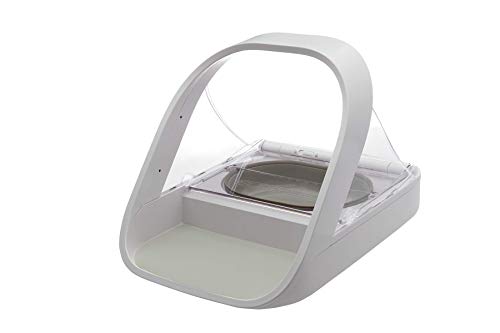
- Opens for microchip or RFID tag access.
- Supports wet and dry food.
- Helps prevent food stealing in multi-pet homes.
Best For: multi-pet homes and prescription diets
RFID App Feeding
PETLIBRO RFID Automatic Cat Feeder

- Uses a provided RFID collar tag, not a microchip.
- Offers app-based diet tracking and scheduling.
- Includes backup battery power for outages.
Best For: multi-cat homes needing RFID access and app control
Compact Microchip Access

- Uses microchip identification for selective feeding.
- Works with wet and dry food.
- Compact, lightweight design suits travel or storage.
Best For: small pets needing a portable selective feeder
Large-Capacity Microchip Feeder
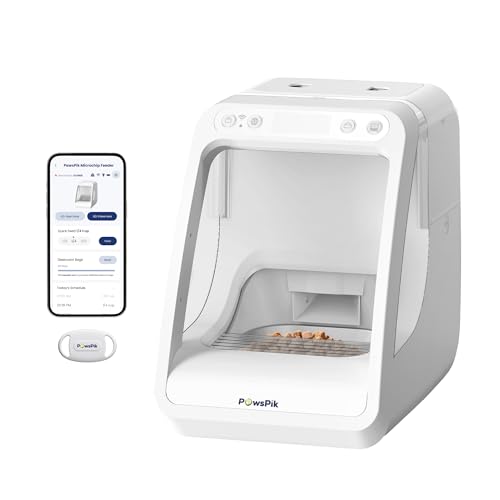
- Supports ISO microchips and an included RFID tag.
- App scheduling handles up to 10 meals daily.
- 16-cup capacity with backup battery support.
Best For: cats or small dogs needing selective access and larger capacity
RFID Meal Protection
RFID Cat Feeder with Collar Tag

- RFID collar tag opens the lid for the assigned pet
- Supports wet and dry food with ice packs
- Bluetooth setup is only for initial configuration
Best For: Multi-cat homes needing simple RFID feeding control
App-Controlled RFID Feeding
HoneyGuaridan RFID Automatic Cat Feeder
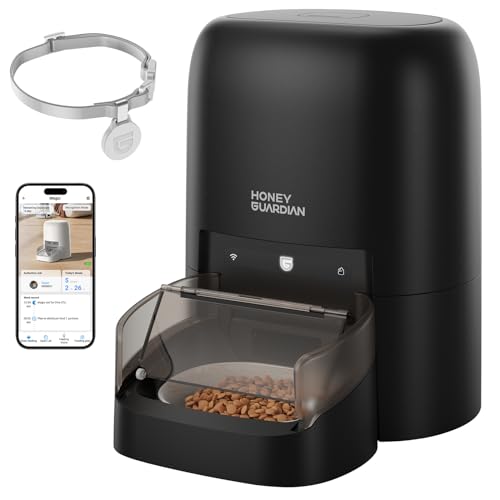
- RFID collar tag access for assigned-cat feeding
- App scheduling with feeding records and alerts
- Large 4.6L capacity with sealed freshness design
Best For: Multi-pet homes wanting app control and diet tracking
Microchip-Only Multi-Pet Control
Automatic Microchip Cat Feeder for Meal Separation
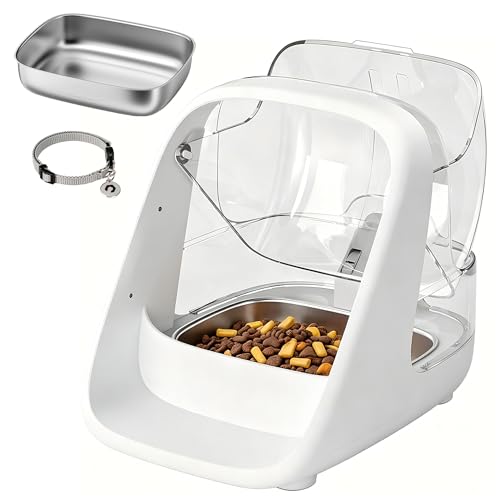
- Works with compatible implanted microchips or included RFID tag
- Rechargeable cordless design for flexible placement
- Stainless steel bowl supports wet or dry food
Best For: Multi-cat homes needing selective feeding and food-stealing prevention
App-Tracked RFID Feeding
PETLIBRO RFID Automatic Cat Feeder

- Uses the included RFID collar tag, not a microchip
- Pawsense app tracks meals, timing, and portions
- Dual-band Wi-Fi supports scheduling and remote control
Best For: Households that want RFID access with app-based diet tracking
Fast Auto-Lock Access
HEAPETS RFID Automatic Cat Feeder

- RFID collar sensor allows only the paired pet to eat
- Sealed lid helps protect dry and wet food
- Pinch-free design and simple controls support easy training
Best For: Single-pet selective feeding in a multi-pet household
Selective Microchip Feeding – SureFeed Microchip Pet Feeder
If you need automatic pet feeders with microchip recognition to stop food stealing and reduce mealtime stress, the SureFeed Microchip Pet Feeder is built for exactly that job. It opens only for the assigned pet’s microchip or RFID collar tag, making it a practical option for multi-pet homes and pets on wet or dry food plans.
Best For: Multi-pet households, pets on prescription diets, and owners who want portion control with selective access.
Pros:
- Opens for a pet’s microchip ID or included RFID collar tag.
- Helps prevent food stealing and supports healthier portion control.
- Works with wet or dry food and helps keep food fresher with a sealing lid.
- Stores up to 32 pet ID entries and includes a 3-year warranty.
Cons:
- Holds only 13.5 fl. oz., so it is best for controlled portions rather than large meals.
- Ideally one feeder per pet for the cleanest setup.
Overall, this is a strong fit if you want selective feeding without adding app complexity. It’s especially useful when one pet tends to eat another pet’s food or when exact mealtime access matters.
RFID App Feeding – PETLIBRO RFID Automatic Cat Feeder
For shoppers comparing automatic pet feeders with microchip recognition alternatives, this PETLIBRO model uses an RFID collar tag rather than a microchip. It is designed to give each cat personalized access, help prevent food stealing, and let you track eating habits from the app.
Best For: Cat owners who want RFID-based personalized feeding, app monitoring, and stable Wi-Fi control for multi-cat homes.
Pros:
- RFID collar tag access keeps the feeder limited to the designated cat.
- App features include diet tracking, meal scheduling, and portion control.
- Dual-band Wi-Fi supports remote access and alerts.
- Large 3L capacity and battery backup help keep feeding on schedule.
Cons:
- Not microchip activated; it only supports the provided collar tag.
- Designed for indoor dry food use, not wet food.
This is a good choice if you want personalized access plus smart tracking, but it is not the same as a true microchip feeder. It makes the most sense when every cat wears the included tag and you want app-based feeding oversight.
Compact Microchip Access – Sureflap SureFeed MPF001
If you’re looking for automatic pet feeders with microchip recognition in a compact format, this Sureflap SureFeed model focuses on simple selective feeding. It identifies your pet by microchip and automatically opens when the right animal approaches, which can help keep mealtimes organized in a small-pet setup.
Best For: Small dogs and other pets that need selective access in a lightweight, portable feeder.
Pros:
- Uses microchip technology to identify the pet before feeding.
- Suitable for both wet and dry food.
- Compact and lightweight for easier storage or travel.
- Wi-Fi connectivity is listed for monitoring and control.
Cons:
- Capacity is only 400 ml, so it is best for smaller portions.
- Hand wash only care adds a little maintenance.
This model is a straightforward option if you value selective access over advanced extras. Its small footprint and microchip-based opening make it appealing for pet owners who want a portable, no-fuss feeder.
Large-Capacity Microchip Feeder – PawsPik RFID Cat Feeder
Among automatic pet feeders with microchip recognition, the PawsPik model stands out for its large capacity and app-based control. It supports ISO-compliant microchips or the included RFID tag, then uses closed or open modes to help manage access, portions, and feeding routines.
Best For: Cat owners or small-dog households that want microchip or RFID access with app scheduling and a larger food reserve.
Pros:
- Supports ISO microchips and also includes a compatible RFID tag.
- App control lets you schedule up to 10 meals per day.
- 16-cup capacity reduces refill frequency.
- Backup battery helps maintain feeding during outages.
Cons:
- Each feeder works for one pet only.
- It is designed for cats and small dogs, not larger pets.
This is a feature-rich option if you want selective access plus more control over portions and timing. The larger capacity and app tools make it especially practical for busy routines.
Best for Easy Setup – Closer Pets MiBowl CP500
If you need automatic pet feeders with microchip recognition for a multi-pet home, the Closer Pets MiBowl is built to keep one pet from eating another’s food. It works with compatible ISO and AVID 15-digit microchips or electronic ID tags, and its enclosed design helps protect wet food from side and rear access while reducing mealtime stress.
Best For: Small to medium cats and small dogs that need controlled access to wet food or prescription meals.
Pros:
- Supports compatible 15-digit microchips and electronic ID tags for selective access
- Enclosed bowl design helps block food stealing from the sides and rear
- Removable, dishwasher-safe bowl makes cleanup easier
- Battery power is reported to last up to 6 months or more
Cons:
- Not compatible with non-15-digit chips
- Bowl size is relatively small at 11.83 fl oz, so it suits portioned wet meals best
- Setup may be easiest if you follow the included video and written guides
This feeder makes sense if your main goal is reliable food separation without a lot of moving parts. It is a practical fit for cats that need diet control, and the compact, fully enclosed layout should appeal to owners who want a simpler selective feeder for daily use.
RFID Meal Protection – RFID Cat Feeder with Collar Tag
This RFID option is a straightforward pick among automatic pet feeders with microchip recognition when your priority is stopping food stealing between cats. It uses an RFID collar tag to unlock the lid for the assigned pet, and it supports both wet and dry food with removable bowl cleanup and dual ice packs for cooler wet meals.
Best For: Multi-cat households that need simple RFID-based meal separation for wet or dry food.
Pros:
- RFID collar tag access helps keep meals assigned to one pet
- Works with wet and dry food, with two reusable ice packs included
- Bluetooth setup is used only for initial configuration and feeding records
- Anti-pinch lid adds an extra safety feature during daily use
Cons:
- Uses an RFID collar tag rather than a built-in microchip reader
- Food capacity is modest at 400 ml
- Best recognition may require the optional raised stand sold separately
Overall, this feeder is aimed at households that want a calmer feeding routine without a complicated setup. Its strengths are basic selectivity, wet-food support, and easy cleaning, though the smaller size makes it better for individual servings than larger appetites.
App-Controlled RFID Feeding – HoneyGuaridan RFID Automatic Cat Feeder
For shoppers comparing automatic pet feeders with microchip recognition, this HoneyGuaridan model stands out for combining RFID collar tag access with app-based scheduling. It is designed to keep the right cat on the right diet, while also recording feeding activity and offering several power options for home use or backup support.
Best For: Multi-pet homes that want RFID access control plus app scheduling and feeding records.
Pros:
- RFID collar tag unlocks the bowl for the assigned cat
- 5G/2.4G Wi-Fi app control supports schedule setup and feeding records
- Large 4.6L capacity is useful for longer intervals between refills
- Sealed storage design and ceramic bowl support freshness and easy cleaning
Cons:
- Uses an RFID collar tag, not a direct microchip reader
- Battery-only mode cannot connect to Wi-Fi for app control
- Lithium battery is sold separately if you want cord-free Wi-Fi operation
This feeder is the most feature-rich option in the group if you want feeding data and scheduling alongside selective access. It should be especially appealing for owners managing different diets or medication routines, though you will want to plan around its power and accessory requirements.
Microchip-Only Multi-Pet Control – Automatic Microchip Cat Feeder for Meal Separation
If you’re comparing automatic pet feeders with microchip recognition for a multi-cat home, this ePawDen model is built to stop food stealing and keep meals separated. It opens for a paired implanted microchip or the included RFID tag, which makes it useful for prescription diets, weight control, and allergy-sensitive feeding.
Best For: Multi-cat households that need selective feeding with either a compatible microchip or the included RFID tag.
Pros:
- Opens only for paired microchip or included RFID tag to reduce food stealing
- Rechargeable cordless design allows flexible placement without disposable batteries
- Stainless steel bowl works with wet or dry food and is dishwasher safe
- Quiet opening motion may help cautious cats adjust more easily
Cons:
- Does not support 9-digit or 10-digit chips
- Feeder body should not be washed with water
This is a practical choice if you want selective access without relying on a collar tag alone, but chip compatibility is important to verify first. The rechargeable setup and washable removable parts add convenience, while the 500 ml capacity keeps it compact for controlled feeding.
App-Tracked RFID Feeding – PETLIBRO RFID Automatic Cat Feeder
For shoppers focused on automatic pet feeders with microchip recognition alternatives, this PETLIBRO model uses an included RFID collar tag instead of an implanted chip. It is designed to unlock only for the paired cat, helping prevent food stealing while adding app-based diet tracking, scheduling, and portion control for multi-pet homes.
Best For: Multi-cat households that want RFID-tag access plus app tracking for meals and portions.
Pros:
- RFID collar tag access helps keep each cat on its own diet
- Pawsense app tracking shows who ate what, when, and how much
- Dual-band Wi-Fi and app controls support scheduling and portion management
- 5-layer freshness protection and stainless steel bowl help keep food in good condition
Cons:
- Not microchip activated; only works with the included RFID collar tag
- Requires corded power rather than battery operation
This feeder stands out if you want more visibility into feeding habits, not just controlled access. The tradeoff is that it depends on the supplied tag and a plugged-in setup, but it offers strong convenience for households managing different diets.
Fast Auto-Lock Access – HEAPETS RFID Automatic Cat Feeder
If you need automatic pet feeders with microchip recognition-style access control, this HEAPETS feeder uses an RFID collar sensor to open only for the paired pet. It is aimed at multi-pet homes where food stealing, prescription diets, and weight management are common concerns, while also supporting both dry and wet food use.
Best For: Multi-pet homes that want a sealed, RFID-controlled feeder for one paired cat or small dog.
Pros:
- RFID collar sensor opens the lid only for the paired pet
- Automatic closing after 10 seconds helps keep meals protected
- Sealed lid design supports dry kibble and short-term wet food use
- Pinch-free motorized door and soft silicone edges add peace of mind
Cons:
- Only one collar can be paired to each feeder
- Wet food should not be left inside for extended periods
This model is a straightforward pick if you want identity-based access with simple operation and easy training. Its compact bowl capacity and single-pet pairing limit it to targeted feeding rather than broader multi-pet sharing.
How We Picked the Best Automatic Pet Feeders with Microchip Recognition
We focused on Automatic Pet Feeders with Microchip Recognition that solve the most common household problems: food stealing, diet separation, and inconsistent mealtimes. Priority went to feeders with selective access, reliable pet identification, easy cleaning, and practical capacity for everyday use.
We also considered whether a model supports wet food or dry food, how well it fits multi-pet homes, and whether the controls are simple enough for regular use. For connected models, app features and scheduling flexibility mattered, but only if the core feeding function stayed straightforward.
Quick Comparison: What Matters Most
Before choosing, compare recognition method, food type compatibility, bowl design, and capacity. Microchip-based systems are usually the most precise, while RFID collar-tag models can work well if all pets wear tags consistently.
Also weigh maintenance: sealed lids, removable bowls, dishwasher-safe parts, and battery or power backup can make a big difference over time. If you have multiple cats with different diets, selective access is often more valuable than extra smart features.
Key Buying Factors for Automatic Pet Feeders with Microchip Recognition
Recognition Method
Microchip recognition is ideal for pets already implanted with chips, while RFID collar sensors are useful when you want tag-based access. Choose the system that best matches how your pets are identified today.
Food Type and Portion Needs
Not every feeder handles both wet and dry food equally well. Check whether the bowl stays sealed, how portions are delivered, and whether the design supports your pet’s diet plan.
Capacity and Household Size
Smaller bowls may work for a single cat or one protected meal station, while larger-capacity feeders suit busy homes and less frequent refills. Bigger does not always mean better if your pet needs fresh food more often.
Cleaning and Durability
Look for dishwasher-safe bowls, washable liners, and materials that resist odor buildup. In Automatic Pet Feeders with Microchip Recognition, hygiene matters because the food area is often enclosed and used daily.
Power, App Control, and Backup Features
Wi-Fi scheduling, app alerts, and portion tracking can be helpful, but they should not replace basic reliability. Battery backup or dual-power options are especially useful in case of outages.
Who Should Buy Which Automatic Pet Feeders with Microchip Recognition?
If you have multiple pets and one steals food, choose a selective feeder with fast, reliable recognition. If your pets already wear RFID tags, a collar-tag feeder may be the most convenient option. For owners managing prescription diets or weight control, prioritize portion control and secure access over smart extras.
For the simplest setup, look for a model with clear controls and easy cleaning. For tech-focused homes, app-connected feeders add more scheduling and monitoring flexibility, but only when the core feeder design is proven and dependable.
