

Choosing among diskless network attached storage devices is easier when you know which features matter most: drive bays, network speed, app support, and future expandability.
Below, we focus on practical options for home and small office users who want reliable storage, simple setup, and room to grow.
Best 10 Diskless Network Attached Storage Devices Picks for 2026
Performance NAS Workstation

- Intel Core i3-1315U with DDR5 memory
- 10GbE plus 2.5GbE for fast transfers
- Docker, VMs, and AI photo recognition
Best For: Power users and small teams needing speed and flexibility
Simple Private Cloud Starter
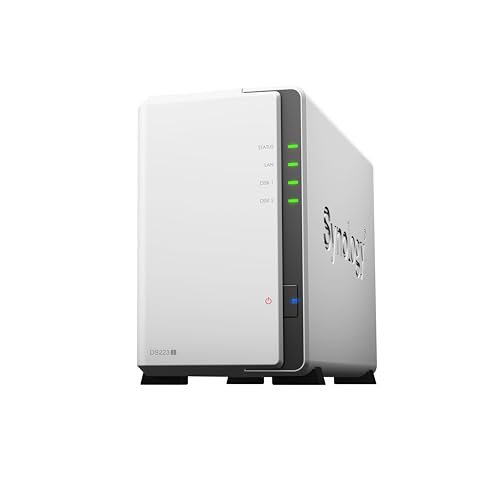
- Secure private cloud with data ownership
- Automated backups for computers and mobile devices
- Supports sharing, syncing, and IP cameras
Best For: Home users wanting simple backup and cloud access
Balanced Pro NAS

- Pentium Gold 8505 with 8GB DDR5
- 10GbE plus 2.5GbE wired connectivity
- Docker, VMs, and AI photo album
Best For: Small offices and advanced users needing a balanced NAS
Media Streaming NAS

- Intel CPU with hardware transcoding
- Automated backups and snapshot protection
- Supports 4K streaming and IP cameras
Best For: Media libraries and users who want compact backup protection
Beginner-Friendly Private Cloud

- Entry-level 2-bay NAS with up to 64TB capacity
- AI photo album organizes faces, objects, text, and locations
- Includes 1GbE, 4GB RAM, and 4K HDMI
Best For: Beginners who want simple private storage and photo backup
Easy Upgrade Personal Cloud

- 2.5GbE connection speeds up home file transfers
- Quad-core CPU handles storage and backup tasks
- Tool-free installation keeps setup beginner-friendly
Best For: Home users wanting a simple faster-than-Gigabit NAS
AI-Ready Home Media NAS

- Built-in NPU speeds up face and object recognition
- 2.5GbE ports support faster sharing and transfers
- 4GB DDR4 RAM suits home media and personal storage
Best For: Families needing a budget-friendly media NAS with AI tools
Entry-Level Personal NAS
UGREEN DH2300 2-Bay Diskless NAS

- 2-bay diskless design for personal storage
- AI photo tagging and duplicate cleanup
- Automatic backups across major platforms
Best For: Beginners who want simple private storage and backup
Quiet Home Media Hub
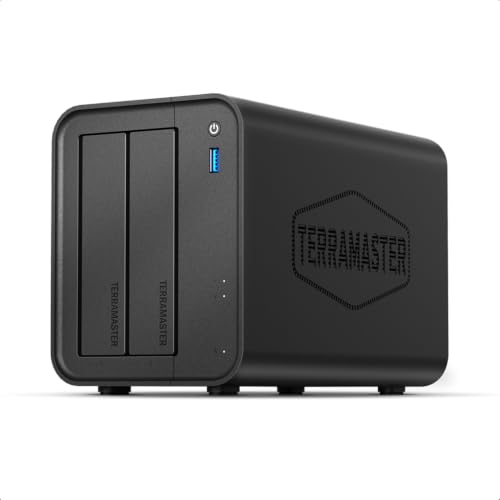
- Intel x86 quad-core CPU with 4GB RAM
- 2.5GbE and 4K H.265 media support
- Quiet 19dB(A) operation with tool-free trays
Best For: Home media streaming and quiet everyday NAS use
Expandable Power User NAS
Yxk Zero1 Pro 4-Bay Diskless NAS

- 4-bay design plus 2 M.2 NVMe slots
- Dual 2.5GbE, 4K HDMI, and Docker support
- Compatible with third-party OS options
Best For: Enthusiasts who want expansion and customization
Performance NAS Workstation – UGREEN DXP4800 Pro 4-Bay
If you’re shopping for diskless network attached storage devices that can handle heavy multitasking, the UGREEN DXP4800 Pro is built for demanding workflows. Its Intel Core i3-1315U, DDR5 memory, dual M.2 NVMe slots, and 10GbE networking make it a strong fit for fast file transfers, virtualization, and media-heavy projects.
Best For: Power users, small teams, and creators who need high-speed NAS performance plus Docker and VM support.
Pros:
- Intel Core i3-1315U with 8GB DDR5 RAM, expandable up to 96GB
- 1x 10GbE plus 1x 2.5GbE for fast wired transfers
- 2x M.2 NVMe slots for cache or extra storage pool options
- Supports Docker, virtual machines, and AI-powered photo recognition
Cons:
- Drives are not included, so total cost depends on your chosen HDDs and SSDs
- Best value is tied to advanced use cases rather than basic file storage
Overall, this is one of the more capable diskless network attached storage devices in the group if your priority is performance and expansion. It leans hard into speed, app flexibility, and on-device features rather than simplicity alone.
Simple Private Cloud Starter – Synology DS223j 2-Bay
The Synology DS223j is a straightforward option if you want diskless network attached storage devices focused on private cloud basics. It emphasizes secure file access, syncing, and backups, with enough flexibility for home sharing and simple surveillance use.
Best For: Home users who want an easy 2-bay NAS for backup, syncing, and private cloud access.
Pros:
- Secure private cloud with 100% data ownership
- Automated backups for Macs, PCs, and mobile devices
- Easy sharing and syncing across multiple platforms
- Supports IP cameras for home security monitoring
Cons:
- 2-bay design limits capacity and RAID flexibility versus larger models
- Less suited to heavy workloads like virtualization or advanced container use
This model makes sense when you want a reliable, entry-friendly NAS experience rather than maximum hardware power. It focuses on the essentials: backup, access, and ownership of your files.
Balanced Pro NAS – UGREEN DXP4800 Plus 4-Bay
For buyers comparing diskless network attached storage devices that balance speed, app support, and centralized storage, the UGREEN DXP4800 Plus is a compelling middle ground. It pairs an Intel Pentium Gold 8505 processor with 10GbE networking, DDR5 RAM, and dual M.2 NVMe slots for a setup aimed at small offices and advanced home users.
Best For: Small offices and tech-savvy users who want a fast all-around NAS for backups, collaboration, and Docker.
Pros:
- Intel Pentium Gold 8505 CPU with 8GB DDR5 RAM
- 1x 10GbE and 1x 2.5GbE for faster wired networking
- Supports Docker and virtual machines for flexible workloads
- AI-powered photo album with duplicate removal and face/object recognition
Cons:
- Drives are sold separately, so storage costs are additional
- Wired-Ethernet-only design means no built-in Wi-Fi support
If you want a NAS that is more capable than an entry model but not as workstation-focused as a top-end system, this one fits well. It emphasizes centralized storage, backups, remote access, and collaboration-friendly features.
Media Streaming NAS – Synology DS225+ 2-Bay
The Synology DS225+ is aimed at diskless network attached storage devices buyers who want a media-first setup with dependable backup tools. With Intel CPU hardware transcoding, it’s positioned for streaming 4K content, storing large libraries, and keeping family or creative files protected.
Best For: Media streamers and backup-focused users who want a compact 2-bay NAS with hardware transcoding.
Pros:
- Intel CPU with hardware transcoding for 4K streaming
- Supports automated backups to cloud services, external drives, and remote NAS
- Snapshot technology plus RAID redundancy for multi-layered protection
- Supports up to 30 IP cameras with AI detection
Cons:
- 2-bay capacity is more limited than 4-bay desktop NAS units
- Designed around media and backup use, not high-end workstation tasks
In practice, this model is a strong fit if streaming and protection matter more than raw expansion. It combines compact hardware with the kinds of features many households and creators actually use day to day.
Beginner-Friendly Private Cloud – UGREEN DH2300 2-Bay NAS
If you want one of the more approachable diskless network attached storage devices, the UGREEN NAS DH2300 is built as an entry-level 2-bay system for personal storage, photo libraries, and simple backup. It focuses on an easy move away from scattered cloud files and external drives, while still offering remote access, AI photo organization, and support for up to 64TB of total capacity with your own drives installed.
Best For: Beginners who want a simple private cloud for photos, videos, and everyday backups.
Pros:
- Beginner-friendly setup aimed at users new to NAS storage
- AI photo tools can tag faces, objects, text, and locations
- Supports automatic backups across Windows, iOS, Android, and macOS
- Includes 1GbE networking, 4GB RAM, and 4K HDMI output
Cons:
- Does not support Docker or virtual machines
- Wireless networking needs an external USB adapter
- 1GbE is slower than 2.5GbE-equipped alternatives
For shoppers prioritizing simplicity over advanced server features, the DH2300 is a practical diskless NAS enclosure with privacy-focused storage and useful media organization tools. It is a solid fit if you mainly want dependable personal storage and straightforward backup without a steep learning curve.
Easy Upgrade Personal Cloud – Asustor Drivestor 2 Gen 2
The Asustor Drivestor 2 Gen 2 is a straightforward pick among diskless network attached storage devices if you want a home cloud for backup, file storage, and media access without paying for recurring cloud plans. Its quad-core CPU, 2.5GbE networking, and tool-free drive installation make it a practical step up from basic external storage.
Best For: Home users who want a faster entry-level NAS for backup, personal cloud access, and media streaming.
Pros:
- 2.5GbE Ethernet offers faster transfers than standard Gigabit NAS models
- Quad-core 1.7GHz processor supports daily storage and backup tasks
- Tool-free drive installation makes setup easier for beginners
- 1GB DDR4 memory helps keep core NAS functions stable
Cons:
- 1GB RAM is modest for heavier multitasking
- Best suited to basic personal cloud use rather than advanced workloads
- Diskless design means drives must be purchased separately
Overall, this model is a strong fit if you want an affordable NAS enclosure with faster-than-Gigabit networking and simple installation. It stays focused on the essentials, which makes it appealing for first-time NAS buyers who want dependable home storage.
AI-Ready Home Media NAS – QNAP TS-216G-US 2-Bay NAS
The QNAP TS-216G-US stands out among diskless network attached storage devices for buyers who want a compact home NAS with faster networking and built-in AI acceleration. With a quad-core ARM CPU, 4GB DDR4 RAM, and 2.5GbE connectivity, it is designed to centralize photos, music, and videos while improving file sharing and recognition tasks.
Best For: Families and home users who want a budget-friendly NAS for media storage with faster networking and AI features.
Pros:
- Built-in NPU helps accelerate face and object recognition
- 2.5GbE ports improve sharing and large file transfers
- 4GB DDR4 RAM offers more headroom than many entry-level models
- Good fit for organizing personal or family media collections
Cons:
- Diskless enclosure requires separate drive purchases
- ARM platform may not suit users needing x86-only software support
- Focused on personal and multimedia use rather than advanced server workloads
If your priority is a home NAS that balances media management, AI-assisted organization, and faster-than-Gigabit networking, this QNAP is a compelling option. It is especially practical for households that want centralized storage without moving to a more complex server-class system.
Entry-Level Personal NAS – UGREEN DH2300 2-Bay Diskless NAS
If you want diskless network attached storage devices that make the jump from cloud storage simple, the UGREEN NAS DH2300 is built for beginners. This 2-bay desktop NAS focuses on personal storage, automatic backups, and easy photo and file organization without extra complexity.
Best For: First-time NAS buyers who want a simple private storage hub for photos, videos, and backups.
Pros:
- Supports up to 64TB of total capacity, with drives sold separately.
- Offers automatic backups across Windows, iOS, Android, and macOS devices.
- Includes AI-powered photo organization with face, object, text, and location tagging.
- Designed for personal entertainment, photo storage, and basic data backup.
Cons:
- Does not support Docker or virtual machines.
- Uses a 1GbE port, so it is not the fastest option in this group.
Overall, the DH2300 is a straightforward entry point if you want diskless network attached storage devices with simple setup and long-term storage value. It is especially appealing for users moving away from scattered files and recurring cloud fees.
Quiet Home Media Hub – TERRAMASTER F2-425 2-Bay NAS
The TERRAMASTER F2-425 is a strong pick if you want diskless network attached storage devices built around home media use and easy everyday file sharing. Its Intel x86 quad-core CPU, 4GB RAM, and 2.5GbE port are aimed at smooth multitasking, fast transfers, and 4K media handling.
Best For: Home users who want a quiet NAS for media streaming, backups, and simple family file sharing.
Pros:
- Intel x86 quad-core processor with 4GB RAM for multitasking and 4K transcoding.
- 2.5GbE networking supports faster file transfers and concurrent access.
- Hardware-level 4K H.265 decoding works with Plex, Emby, Jellyfin, and DLNA.
- Very quiet operation at 19dB(A) with tool-free HDD tray installation.
Cons:
- 2-bay design limits maximum capacity compared with larger NAS units.
- Plastic enclosure may feel less premium than metal-bodied alternatives.
For buyers prioritizing media playback, quiet operation, and easy mobile management, the F2-425 offers a balanced feature set. It is a practical choice for anyone who wants diskless network attached storage devices without a steep learning curve.
Expandable Power User NAS – Yxk Zero1 Pro 4-Bay Diskless NAS
The Yxk Zero1 Pro is aimed at users who want diskless network attached storage devices with more room to grow and more customization options. With an Intel N100 CPU, 8GB RAM, 4 SATA bays, 2 M.2 NVMe slots, dual 2.5GbE, and 4K HDMI, it is built for home and office storage setups that go beyond basic backup.
Best For: Enthusiasts who want a highly expandable NAS for streaming, apps, and custom operating systems.
Pros:
- Supports up to 144TB of total storage across 4 SATA bays and 2 M.2 NVMe slots.
- Dual 2.5GbE ports support link aggregation for smoother multi-user access.
- Includes Docker support and compatibility with third-party operating systems such as TrueNAS, Unraid, and OMV.
- Aluminum enclosure and dual-fan cooling are designed for quiet, sustained performance.
Cons:
- Drives are not included and must be purchased separately.
- Third-party OS installation requires manual setup.
If you want a more advanced NAS that can handle media, apps, and flexible operating systems, the Zero1 Pro stands out. It is one of the more capable diskless network attached storage devices here for users who want both performance and expandability.
How We Picked These Diskless Network Attached Storage Devices
We prioritized models that make sense for real-world home and small office use: dependable hardware, sensible expandability, strong networking, and a setup process that does not require advanced IT skills. We also looked at whether each device supports common needs such as backups, media streaming, photo management, and remote access.
Because Diskless Network Attached Storage Devices are sold without drives, we gave extra weight to bay count, RAID flexibility, and whether the enclosure leaves room for future capacity upgrades. We also considered CPU class, memory, and ports like 2.5GbE or 10GbE for users who want better transfer speeds.
Quick Comparison: What These Models Are Best for
Two-bay units are usually the easiest starting point for basic backups, private cloud storage, and media libraries. Four-bay models are better if you want more storage headroom, stronger RAID options, or room to expand over time. Entry-level systems suit simple file sharing, while faster x86-based picks are better for multitasking and heavier media use.
If your priority is everyday reliability, a modest two-bay NAS may be enough. If you expect to grow into larger photo libraries, multiple users, or faster wired networks, a higher-end four-bay platform is the smarter long-term choice.
Key Buying Factors for Diskless Network Attached Storage Devices
Drive Bays and RAID Options
The number of bays affects both total capacity and redundancy. Two-bay systems are compact and affordable, but four-bay models offer more flexibility for RAID and future expansion. If you want safer storage, choose a configuration that can tolerate at least one drive failure.
Network Speed
For most buyers, 2.5GbE is a meaningful upgrade over standard gigabit Ethernet. Power users and larger households may benefit from 10GbE, especially if they move large video files or back up multiple devices regularly.
Processor and Memory
ARM-based systems are often efficient and quiet for basic file services. Intel-based models are usually better for transcoding, heavier multitasking, and more demanding apps. More RAM helps with smoother multitasking, especially when using backups, media servers, or photo indexing features.
Software and Ease of Use
A good operating system matters as much as hardware. Look for intuitive mobile apps, simple backup tools, remote access, and clear user permissions. If several people will use the NAS, a polished software ecosystem can save time and frustration.
Who Should Buy Which Diskless Network Attached Storage Devices?
Choose a budget-friendly two-bay model if you mainly need private file storage, photo backup, and basic media access. Choose a faster two-bay x86 unit if you want smoother streaming, better app performance, or a little more headroom for the future.
Go with a four-bay NAS if you expect your storage needs to grow, want better redundancy, or prefer to buy once and expand later. For most buyers, the best Diskless Network Attached Storage Devices are the ones that match today’s needs without closing the door on tomorrow’s upgrades.
