

If your edits are slowing down because files live on scattered drives, the right NAS can streamline your workflow fast. The best network attached storage devices for video editing give you centralized storage, faster shared access, and room to grow.
Below, we focus on practical buyer needs: speed, expandability, RAID flexibility, and network connectivity for teams working with large media files.
Best 10 Network Attached Storage Devices for Video Editing Picks for 2026
Pro Performance Pick
UGREEN DXP4800 Pro for Power Users

- Intel Core i3-1315U with DDR5 memory
- 10GbE + 2.5GbE for fast transfers
- Dual M.2 NVMe slots and 4-bay expansion
Best For: Power users and editing teams needing high-speed, flexible storage
Budget-Friendly Starter
BUFFALO TeraStation Essentials 32TB

- Drives included for easier setup
- Ships pre-configured in RAID 5
- Native 2.5GbE and 3-year warranty
Best For: Small studios and solo creators who want simple, ready-to-use storage
Editor Collaboration Choice
Synology DS1525+ for Shared Production

- Direct 4K/8K editing support
- 10GbE ready for multi-user workflows
- Scales to 300TB with expansion
Best For: Post-production teams and shared editing workflows
Rackmount Business Pick

- Rackmount NAS with drives included
- RAID pre-configured for protection
- 2.5GbE plus iSCSI support
Best For: IT-managed studios and small businesses needing rackmount storage
Home Media & Backup NAS
Synology DS225+ Private Cloud Media Server

- Intel CPU with hardware transcoding
- Up to 282 MB/s transfer speeds
- RAID, backups, and snapshots for protection
Best For: Creators who want a compact NAS for editing storage and media streaming
High-Speed Creator NAS
UGREEN NAS DXP4800 Plus 4-Bay 10GbE

- 10GbE and 2.5GbE networking
- Intel Pentium Gold 8505 with 8GB DDR5
- 2x M.2 NVMe slots and 144TB capacity
Best For: Video editors and small teams that want faster transfers and flexible expansion
Starter Video Storage Bundle
Synology DS225+ 8TB IronWolf Bundle

- Includes 2x 4TB Seagate IronWolf drives
- Supports SHR for flexible storage management
- Btrfs snapshots and DSM 7.3 drive compatibility
Best For: Editors who want a ready-to-use NAS bundle with included drives and data protection
Enterprise 8-Bay Creator NAS

- Dual 10GbE with link aggregation
- 8-bay chassis plus 2x M.2 NVMe
- Intel i5, 8GB DDR5, 8K HDMI and Thunderbolt 4
Best For: Large editing teams and high-throughput shared media storage
Quiet Home Media NAS
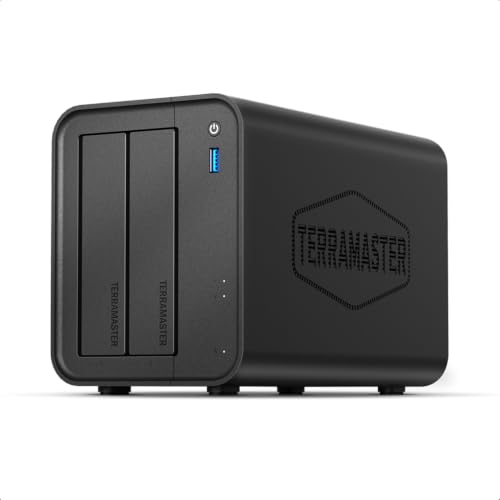
- Intel x86 quad-core CPU with 4GB RAM
- 2.5GbE plus Plex, Emby, and Jellyfin support
- Very quiet 19dB(A) operation
Best For: Quiet home media storage and lighter editing workflows
Creator Workflow NAS
Asustor Lockerstor 6 Gen2+ AS6706T v2
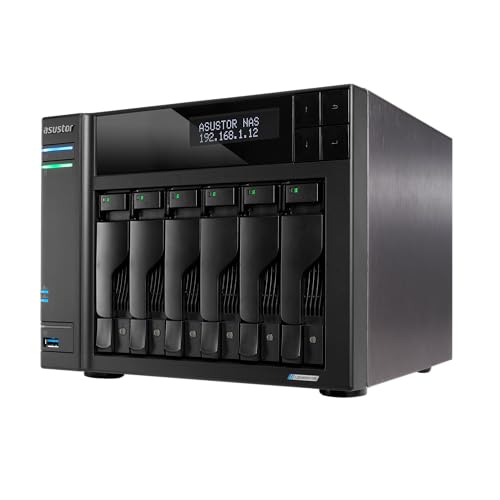
- Dual 5GbE with 10GbE upgrade readiness
- 4 M.2 NVMe slots for caching or acceleration
- Hybrid 6-bay design with 8GB DDR4
Best For: Creators wanting flexible storage and SSD acceleration
Pro Performance Pick – UGREEN DXP4800 Pro for Power Users
If you’re shopping for network attached storage devices for video editing, the UGREEN NAS DXP4800 Pro is built for demanding workflows that need speed, expansion, and room to grow. Its Intel Core i3-1315U, 10GbE + 2.5GbE networking, and dual M.2 NVMe slots make it a strong fit for editors who want fast transfers and flexible storage options.
Best For: Editors, small teams, and power users who need high-performance NAS features for 4K workflows, virtual machines, and large media libraries.
Pros:
- Intel Core i3-1315U with 8GB DDR5 RAM supports multitasking and heavier workflows.
- 10GbE plus 2.5GbE can reach up to 1.25GB/s transfers for faster media movement.
- Two M.2 NVMe slots add cache or storage-pool flexibility to reduce HDD bottlenecks.
- Includes Docker and VM support for advanced creator and IT workloads.
Cons:
- Diskless model means you still need to buy your own drives.
- Full potential depends on a fast network and compatible setup.
- Best value is aimed more at serious users than casual home storage.
This is the most feature-rich option in the group, and it stands out if your editing workflow needs both speed and expansion headroom. The built-in 4K HDMI, RAID support, and large 144TB capacity make it a versatile backbone for a growing production setup.
Budget-Friendly Starter – BUFFALO TeraStation Essentials 32TB
BUFFALO TeraStation Essentials 2025 4-Bay Value Desktop NAS 32TB (4x8TB) with Hard Drives Included
Check Price On AmazonFor buyers who want network attached storage devices for video editing without a complicated setup, the BUFFALO TeraStation Essentials is a straightforward starting point. It comes with hard drives included, ships pre-configured in RAID 5, and adds a native 2.5GbE port for quicker transfers right out of the box.
Best For: Small studios or solo creators who want a ready-to-use NAS with included drives and simple protection.
Pros:
- Hard drives are included, so setup is simpler and faster.
- Ships in RAID 5 for out-of-the-box data protection.
- Native 2.5GbE helps improve transfer speed without a cable upgrade.
- 3-year warranty includes hard drive coverage and support.
Cons:
- 5400 rpm drives are more modest than higher-performance options.
- Less powerful than editor-focused NAS systems for heavier workloads.
- Capacity tops out at 32TB in this configuration.
This model makes the most sense if you want a low-friction NAS for storing, sharing, and backing up media rather than pushing advanced post-production performance. It is a practical choice for creators who value convenience and bundled storage over maximum speed.
Editor Collaboration Choice – Synology DS1525+ for Shared Production
The Synology DS1525+ is a strong option if you need network attached storage devices for video editing in a shared production environment. It is designed for direct 4K and 8K editing over the network, with 1,181 MB/s speeds, 10GbE readiness, and support for multi-user workflows.
Best For: Post-production teams and content studios that need scalable shared storage for large media projects.
Pros:
- Built for direct 4K and 8K editing with high network throughput.
- 10GbE readiness supports faster shared-project workflows.
- Scales from 100TB up to 300TB with DX525 expansion units.
- AI tagging and project version control help manage large asset libraries.
Cons:
- Diskless design means you must supply the drives.
- Expansion requires additional DX525 hardware.
- Best suited to teams that can benefit from its production-focused feature set.
If your workflow centers on collaboration, this NAS is the most production-oriented choice here. Its combination of scale, speed, and media management features makes it especially useful when multiple editors need access to the same project files.
Rackmount Business Pick – BUFFALO TeraStation 3420RN
If you want network attached storage devices for video editing in a rackmount format, the BUFFALO TeraStation 3420RN is aimed at business environments that prioritize reliability and centralized management. It includes hard drives, ships with RAID protection, and supports iSCSI for server storage expansion.
Best For: Small businesses and IT-managed studios that need rackmount storage with built-in drives and straightforward protection.
Pros:
- Rackmount design fits organized business or server-room setups.
- Hard drives included with RAID pre-configuration for easier deployment.
- Native 2.5GbE helps keep transfers moving efficiently.
- iSCSI support adds flexibility for storage expansion use cases.
Cons:
- 8TB total capacity is relatively modest for large media libraries.
- 5400 rpm drives are not as fast as higher-end editor-focused systems.
- Best suited to business storage than high-performance solo editing.
This is a practical choice when you want dependable rackmount NAS hardware more than a feature-heavy creative workstation. It should work well for file sharing, backups, and smaller editing environments that already run on managed infrastructure.
Home Media & Backup NAS – Synology DS225+ Private Cloud Media Server
If you want network attached storage devices for video editing that also double as a media hub, the Synology DS225+ is a practical two-bay option. It’s built around fast file access, hardware transcoding, and layered protection, so it can support a small creator workflow while also serving as a private streaming server.
Best For: Creators who want a compact NAS for editing storage, media streaming, and dependable backups.
Pros:
- Intel CPU with hardware transcoding for smooth media handling.
- Up to 282 MB/s transfer speeds for faster file access.
- Automated backups, RAID redundancy, and snapshot technology for data protection.
- Supports up to 30 IP cameras for broader home or studio use.
Cons:
- Two-bay design limits expansion compared with larger NAS units.
- Diskless, so you’ll need to buy drives separately.
- Not positioned as the fastest option for heavy multi-user workloads.
The DS225+ makes sense if you want a compact, reliable NAS that can store video projects, stream media, and back up valuable footage in one place. It’s less about maximum raw throughput and more about balanced everyday creator use.
High-Speed Creator NAS – UGREEN NAS DXP4800 Plus 4-Bay 10GbE
For network attached storage devices for video editing, the UGREEN NAS DXP4800 Plus stands out with its 10GbE port, DDR5 memory, and NVMe expansion. That combination makes it a stronger fit for creators who need a more performance-focused desktop NAS for large media libraries, backups, and collaboration.
Best For: Video editors and small teams that want faster transfers and more flexible storage expansion.
Pros:
- 10GbE plus 2.5GbE networking for high-speed transfers.
- Intel Pentium Gold 8505 CPU and 8GB DDR5 RAM for better multitasking.
- Built-in 128GB SSD and 2x M.2 NVMe slots for flexible performance tuning.
- Up to 144TB capacity with RAID support and centralized backup features.
Cons:
- Drives are not included.
- Wired Ethernet only; no Wi-Fi support on this model.
- Some apps, like Plex, require Docker rather than native support.
If your editing workflow moves large files and you want more headroom than a basic two-bay NAS, this UGREEN model offers a compelling hardware package. It’s especially attractive when network speed and expandable storage matter more than simplicity.
Starter Video Storage Bundle – Synology DS225+ 8TB IronWolf Bundle
If you’re looking for network attached storage devices for video editing and want a bundle that gets you started right away, this Synology DS225+ package includes 8TB of Seagate IronWolf storage. It keeps the same compact two-bay DiskStation approach while adding Synology’s backup and snapshot features for safer project storage.
Best For: Editors who want an easier entry into NAS storage with included drives and Synology’s data protection tools.
Pros:
- Includes 2x 4TB Seagate IronWolf drives for an out-of-box bundle.
- Supports Synology Hybrid RAID for flexible storage management.
- Btrfs file system and snapshot technology add extra protection.
- Now compatible with third-party drives since DSM 7.3.
Cons:
- Only 2 GB RAM out of the box.
- Two-bay design is less scalable than larger NAS units.
- Less flexible than higher-end models for very demanding workloads.
This bundle is a straightforward way to get a ready-to-use NAS for project storage, backups, and general editing workflows. It’s best when you want Synology’s software ecosystem without having to source drives separately.
Enterprise 8-Bay Creator NAS – UGREEN DXP8800 Plus
If you want network attached storage devices for video editing that can handle serious throughput, the UGREEN DXP8800 Plus is built for high-demand workflows. Its 10-core Intel i5 CPU, dual 10GbE ports, and NVMe expansion are aimed at moving large media files quickly while keeping editing assets centralized.
Best For: Editors and small teams that need fast shared storage, large capacity, and strong expandability for high-resolution projects.
Pros:
- Dual 10GbE ports can be aggregated for up to 20G bandwidth and transfer speeds up to 2500MB/s.
- 8-bay design with two M.2 NVMe slots and up to 272TB capacity for large media libraries.
- 12th Gen Intel Core i5 processor and 8GB DDR5 RAM support demanding multitasking.
- Includes 8K HDMI and 2x Thunderbolt 4 for flexible workstation-style connectivity.
Cons:
- Drives are not included, so total cost depends on the storage you add.
- Wired Ethernet only; it does not support Wi-Fi.
- Actual transfer speeds depend on your router, CPU, drives, and file sizes.
Overall, this is the most ambitious option here for creators who prioritize speed, capacity, and future growth over simplicity. It makes the most sense when multiple users or heavy 4K/8K projects need a shared storage hub.
Quiet Home Media NAS – TERRAMASTER F2-425
For buyers comparing network attached storage devices for video editing with a more compact footprint, the TERRAMASTER F2-425 is a practical 2-bay choice. It combines an Intel x86 quad-core CPU, 2.5GbE networking, and 4K H.265 support, so it can handle light editing workflows and fast file transfers without taking over the room.
Best For: Home users and solo creators who want quiet, compact NAS storage for media files, backups, and lighter video workloads.
Pros:
- Intel x86 quad-core processor and 4GB RAM support multitasking and 4K transcoding.
- 2.5GbE port enables faster file transfers and multi-user access than basic gigabit NAS units.
- Very quiet at 19dB(A), making it well suited to bedrooms or shared home spaces.
- Supports Plex, Emby, Jellyfin, DLNA, and mobile backup/sync through TNAS Mobile.
Cons:
- 2-bay design limits raw expansion compared with larger creator-focused NAS systems.
- Maximum storage tops out at 60TB, which may be tight for large video libraries.
- Plastic enclosure is less substantial than metal chassis alternatives.
As an affordable, quiet NAS, the F2-425 fits creators who care more about convenience and everyday media handling than heavy expandability. It is a sensible entry point if your editing projects are small to moderate in size.
Creator Workflow NAS – Asustor Lockerstor 6 Gen2+ AS6706T v2
The Asustor Lockerstor 6 Gen2+ is designed for network attached storage devices for video editing and other creator workflows that need a balance of speed, flexibility, and collaboration. With dual 5GbE ports, four M.2 NVMe slots, and a 6-bay hybrid design, it is built to accelerate media access while still leaving room for large SATA storage.
Best For: Video creators and small teams that want a flexible, cache-friendly NAS for editing, sharing, and private cloud storage.
Pros:
- Dual 5GbE ports support fast transfers, link aggregation, and 10GbE upgrade readiness.
- Four M.2 NVMe SSD slots can be used for caching or high-speed storage acceleration.
- Hybrid 6-bay design supports both HDDs and SSDs for capacity plus speed.
- 8GB DDR4 memory and Intel Celeron N5105 CPU are aimed at multitasking and creative production.
Cons:
- Does not include drives, so you will need to budget for your own storage.
- Networking starts at 5GbE rather than built-in 10GbE.
- Compatibility depends on Asustor’s supported device list.
This model stands out if you want a creator-first NAS with SSD acceleration and room to grow. It is especially appealing for users who want a private file hub that can support editing, backup, and media streaming in one box.
How We Picked the Best Network Attached Storage Devices for Video Editing
We prioritized Network Attached Storage Devices for Video Editing that can handle large sequential transfers, multiple users, and future capacity upgrades. The strongest picks combine fast networking, capable CPUs, enough RAM for multitasking, and support for SSD cache or NVMe acceleration where available.
We also favored models with sensible expansion paths, good drive-bay counts, and clear feature sets for creators who need reliable shared storage rather than general-purpose home backups.
Quick Comparison
Choose 2-bay systems if you mainly need a simple shared library or a personal editing workspace. Step up to 4-bay models for better RAID options, higher usable capacity, and more comfortable growth. 5-bay, 6-bay, and 8-bay units make more sense for teams, heavier codecs, or larger media archives that need both speed and resilience.
Key Buying Factors for Network Attached Storage Devices for Video Editing
Network Speed
For video work, 1GbE is often the first bottleneck. Look for 2.5GbE at minimum, and prefer 10GbE if you edit directly from the NAS or share projects across multiple workstations.
Drive Bays and RAID
More bays usually mean better flexibility. A 4-bay NAS is a common sweet spot for RAID 5 or similar setups, while 6- and 8-bay systems are better if you want stronger redundancy, more usable space, or larger high-performance arrays.
CPU and Memory
Transcoding, indexing, previews, and concurrent file access all benefit from a stronger processor and more RAM. Intel-based systems are often attractive for mixed media workflows, especially when hardware transcoding or broad compatibility matters.
SSD and NVMe Support
For editing-heavy workloads, cache SSDs or NVMe slots can help responsiveness, especially for project files, metadata, thumbnails, and small asset reads. They will not replace hard-drive capacity, but they can reduce delays in busy workflows.
Scalability and Team Use
If your storage needs may grow, consider models with expansion support, higher maximum volume sizes, or enough bay count to avoid an early upgrade. Teams should also look for stronger simultaneous-user performance and 10GbE readiness.
Who Should Buy Which Network Attached Storage Devices for Video Editing?
Solo creators and small studios usually do well with 2-bay or compact 4-bay systems if they want affordable shared storage and basic redundancy. Teams handling 4K or larger projects, or anyone editing directly over the network, should lean toward 4-bay or larger units with 2.5GbE or 10GbE.
If you need a mix of speed, expansion, and future-proofing, the stronger 4-bay and multi-bay models are often the best fit. If your priority is maximum capacity for a growing post-production library, choose the higher-bay systems and plan your RAID layout around both uptime and performance.
