

Finding the right power setup for RV travel means balancing runtime, recharge speed, and true portability. The best units can keep essentials running without forcing you to rely on noisy generators or shore power.
Below, we focus on portable power stations for RVs that make sense for weekend trips, extended boondocking, and emergency backup, with options ranging from compact light-duty models to high-capacity systems.
Best 10 Portable Power Stations for RVs Picks for 2026
Flagship High-Capacity RV Backup
ABOK Ark3600 Portable Power Station

- 3840Wh LiFePO4 battery, expandable to 11520Wh
- 3600W output with 4500W peak for bigger loads
- 15 outlets plus wheels, handle, and Bluetooth app
Best For: RV users needing a high-capacity, feature-rich backup power station
Ultra-Light RV Travel Kit

- 292Wh LiFePO4 power station with 40W panel
- Weighs only 7.5 lbs for easy RV travel
- 300W output with AC, USB-C, USB-A, and car port
Best For: Travelers wanting a lightweight solar bundle for small RV power needs
Fast-Charge RV Power Hub
AFERIY P280 Portable Power Station

- 2048Wh LiFePO4 battery expands to 10.24kWh
- 0% to 80% charge in about 38 minutes
- 2800W pure sine wave output with dual PV inputs
Best For: RV owners who want very fast charging and expandable power
Compact RV Essentials Backup

- 292Wh LiFePO4 battery with over 4,000 cycles
- Only 7.5 lbs with a built-in handle
- 300W output for phones, laptops, cameras, and drones
Best For: RV users needing a compact backup for small electronics
Compact Budget Pick
300W Solar Generator for Light RV Use

- 280Wh capacity with 300W AC output
- AC, solar-ready, and car charging options
- About 5 lbs with handle for easy carry
Best For: Light RV charging and small electronics
Fast-Charge Backup Pick
640Wh LiFePO4 Power Station with UPS

- 640Wh capacity, 600W output, 1200W surge
- 10ms UPS for seamless backup power
- Full recharge in about 1.5 hours
Best For: RV backup power with fast recharge and UPS
Mid-Size Travel Pick
600W LiFePO4 Power Station for RV Trips

- 600W output with 1200W surge support
- 288Wh LiFePO4 battery with 3500+ cycles
- Recharges to 80% in about 2 hours
Best For: Compact RV travel and moderate device loads
High-Capacity RV Workhorse
DABBSSON 2000L 2048Wh Semi-Solid LiFePO4 Power Station
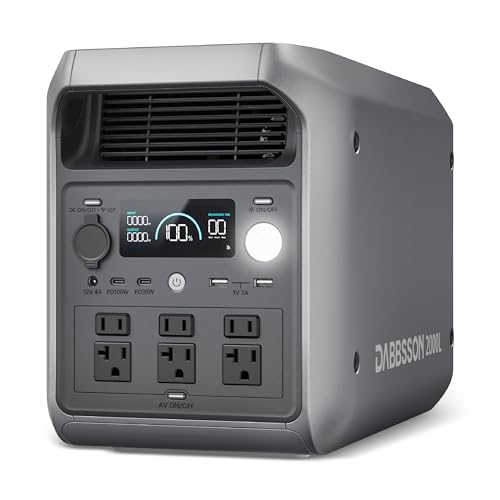
- 2048Wh capacity with 2200W output
- 1-hour AC charging with solar support
- 41 lb build with app and EPS control
Best For: RV travelers needing high-capacity power for appliances and extended off-grid use
Lightweight Emergency Pick
BLUETTI Elite 30 V2 288Wh Portable Power Station

- Only 9.4 lb for easy carrying
- 600W output with 1500W power lifting
- Fast wall charge and 10ms UPS backup
Best For: RV users wanting a compact backup for small devices and short trips
Balanced RV All-Rounder
EcoFlow DELTA 3 Classic 1024Wh LiFePO4 Power Station
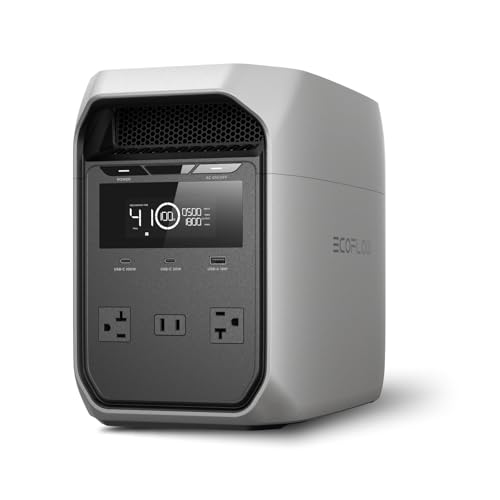
- 1024Wh LiFePO4 battery with 1800W output
- 0-80% recharge in 45 minutes
- 10ms UPS plus app-based control
Best For: RV owners wanting a versatile mid-size power station with fast charging
Flagship High-Capacity RV Backup – ABOK Ark3600 Portable Power Station
If you want portable power stations for RVs that can handle bigger loads, the ABOK Ark3600 is built for serious trips and emergency backup. Its 3840Wh LiFePO4 battery, 3600W output, and 15 outlets make it a strong fit for running multiple devices and small appliances while on the road.
Best For: RV owners who want high capacity, fast recharging, and lots of outlet options for longer off-grid stays.
Pros:
- 3840Wh capacity, expandable to 11520Wh for much longer runtime
- 3600W rated output with 4500W peak power supports 99% of household appliances
- Charges in about 3 hours on AC, or as fast as 1.29 hours with AC + PV combined
- 15 output ports, including AC, USB-C, USB-A, DC, XT60, and a cigarette lighter port
Cons:
- At this capacity, it is more of a transportable RV power hub than a grab-and-go unit
- Needs compatible solar panels and inverters to use its full charging flexibility
- Charging requires temperatures above 32°F according to the notes
Overall, the Ark3600 stands out if you need a large, flexible power station that can support RV life and backup use without constant recharging. The wheels, telescoping handle, and Bluetooth monitoring add convenience to the high-capacity design.
Ultra-Light RV Travel Kit – Jackery Solar Generator 300
For portable power stations for RVs where size and weight matter, the Jackery Solar Generator 300 is a simple, travel-friendly option. It pairs a 292Wh LiFePO4 power station with a 40W solar panel and keeps the package light enough for camping, short RV stops, and charging smaller electronics.
Best For: RV travelers who want an ultra-light solar bundle for phones, cameras, laptops, and other small devices.
Pros:
- Very light at 7.5 lbs, making it easy to carry and pack
- Comes with a 40W solar panel in the bundle for off-grid charging
- 300W output with 2 AC outlets, USB-C, USB-A, and a car port
- LiFePO4 battery is rated for over 4,000 charge cycles
Cons:
- 292Wh capacity is best for light-duty use, not large RV appliances
- 300W output limits what you can run at the same time
- Only 3 total output outlets are listed in the notes
This is a practical pick if you want a compact RV companion rather than a heavy-duty backup system. It makes the most sense for shorter trips, minimalist setups, and users who value portability over maximum runtime.
Fast-Charge RV Power Hub – AFERIY P280 Portable Power Station
If fast recharge times are a priority in portable power stations for RVs, the AFERIY P280 is built to minimize downtime. With a 2048Wh LiFePO4 battery, 2800W output, and dual solar inputs, it is designed for users who want strong performance and flexible charging on the road.
Best For: RV owners who want rapid charging, strong inverter output, and expandable storage for longer trips.
Pros:
- Charges from 0% to 80% in about 38 minutes with AC + PV input
- 2048Wh LFP battery expands to 10.24kWh with extra batteries
- 2800W pure sine wave output with a NEMA TT-30 outlet
- Supports dual PV inputs for more flexible solar charging
Cons:
- At 44 pounds, it is not a lightweight carry
- Single-hour runtime listing suggests load management matters for larger draws
- Most useful when paired with additional batteries or solar input for extended use
Overall, the P280 is a strong RV choice if you care more about charging speed and output quality than compact size. Its UPS support and pure sine wave design make it a practical option for sensitive electronics and dependable backup power.
Compact RV Essentials Backup – Jackery Explorer 300
For portable power stations for RVs that stay simple and compact, the Jackery Explorer 300 focuses on light weight and basic everyday power. Its 292Wh capacity and 300W output are well suited to charging smaller electronics during camping, road trips, and short RV stays.
Best For: RV users who need a lightweight backup for phones, laptops, cameras, drones, and other low-wattage gear.
Pros:
- Lightweight at 7.5 lbs with a built-in handle
- 292Wh LiFePO4 battery rated for over 4,000 cycles
- 300W output with 2 AC outlets, USB-C, USB-A, and a car port
- Supports solar charging with compatible Jackery panels
Cons:
- Small capacity is not intended for high-wattage RV appliances
- Only 300W of rated output limits what it can power
- Solar panel is optional, so off-grid use may require extra purchase
This is a practical low-profile pick for RV owners who mainly need reliable charging for electronics. It is easy to move, easy to store, and best viewed as a compact support unit rather than a full RV power solution.
Compact Budget Pick – 300W Solar Generator for Light RV Use
If you need portable power stations for RVs for light-duty charging, this 280Wh unit keeps the essentials covered without taking up much space. It offers AC, DC, USB, and QC ports, plus three charging methods, so it works well for phones, tablets, laptops, cameras, and other small devices on short trips.
Best For: RV travelers who want a lightweight backup for small electronics, campsite convenience, and emergency charging.
Pros:
- 2 AC outlets with 300W max output for basic device support
- Multiple charging options: AC, solar-ready input, and 12V car charging
- About 5 lbs with a handle, making it easy to move in and out of an RV
- Includes built-in protection features like short circuit, over-current, over-voltage, and overload protection
Cons:
- Not suitable for appliances over 300W
- Solar panel is not included
- Best suited to smaller electronics rather than high-demand RV gear
As a compact entry-level option, this power station makes sense if your RV setup is mostly about keeping electronics topped up. It is not a whole-cabin solution, but it does deliver flexible charging in a very portable package.
Fast-Charge Backup Pick – 640Wh LiFePO4 Power Station with UPS
For RV owners who want more dependable backup power, this portable power station for RVs pairs a 640Wh LiFePO4 battery with 600W output and a strong surge rating. It adds 4 AC outlets, multiple device ports, and a 10ms UPS function, making it a practical option for keeping key electronics running during outages or while parked.
Best For: RV users who want fast charging, UPS backup, and enough output for everyday essentials.
Pros:
- 640Wh capacity with 600W output and 1200W surge support
- 10ms UPS helps keep devices like WiFi routers and CPAP machines powered during outages
- Charges fully in about 1.5 hours via AC
- LiFePO4 battery is rated for 4000+ cycles and housed in a metal enclosure
Cons:
- Indoor-use safety warning requires dry, well-ventilated conditions
- Heavier-duty performance still stays within a 600W limit
This is the strongest all-around pick in the group if you value quick recharge times and clean, stable power. It is especially appealing for RV trips where you may also want a reliable outage backup at home.
Mid-Size Travel Pick – 600W LiFePO4 Power Station for RV Trips
If you want a balanced portable power station for RVs without jumping to a larger battery, this 288Wh model offers 600W output and a 1200W surge rating. It is built for practical road use, with enough ports to run or recharge several small devices at once and support items like a car refrigerator or CPAP machine within its limits.
Best For: RV travelers who need a compact battery with stronger output than basic entry-level models.
Pros:
- 600W output with 1200W surge for a useful range of RV essentials
- LiFePO4 battery with 3500+ cycle life and 12 safety protections
- 6-port layout includes AC, USB-C PD60W, USB-A, and DC connections
- Can recharge to 80% in about 2 hours via AC
Cons:
- 288Wh capacity is smaller than larger backup-focused units
- Solar panel and car charging cable are not included
- Only suitable for devices within the 600W output limit
This model makes sense if portability matters more than maximum runtime. It brings a solid mix of output, safety, and recharge speed, which is useful for weekend RV trips and emergency kits.
High-Capacity RV Workhorse – DABBSSON 2000L 2048Wh Semi-Solid LiFePO4 Power Station
If you want portable power stations for RVs that can handle real appliances, the DABBSSON 2000L is built for bigger loads and longer off-grid days. Its 2048Wh capacity, 2200W AC output, and 6 outlets make it a strong fit for travel setups that need to run multiple devices at once.
Best For: RV travelers who need high-capacity backup power for appliances, charging, and extended stays off-grid.
Pros:
- 2048Wh capacity with claims of 1.3x longer runtime than comparable stations.
- 2200W rated output and 3300W power boost for heavier devices like refrigerators and heaters.
- Fast 1-hour AC charging, plus solar, car, and hybrid dual-input options.
- 10ms EPS switching and app control add convenience for backup use.
Cons:
- At 41 lb, it is portable for its class but not ultra-light.
- Solar panel is optional, so solar use requires a separate purchase.
This is the pick for RV owners who value capacity and output over minimal weight. If your trips include larger appliances or you want a serious backup unit for travel and home use, it offers a strong mix of power, speed, and flexibility.
Lightweight Emergency Pick – BLUETTI Elite 30 V2 288Wh Portable Power Station
For portable power stations for RVs where size and weight matter most, the BLUETTI Elite 30 V2 is a compact 288Wh option that is easy to move between the campsite, road trip stops, and home emergencies. It focuses on core essentials rather than whole-cabin backup, with fast charging and strong surge capability for its size.
Best For: RV users who want a lightweight power station for small devices, quick trips, and emergency essentials.
Pros:
- Very light at 9.4 lb, making it easy to carry and store.
- 600W continuous output with 1500W power lifting for select appliances and devices.
- Fast wall charging, with 0-80% in 45 minutes and 0-100% in 70 minutes.
- 10ms UPS support helps protect sensitive electronics during outages.
Cons:
- 288Wh capacity is much smaller than larger RV-focused stations.
- Not intended for heavy, long-duration appliance use.
This model makes sense if you want something compact for charging electronics, running lights, or covering short emergencies. It is best viewed as a travel-friendly backup rather than a high-output RV power hub.
Balanced RV All-Rounder – EcoFlow DELTA 3 Classic 1024Wh LiFePO4 Power Station
The EcoFlow DELTA 3 Classic lands in the middle of the portable power stations for RVs category with a useful balance of capacity, output, and charging speed. Its 1024Wh LiFePO4 battery, 1800W AC output, and fast recharge times make it a practical option for travelers who want dependable everyday power without moving up to a much heavier unit.
Best For: RV owners who want a versatile mid-size power station for common appliances and quick recharge times.
Pros:
- 1024Wh LiFePO4 battery with 10+ year daily-use rating.
- 1800W output and 3600W surge support for appliances like refrigerators and microwaves.
- 0-80% charging in 45 minutes with X-Stream AC charging.
- <10ms UPS and app control add useful backup and monitoring features.
Cons:
- Solar panel is optional, so off-grid solar setup costs extra.
- Not expandable with DELTA 2 Smart Extra Battery or Delta 3 Series Smart Extra Battery.
For RV use, this is a strong middle ground between compact portability and real appliance support. It is well suited to travelers who want fast charging, dependable battery chemistry, and enough output for everyday essentials.
How We Picked the Best Portable Power Stations for RVs
We prioritized Portable Power Stations for RVs based on usable battery capacity, AC output, surge handling, solar compatibility, recharge speed, outlet variety, and weight. We also considered whether a unit is better suited to charging phones and laptops, or running higher-demand RV essentials like fans, CPAP machines, routers, and small appliances.
Because RV needs vary widely, our goal was to include a range of sizes rather than only the biggest models. That makes it easier to match a power station to your travel style and electrical load.
Quick Comparison
Smaller 280Wh to 300Wh units are best for short outings, light charging, and backup use. Mid-range models around 600Wh to 1,000Wh offer a more practical balance for frequent weekend RV trips. Larger 2,000Wh-plus systems are the strongest fit for off-grid camping, longer stays, or households that want a serious emergency backup option.
In general, look for higher output if you plan to power appliances, and faster recharge if you move camps often or depend on solar.
Key Buying Factors for Portable Power Stations for RVs
Battery Capacity
Capacity, measured in watt-hours, determines how long your station can run devices. For RV use, larger batteries are better when you need to recharge multiple electronics or support appliances overnight.
AC Output and Surge Power
Make sure the inverter can handle the devices you want to use. A coffee maker, blender, or microwave can require far more startup power than a phone charger or fan.
Charging Speed and Solar Input
Fast AC charging is valuable when you have limited campground time. Solar compatibility matters even more for boondocking, where you may recharge daily and want to reduce generator use.
Portability and Weight
Higher capacity usually means more weight. If you will move the unit often, choose a model that is still realistic to lift and store in an RV compartment.
Battery Chemistry and Lifespan
LiFePO4 batteries are usually the best choice for RV owners because they tend to last longer and handle frequent cycling better than older battery types.
Who Should Buy Which Portable Power Stations for RVs?
If you only need backup charging for phones, tablets, cameras, and a CPAP, a compact model is usually enough. For most RV travelers, mid-size options are the sweet spot because they offer better runtime without becoming overly heavy.
If you camp off-grid often, work from the road, or want a station that can support more demanding loads, choose one of the larger Portable Power Stations for RVs with expandable capacity and strong solar support. That gives you more flexibility now and more room to grow later.
