

Smart electrical panels and energy monitors can turn raw power usage into clear, actionable insights. That makes it easier to cut waste, balance loads, and plan upgrades for solar, battery storage, and EV charging.
Below, we’ve narrowed the field to the best options for homeowners who want smarter visibility and control without overbuying features they won’t use.
Best 10 Smart Electrical Panels for Home Energy Management Picks for 2026
Fast Backup Load Control

- Controls 6 remote circuits
- Sheds non-essential loads automatically
- Switches in under 20 ms
Best For: Homes that want quick backup switching and selective circuit control
Flexible Panel Foundation

- 125A indoor load center
- Plug-on neutral ready
- Supports full-size, tandem, and quad breakers
Best For: Users who need a standard, upgrade-friendly panel base
Real-Time Energy Visibility
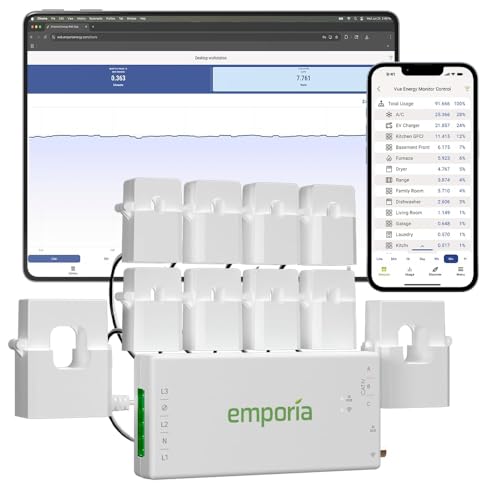
- Clamp-on sensors for most panels
- UL Listed and app-based
- Supports solar and net metering
Best For: Homeowners who want detailed energy tracking in an existing panel
Circuit-Level Energy Control
16-Circuit Smart Energy Monitor

- Monitors mains and up to 16 circuits
- Supports advanced energy management features
- Works in new and existing panels
Best For: Homes that want detailed monitoring and energy automation
Local-First Solar Monitor
Refoss Smart Home Energy Monitor

- Local Web UI, Open API, and MQTT
- Native Home Assistant and OpenClaw support
- Solar net metering and surplus automation
Best For: Privacy-minded solar homes needing local automation
3-Circuit Panel Tracker
WiFi Home Energy Monitor with CT Clamps
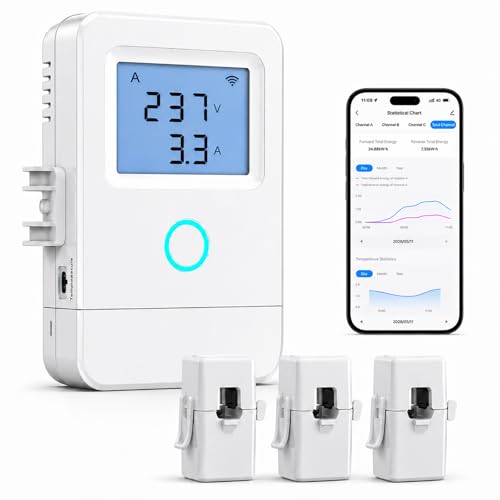
- Monitors 3 selected circuits
- Smart Life/Tuya app with history
- Temperature alerts and one-circuit control
Best For: Targeted monitoring of a few high-power circuits
Privacy-Focused 18-Circuit Monitor
Refoss Smart Home Energy Monitor
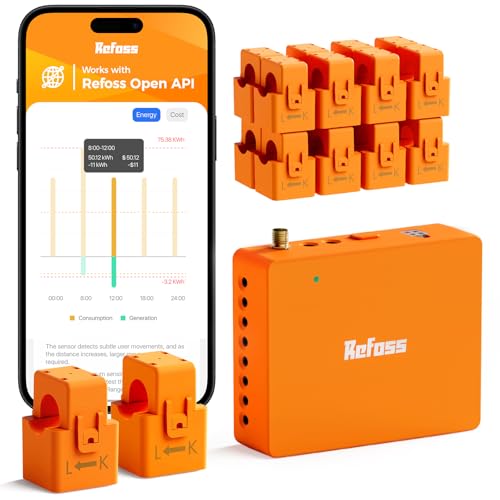
- 18-circuit monitoring with ±1% precision
- Local-first access via Web UI, API, MQTT, and WebSocket
- Solar optimization and 5-year data history
Best For: Large homes wanting deep local circuit analytics
Panel-Level Pick
Meross 18-Circuit Home Energy Monitor

- 18-circuit monitoring with 2 main circuits and 16 branches
- Local data, no subscriptions, and smart alerts built in
- Home Assistant support for solar surplus automation
Best For: Homeowners wanting detailed circuit monitoring and local smart automation
Commercial-Grade Pick
Emporia Vue 3 Commercial 3-Phase

- Built for 3-phase and other supported panel types
- Includes 16 circuit sensors for load-level tracking
- Supports solar and net metering in real time
Best For: Users with larger or 3-phase panels who need advanced metering
UL-Certified Pick
Emporia Vue 3 Smart Energy Monitor
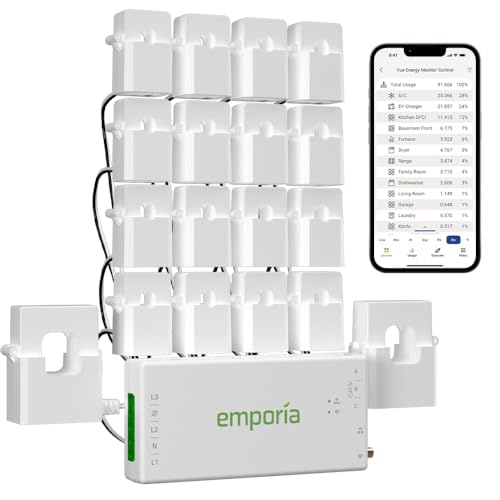
- UL Listed and CE Listed for safe home monitoring
- Sixteen branch sensors track key appliances and loads
- App support for solar, net metering, and automation
Best For: Homeowners wanting a certified, app-based whole-home energy monitor
Fast Backup Load Control – 6-Circuit Backup Control
For smart electrical panels for home energy management, the EcoFlow Smart Gateway is built for homeowners who want automatic backup control without micromanaging every circuit. It manages six remote-controlled circuits, sheds non-essential loads automatically, and switches in under 20 ms for fast backup continuity. It is also compatible with DELTA Pro Ultra X, solar, EV chargers, and generators.
Best For: Homes that need automatic load shedding and fast backup switching for a few critical circuits.
Pros:
- Controls 6 circuits remotely for selective load management
- Automatically sheds non-essential loads during backup events
- Fast under-20 ms switching helps maintain continuity
- Compatible with solar, EV chargers, generators, and DELTA Pro Ultra X
Cons:
- Single-phase design may not fit every electrical setup
- Only 6 controlled circuits, so it is less expansive than full-panel systems
This is a focused backup and load-control solution rather than a whole-home monitoring platform. If your priority is seamless switchover and automation for a limited number of circuits, it is a strong fit.
Flexible Panel Foundation – 125A 24-Circuit Load Center
For smart electrical panels for home energy management, this Square D Homeline load center is a solid foundation when you need a standard indoor panel with room to expand. It offers 125 amps, 12 spaces, and 24 circuits, plus plug-on neutral readiness and support for full-size, tandem, or quad breakers. It is not a monitor or automation hub, but it can support modern panel upgrades and a plug-on secondary surge arrestor.
Best For: Homeowners or electricians looking for a conventional, upgrade-friendly load center base.
Pros:
- 125-amp, 24-circuit indoor load center with 12 spaces
- Plug-on neutral ready for Homeline compatible breaker setups
- Accepts full-size, tandem, or quad breakers in each pole space
- Convertible to a main breaker load center with sold-separately parts
Cons:
- Does not include smart monitoring or app-based controls
- Indoor use only
- Main breaker and surge arrestor are sold separately
This is best viewed as the panel hardware behind an energy-management upgrade, not the management system itself. It makes sense when you want a flexible, standards-based load center for a residential electrical install.
Real-Time Energy Visibility – UL-Listed Home Energy Monitor
If you want smart electrical panels for home energy management without replacing the whole panel, the Emporia Vue 3 focuses on detailed visibility and automation. It installs in most circuit panels with clamp-on sensors, tracks whole-home and solar/net metering data, and uses the Emporia Energy app for real-time reporting and savings insights. It is UL Listed for safety and supports 24/7 monitoring with useful alerts and automation features.
Best For: Homeowners who want real-time circuit monitoring and energy insights in an existing panel.
Pros:
- UL Listed for safety and reliability
- Clamp-on sensors work in most home circuit panels
- Supports solar and net metering monitoring
- App-based automation for time-of-use and peak-demand management
Cons:
- Requires 2.4 GHz WiFi with internet access
- 1-second data is only available in the app while open
- Includes 8 circuit sensors, so coverage is limited compared with larger systems
For energy-conscious owners, this is a practical monitor-first option that helps pinpoint usage and savings opportunities. It is especially useful if you want actionable data without a full panel replacement.
Circuit-Level Energy Control – 16-Circuit Smart Energy Monitor
For smart electrical panels for home energy management, the SIEMENS Inhab is designed for homeowners who want both whole-home and circuit-level visibility. It installs in new or existing electrical panels, measures usage directly at the mains and up to 16 branch circuits, and adds features like Time of Use management, Peak Demand management, Excess Solar management, and load shedding for compatible devices. The mobile app and custom alerts make it easier to spot unusual usage and savings opportunities.
Best For: Homes that need detailed circuit-level monitoring plus advanced energy controls.
Pros:
- Measures at the mains and up to 16 branch circuits directly
- Works in new and existing electrical panels
- Supports time-of-use, peak demand, excess solar, and net metering features
- Can manage load shedding for compatible EV chargers and smart devices
Cons:
- USA and Canada only
- Requires wiring and CT installation inside the panel
- Not a replacement panel; it is a monitoring and control system
This is one of the more feature-rich choices if you want deeper insight and energy management from your existing setup. It is a strong match for users who want circuit-level data and advanced automation in one package.
Local-First Solar Monitor – Refoss Smart Home Energy Monitor
For shoppers comparing smart electrical panels for home energy management, this Refoss monitor stands out for local control, solar automation, and detailed circuit visibility. It avoids cloud dependence by offering a built-in Web UI, Open API, and MQTT, so you can track usage and automate energy decisions within your own network.
Best For: Homeowners who want privacy-focused, local energy monitoring with Home Assistant and solar self-consumption automation.
Pros:
- Local Web UI, Open API, and MQTT keep data off the cloud.
- Native Home Assistant support plus new OpenClaw AI automation.
- Supports solar net metering and automates surplus power usage.
- Monitors voltage, current, active power, and power factor with stated ±1% accuracy.
Cons:
- Installation requires work inside the electrical panel.
- Works best for buyers who already use or plan to use Home Assistant or MQTT.
- Branch sensor setup may be more than casual users need if they only want basic whole-home tracking.
This is a strong fit if you want panel-level insight without sacrificing privacy or subscription-free access. The solar-focused automation and long-term data storage make it especially practical for households trying to cut bills and manage midday surplus power more intelligently.
3-Circuit Panel Tracker – WiFi Home Energy Monitor with CT Clamps
If you need smart electrical panels for home energy management without monitoring every circuit in the house, this WiFi energy monitor is built around three selected loads. It lets you compare major circuits like HVAC, water heaters, laundry equipment, or solar-related lines through the Smart Life/Tuya app, with real-time readings and historical trends.
Best For: Homes, workshops, or rental setups that only need targeted monitoring of a few high-usage circuits.
Pros:
- Monitors up to 3 selected circuits with included CT clamps.
- Shows voltage, current, power, and energy in the Smart Life/Tuya app.
- Historical data helps track long-term usage patterns.
- Includes temperature alerts and remote ON/OFF control for one circuit up to 15A.
Cons:
- Only covers three circuits, so it is not a full-panel monitor.
- Electrical wiring is required and a qualified electrician is recommended.
- Remote control is limited to one connected circuit.
This model makes sense when your goal is to watch a few expensive circuits closely rather than build a full home energy dashboard. Its app-based monitoring and alert features are practical, but the limited channel count keeps it focused on specific loads.
Privacy-Focused 18-Circuit Monitor – Refoss Smart Home Energy Monitor
For buyers comparing smart electrical panels for home energy management, this Refoss unit offers broad circuit coverage with a strong privacy angle. It monitors 18 individual circuits, stores data locally, and supports Open API, Web UI, MQTT, and WebSocket access, making it a good match for users who want detailed energy auditing without cloud lock-in.
Best For: Larger homes or power users who want local, detailed monitoring across many circuits and solar-aware automation.
Pros:
- Monitors 18 circuits with professional ±1% precision.
- Local Web UI, Open API, MQTT, and WebSocket support protect privacy.
- Works with Home Assistant via Refoss_RPC and no subscription fees.
- Supports solar optimization, net metering, and long-term data storage.
Cons:
- Requires installation inside the panel with multiple sensors.
- Better suited to users who will actually use the advanced local integrations.
- Its feature set may be more than a simple whole-home monitor buyer needs.
This is the most full-featured option here for users who want both broad coverage and local control. The 5-year data history, fault alerts, and support for multiple electrical systems make it a serious tool for energy audits and solar-focused optimization.
Panel-Level Pick – Meross 18-Circuit Home Energy Monitor
If you want smart electrical panels for home energy management, this Meross monitor is built for detailed circuit-level tracking with no subscription fees. It monitors up to 18 circuits, supports real-time usage data, and keeps everything local for users who prefer privacy and direct control over their energy data.
Best For: Homeowners who want local, circuit-by-circuit energy monitoring with solar automation support.
Pros:
- Tracks 2 main circuits plus 16 branch circuits for detailed panel visibility.
- Shows power, voltage, current, and power factor with minute, hour, day, month, and year charts.
- Works with Home Assistant and supports solar surplus automation for high-use appliances.
- No subscriptions, no cloud lock-in, and local data storage for privacy.
Cons:
- Only supports compatible US electrical systems listed in the product notes.
- Installation is clamp-on, but it still requires opening the electrical panel.
Overall, this is a strong fit if your priority is granular whole-home monitoring and smart automation rather than just a basic power meter. The combination of local data, alerts, and Home Assistant integration makes it especially useful for energy-conscious homes with solar.
Commercial-Grade Pick – Emporia Vue 3 Commercial 3-Phase
For shoppers comparing smart electrical panels for home energy management, this Emporia Vue 3 Commercial model is aimed at larger panels and 3-phase setups. It uses clamp-on sensors to monitor real-time electricity usage, supports solar and net metering, and is designed for circuit panels in small businesses or homes that need broader compatibility.
Best For: Larger panel setups, small businesses, and 3-phase users who need whole-home monitoring with solar/net metering.
Pros:
- Supports single-phase, single-split phase, and 3-phase wye systems with the right sensor setup.
- Includes 16 circuit sensors for monitoring critical loads.
- Provides real-time electricity usage monitoring plus solar and net metering support.
- Clamp-on sensor installation is suitable for many circuit panels.
Cons:
- 3-phase compatibility may require an additional 200A sensor.
- Best suited to more complex panels, so it may be more monitor than a simple household needs.
This is the most specialized option in the group, and it makes sense if your electrical setup is more demanding than a standard single-home panel. The mix of 3-phase support, circuit sensors, and metering features gives it a clear advantage for users with bigger monitoring needs.
UL-Certified Pick – Emporia Vue 3 Smart Energy Monitor
If you’re choosing smart electrical panels for home energy management, this Emporia Vue 3 focuses on safe, UL-listed monitoring for everyday homes. It installs in the circuit panel with clamp-on sensors, provides real-time energy data, and helps you manage solar, peak demand, and time-of-use costs through the Emporia app.
Best For: Homeowners who want a UL-certified whole-home monitor with app-based energy management.
Pros:
- UL Listed and CE Listed for safety and peace of mind.
- Includes sixteen branch sensors for monitoring key appliances and loads.
- Supports solar/net metering and automated energy management in the app.
- Real-time energy data with exportable cloud reports and savings notifications.
Cons:
- Requires 2.4 GHz Wi-Fi with an internet connection.
- Minute and hour data retention is cloud-based rather than fully local.
Compared with more niche monitors, this one is a balanced all-around choice for homeowners who want safety certification and practical usage tracking. It offers a solid mix of appliance monitoring, solar awareness, and app controls without overcomplicating the setup.
How We Picked the Best Smart Electrical Panels for Home Energy Management
Our shortlist focuses on monitoring accuracy, install flexibility, app or web access, circuit-level visibility, and compatibility with modern home energy setups. We also looked for models that fit different use cases, from whole-home insight to panel-level and circuit-level control.
Quick Comparison
For simple whole-home monitoring, a lower-cost energy monitor may be enough. If you need a more advanced setup for solar, battery backup, or EV charging, look for smarter panel integration, more sensor coverage, and stronger local control options. Commercial or three-phase users should only consider units built for those electrical demands.
Key Buying Factors for Smart Electrical Panels for Home Energy Management
Monitoring Depth
Some products track only main service usage, while others provide circuit-level data. Choose the level of detail that matches your goals. Whole-home monitoring is useful for overall bills; circuit monitoring is better for identifying appliance-level waste.
Installation and Electrical Fit
Confirm amperage rating, number of spaces, and whether the unit is intended for an indoor load center, a retrofit monitor, or a smart gateway tied to existing equipment. The wrong panel size or service rating can eliminate a product from consideration quickly.
Connectivity and Data Access
Wi-Fi apps are convenient, but some buyers prefer local storage, open APIs, or web-based dashboards. If privacy and reliability matter, prioritize products that continue working even when cloud services are down.
Compatibility with Solar, EVs, and Backup Power
The best Smart Electrical Panels for Home Energy Management should fit into a broader energy strategy. If you plan to add solar, an EV charger, or battery backup, choose hardware that supports load awareness and can grow with your system.
Who Should Buy Which Smart Electrical Panels for Home Energy Management?
Choose a smart panel or gateway if you want active load control, backup-power coordination, or a cleaner path to a whole-home energy ecosystem. Pick a circuit-level energy monitor if your main goal is better visibility, lower bills, and smarter usage habits.
Budget-minded buyers may prefer a simpler monitor with strong app support, while advanced users should lean toward models with open APIs, local data options, or more circuits. For larger homes or mixed-load properties, make sure the device can handle the service type and number of circuits you need before buying.
