

Smart home charging is evolving fast, and solar-ready EVSE options now make it easier to pair convenience with lower-energy costs. If you want charging that adapts to your home, utility rates, and solar production, this roundup is built for you.
Below, we focus on the best smart EV chargers with solar integration for 2026, with picks that prioritize control, compatibility, and real-world value.
Best 10 Smart EV Chargers with Solar Integration Picks for 2026
ELECQ Solar-Ready Pick
Smart Level 2 EV Charger, 40A Plug-In

- 40A plug-in Level 2 charging
- Three solar charging modes
- Wi‑Fi, Bluetooth, and app control
Best For: Homeowners wanting solar-aware smart charging with plug-in ease
Wallbox Commercial Option
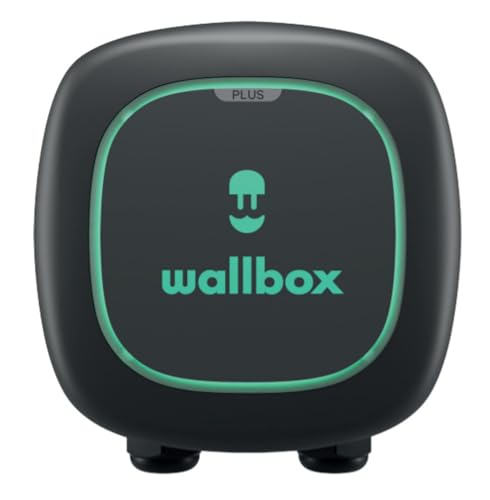
- 48A Level 2 charging
- UL listed with 3-year warranty
- Includes mount, holster, and guide
Best For: Commercial installs and users prioritizing a high-output smart charger
Emporia Flexible Smart Charger

- 48A hardwired or 40A plug-in
- Wi‑Fi energy tracking and scheduling
- UL listed and ENERGY STAR certified
Best For: Drivers wanting a versatile smart charger with broad EV compatibility
Enphase Solar-First Choice
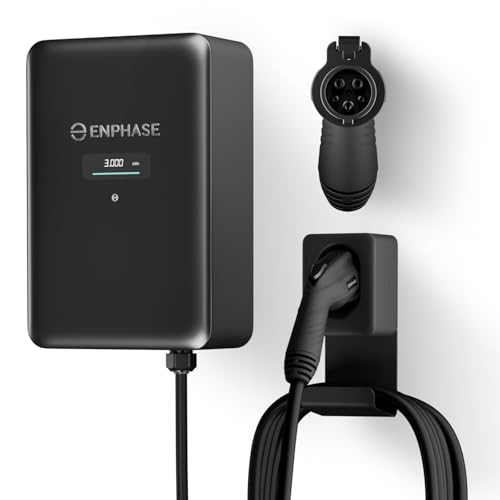
- Direct solar system connectivity
- 40A, up to 9.6 kW charging
- 5-year warranty with UL certification
Best For: Solar-equipped homes needing a certified smart charger
Solar-Ready Smart EV Charger
EMPORIA Level 2 EV Charger for Tesla

- Native NACS connection for Tesla drivers
- 2.4 GHz WiFi smart charging and energy data
- Up to 48A hardwired or 40A plug-in use
Best For: Tesla owners who want smart charging and flexible installation
Networked Home Charger

- ChargePoint app control for schedules and reminders
- J1772 connector for all non-Tesla EVs
- Indoor or outdoor use with UL certification
Best For: Non-Tesla drivers who want a trusted smart home charger
Weatherproof Smart Charger

- App control for scheduling and power settings
- IP66/NEMA 4 weatherproof hardwired design
- 25ft cable with up to 48A output
Best For: Non-Tesla owners wanting a weatherproof hardwired smart charger
Smart Load-Saving Home Charger
EMPORIA Pro Level 2 EV Charger with PowerSmart

- PowerSmart load balancing helps avoid panel upgrades
- App scheduling and usage tracking support smarter charging
- Includes Emporia Vue for whole-home energy insight
Best For: Homeowners who want fast charging plus detailed energy monitoring
Connected NACS Wallbox
Wallbox Pulsar Plus Level 2 EV Charger 40 Amp
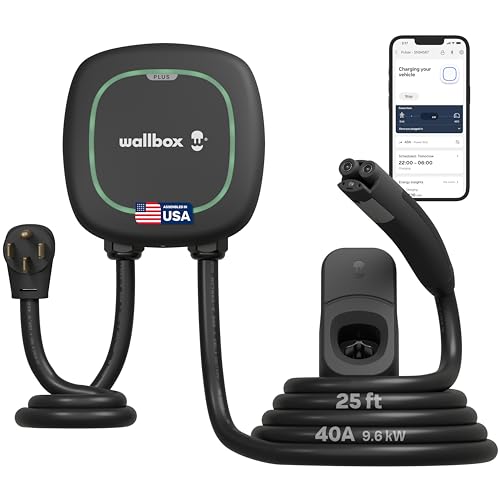
- 40A / 9.6 kW output for steady home charging
- Wi-Fi and Bluetooth app control for scheduling and monitoring
- UL and Energy Star certified with weather-resistant build
Best For: Tesla and NACS drivers who want app-controlled home charging
High-Power AI Charger
Autel MaxiCharger Level 2 EV Charger up to 80 Amp

- Up to 80A / 19.2 kW for very fast charging
- AI app scheduling and real-time energy monitoring
- Dual-network connectivity plus tamper protection
Best For: Users who want the fastest charging and advanced smart controls
ELECQ Solar-Ready Pick – Smart Level 2 EV Charger, 40A Plug-In
If you want smart EV chargers with solar integration for a home setup, the ELECQ model stands out for combining plug-in convenience, active load management, and multiple solar charging modes. It delivers up to 40 amps through a NEMA 14-50 plug, adds app control over Wi‑Fi and Bluetooth, and is built to handle outdoor use with strong safety protections.
Best For: Homeowners who want a plug-in Level 2 charger with solar-aware charging and load balancing support.
Pros:
- Up to 40A output with a NEMA 14-50 plug for faster Level 2 charging.
- Three flexible solar charging modes plus support for the Elecq Power Monitor.
- Wi‑Fi, Bluetooth, app scheduling, and real-time energy tracking.
- CSA certified, UL compliant, and rated for indoor or outdoor use.
Cons:
- Dynamic load balancing requires the Elecq Power Monitor.
- Hardwiring is recommended if you do not already have a 240V outlet.
- Solar features depend on your home energy setup.
Overall, this is a strong fit if you want a future-proof home charger that blends solar integration with practical smart controls and safety-focused engineering.
Wallbox Commercial Option – Pulsar Plus 48A Smart Wallbox
For buyers comparing smart EV chargers with solar integration, this Wallbox Pulsar Plus listing is more about commercial-grade smart charging than built-in solar features. It focuses on a 48-amp J1772 output, UL listing, and an installation-ready package designed for professional use.
Best For: Commercial applications or advanced home users who want a high-output smart charger with a polished install package.
Pros:
- 48A output for fast Level 2 charging.
- UL listed with a 3-year parts warranty.
- Includes wall mount bracket, holster, and installation guide.
- J1772 connector works with standard North American EVs.
Cons:
- No solar integration features are listed in the supplied details.
- Best suited to professional or commercial applications.
- Hardware-focused listing with limited smart feature specifics provided.
This is a solid choice if your priority is dependable, higher-amperage smart charging in a commercial-style setup rather than solar-linked energy management.
Emporia Flexible Smart Charger – 48A WiFi EV Station
The Emporia Level 2 charger is a practical option in the smart EV chargers with solar integration conversation, especially if you want app-based charging control and a system that can be paired with solar at the home-energy level. It offers up to 48 amps hardwired or 40 amps on a NEMA 14-50 plug, along with Wi‑Fi monitoring and scheduling.
Best For: EV owners who want a widely compatible smart charger with flexible installation and energy tracking.
Pros:
- Up to 48A hardwired or 40A with the included NEMA 14-50 setup.
- Wi‑Fi connectivity for real-time energy data and scheduling.
- UL listed and ENERGY STAR certified for added peace of mind.
- J1772 connector supports a wide range of North American EVs.
Cons:
- Solar integration is not specifically listed in the supplied notes.
- Professional installation is recommended for best results.
- App features are focused on charging control rather than advanced energy automation.
Emporia is a strong all-around smart charger if you want flexible installation, broad compatibility, and utility-friendly charging controls without needing a more specialized solar-linked system.
Enphase Solar-First Choice – IQ EV Charger 2, 40A
If you specifically want smart EV chargers with solar integration, the Enphase IQ EV Charger 2 is the most directly aligned choice here. It connects with home solar systems, supports app-based charging modes, and includes revenue-grade metering for utility rebate eligibility, making it a strong fit for energy-conscious households.
Best For: Homeowners with solar who want a compact, certified Level 2 charger with app control and utility-ready metering.
Pros:
- Solar charging support designed to work with home solar systems.
- Up to 9.6 kW / 38 miles per hour charging with a 40A output.
- Revenue-grade meter may help with utility rebate programs.
- 5-year warranty plus UL and Energy Star certification.
Cons:
- Limited to 40A output rather than higher 48A charging.
- No hardwired configuration is described in the supplied details.
- Best value depends on whether you have a compatible solar setup.
This charger is the clearest solar-first pick in the group, especially if you want reliable home charging that can make better use of your own clean energy.
Solar-Ready Smart EV Charger – EMPORIA Level 2 EV Charger for Tesla
If you want smart EV chargers with solar integration-friendly monitoring features, the EMPORIA Level 2 EV Charger is a strong fit for Tesla drivers who want app-based control and detailed energy tracking. It supports NACS directly, so you do not need an adapter for compatible Tesla vehicles, and it offers both plug-in and hardwired installation options depending on your setup.
Best For: Tesla owners who want a NACS charger with smart scheduling and real-time energy data.
Pros:
- Native NACS connection for Tesla and other compatible vehicles, with no adapter needed.
- Smart charging over 2.4 GHz WiFi with real-time energy data and charging schedules.
- Up to 48A hardwired output, or 40A through the NEMA 14-50 plug configuration.
- UL listed and ENERGY STAR certified for added peace of mind.
Cons:
- Professional installation is recommended, especially for hardwired use.
- Smart features require a 2.4 GHz WiFi connection.
This charger stands out if you want a Tesla-ready home unit with useful energy monitoring and flexible install choices. It is a practical option when you care about smart scheduling and a clean setup, even if it is not a dedicated solar controller.
Networked Home Charger – ChargePoint HomeFlex Level 2
For shoppers comparing smart EV chargers with solar integration-friendly home energy habits, the ChargePoint HomeFlex is a reliable Level 2 option with app control and a long-running charging network behind it. It uses a J1772 connector for non-Tesla EVs, plugs into a 240V NEMA 14-50 outlet, and supports managed charging through the ChargePoint Mobile App.
Best For: Non-Tesla EV owners who want app-based charging control and a trusted brand.
Pros:
- ChargePoint Mobile App lets you manage charging, reminders, and charging info.
- J1772 connector works with all non-Tesla EVs.
- UL-certified and suitable for indoor or outdoor installation by an electrician.
- Delivers up to 9× faster charging than a 120V outlet.
Cons:
- Tesla vehicles need an adapter.
- Requires a 40A or 50A circuit with a 14-50 receptacle.
The HomeFlex is a straightforward choice if you want dependable smart charging without unnecessary complexity. It is especially appealing for drivers who already have, or plan to install, a compatible 240V outlet and want a well-supported home charger.
Weatherproof Smart Charger – EVIQO 48A WiFi EV Charger
If you are shopping for smart EV chargers with solar integration-friendly timing and load management habits, the EVIQO Level 2 EV Charger offers strong app control and a weatherproof build. It is a hardwired J1772 charger with WiFi app features for starting and stopping sessions, setting current, tracking costs, and scheduling off-peak charging.
Best For: Non-Tesla EV owners who want a hardwired outdoor-capable charger with app controls.
Pros:
- Smart app control over start/stop, charging current, reminders, and usage tracking.
- IP66/NEMA 4 weatherproof enclosure for indoor or outdoor installation.
- Up to 48A output on a dedicated 60A circuit, with a 50A option on a 70A circuit.
- Extra-long 25ft charging cable and easy-access side reset button.
Cons:
- Hardwired installation requires a licensed electrician.
- Smart features require 2.4 GHz WiFi.
- J1772 plug needs an adapter for Tesla use.
The EVIQO is the best fit here if you want a rugged charger with detailed app controls and a long cable reach. It is a practical pick for garages or outdoor spaces where weather resistance and scheduling matter.
Smart Load-Saving Home Charger – EMPORIA Pro Level 2 EV Charger with PowerSmart
If you want smart EV chargers with solar integration-style energy awareness for a home setup, the EMPORIA Pro stands out for its PowerSmart load balancing and included Vue monitoring. It is built to charge quickly without requiring a panel upgrade, while also helping you track usage, automate schedules, and avoid peak rates through the app.
Best For: Homeowners who want a fast, energy-aware charger that works with an existing electrical panel and provides detailed home usage insight.
Pros:
- PowerSmart technology automatically balances load so you can charge at the maximum speed possible without a panel upgrade.
- Emporia app support lets you schedule charging, monitor usage in real time, and avoid peak electricity rates.
- Includes Emporia Vue for deeper visibility into whole-home energy use.
- Flexible setup with NEMA 14-50 plug or hardwired installation options.
Cons:
- Best suited to homes already using Emporia’s energy ecosystem if you want the full monitoring experience.
- Requires installation planning, especially for hardwired setups.
This is a strong choice if you want a charger that does more than just add miles: it helps you understand and manage household energy use while staying simple to operate day to day. The weather-resistant build and US-based support add confidence for long-term home use.
Connected NACS Wallbox – Wallbox Pulsar Plus Level 2 EV Charger 40 Amp
For smart EV chargers with solar integration-minded control features, the Wallbox Pulsar Plus is a compact Level 2 option that focuses on scheduling, energy management, and everyday convenience. Its Wi-Fi and Bluetooth app controls make it easy to optimize charging times, while Static Load Management helps share available power in homes with multiple charging points.
Best For: Tesla and other NACS-compliant EV owners who want a reliable, app-controlled charger for indoor or outdoor use.
Pros:
- Delivers 40 amps and 9.6 kW for a consistent daily charging experience.
- Wi-Fi and Bluetooth connectivity let you monitor, control, and schedule charging from the app.
- Static Load Management helps balance power when multiple charging points share the same system.
- UL and Energy Star certified with weather-resistant construction for indoor or outdoor use.
Cons:
- Best suited to homes already equipped with a compatible NEMA 14-50 outlet.
- Lower output than higher-amperage chargers if you need the fastest possible refill times.
This charger is a practical fit if you want a straightforward, dependable smart unit with good app features and broad Tesla/NACS compatibility. The compact design and certified build make it easy to recommend for everyday residential charging.
High-Power AI Charger – Autel MaxiCharger Level 2 EV Charger up to 80 Amp
If you are comparing smart EV chargers with solar integration-style scheduling and strong energy controls, the Autel MaxiCharger is built for serious home or light commercial use. Its AI-enabled app can schedule charging around time-of-use utility rates, while real-time energy data, remote current adjustment, and remote start/stop give you precise control.
Best For: Drivers and property owners who want maximum charging speed, advanced app control, and rugged long-term reliability.
Pros:
- Up to 80A and 19.2 kW output can add about 70 miles of range per hour.
- AI-powered app helps schedule charging around utility rates and monitor energy data.
- Hardwired design supports maximum power and dependable operation.
- Dual-network Wi-Fi + Wi-SUN, tamper resistance, and remote locking support 24/7 reliability.
Cons:
- Professional electrician installation is recommended for the hardwired setup.
- To reach full 80A output, a 100A circuit is recommended.
This model is the most future-ready pick here if you need very fast charging and advanced controls. It also stands out for its long warranty, certification, and features that suit both demanding homeowners and managed charging setups.
How We Picked the Best Smart EV Chargers with Solar Integration
We focused on chargers that offer the right mix of smart controls, load management, and solar-aware charging features. Priority went to models with app scheduling, monitoring, robust safety certifications, strong amperage options, and installation flexibility for both plug-in and hardwired setups.
Because solar integration can mean different things depending on the charger and inverter ecosystem, we also looked for products that support energy management features well enough to help homeowners align charging with available solar power or off-peak electricity.
Quick Comparison: What Matters Most
When comparing Smart EV Chargers with Solar Integration, start with charging speed, connector type, and installation requirements. Then narrow your shortlist by app quality, load balancing, Wi-Fi stability, and whether the unit supports energy-aware scheduling or solar surplus charging.
- Up to 40A: Good for overnight charging and homes with moderate electrical capacity.
- 48A or higher: Better for faster top-ups and drivers with heavier daily mileage.
- NACS or J1772: Match your vehicle connector now and in the future.
- Solar and load management: Helpful if you want charging to respond to household usage or solar generation.
- Plug-in vs hardwired: Choose based on installation cost, portability, and local code requirements.
Key Buying Factors for Smart EV Chargers with Solar Integration
Solar-Aware Features
Look for chargers that can coordinate with home energy systems, support scheduled charging, or integrate with monitoring tools that help you charge when solar output is highest. True solar integration can range from simple time-based automation to more advanced dynamic load control.
Electrical Capacity and Load Management
Your panel capacity matters as much as charger speed. Smart load management is especially valuable in homes with heat pumps, electric appliances, or limited service capacity, since it helps prevent overloads while still maintaining efficient charging.
Connectivity and App Control
A reliable app should let you set charging windows, track energy use, view session history, and adjust amperage when needed. For many buyers, this is the main difference between a basic EVSE and a truly smart charger.
Compatibility and Installation
Check connector type, cable length, indoor/outdoor rating, and whether the unit uses a NEMA 14-50 plug or a hardwired setup. These details affect installation cost, convenience, and where you can mount the charger.
Who Should Buy Which Smart EV Chargers with Solar Integration?
If you want the simplest route to smart charging, choose a mid-priced Wi-Fi model with scheduling and energy monitoring. If you have rooftop solar and want tighter energy control, prioritize chargers with stronger load management or ecosystem compatibility. High-mileage drivers should lean toward 48A or higher output, while Tesla owners should verify NACS support and plug style before buying.
For most households, the best choice among Smart EV Chargers with Solar Integration is the one that matches your electrical setup first, then offers the app features and automation you’ll actually use every day.
