

Smart home energy monitors compatible with Alexa make it easier to see where electricity is going and act on it fast. Whether you want whole-home visibility or simple plug-level tracking, the right setup can help you spot waste and automate savings.
In this roundup, we focus on practical options for different homes, budgets, and installation needs so you can choose a monitor that fits your energy goals and your Alexa-powered routine.
Best 10 Smart Home Energy Monitors Compatible with Alexa Picks for 2026
Whole-Home Circuit Monitor
Emporia Vue 3 whole-home energy monitor
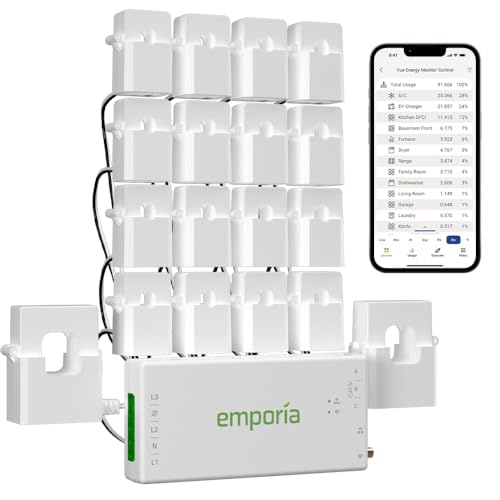
- UL Listed home energy monitor
- 16 circuit sensors included
- Tracks solar and net metering
Best For: Homeowners wanting detailed whole-panel monitoring
Smart Plug Energy Saver
Govee energy monitoring smart plug 2-pack

- Tracks power, current, and voltage
- Works with Alexa and Google Assistant
- Scheduling and group control included
Best For: Alexa users who want easy plug-level monitoring
Privacy-First Panel Monitor
SEM-Meter local-first circuit energy monitor

- 16-circuit panel monitoring
- Can run without cloud access
- Built for rental cost allocation
Best For: Home Assistant users and landlords needing local control
Mini Plug Tracker
TP-Link Tapo P115 energy monitoring plug

- Alexa, Google Home, and SmartThings support
- Energy charts and bill estimates
- Smart charging and auto-shutoff
Best For: Compact plug-level monitoring with voice control
Circuit-Level Power Tracker
Meross 18-Circuit Energy Monitor

- Monitors 18 circuits with real-time usage data
- Home Assistant support for solar surplus automation
- Local-only data with no subscriptions
Best For: Detailed circuit monitoring and local smart-home automation
Alexa Smart Plug Energy Monitor

- Works with Alexa and Google Home
- Monitors plug-in device energy use
- Includes scheduling and remote app control
Best For: Voice-controlled monitoring for plug-in appliances
Panel-Level Solar Monitor
Refoss 16-Circuit Local Energy Monitor
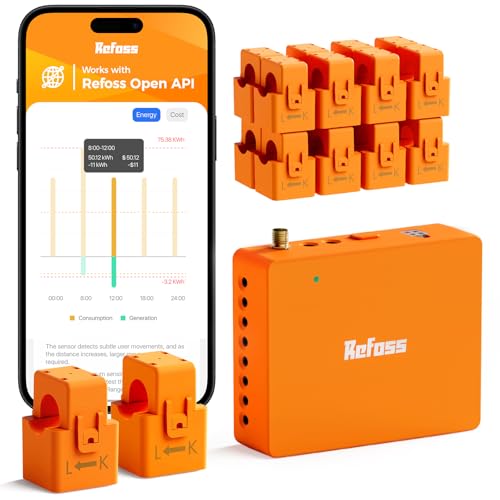
- 18-circuit monitoring with ±1% precision
- Local Web UI, Open API, MQTT, and Home Assistant
- Solar net metering and usage alerts
Best For: Detailed panel monitoring with local privacy and solar optimization
Alexa-Ready Dual Channel

- Two 80A clamp-on sensing channels
- Works with Tuya, Smart Life, and Alexa
- Bi-directional tracking for solar or backup power
Best For: Simple dual-circuit monitoring in an Alexa-friendly smart home
Local Control Solar Monitor
Refoss EM16 Native Home Assistant

- Native Home Assistant support and local Web UI
- Open API, MQTT, and no-cloud operation
- Solar automation with ±1% monitoring accuracy
Best For: Privacy-focused smart homes with Home Assistant and solar automation
Whole-Home Circuit Monitor – Emporia Vue 3 whole-home energy monitor
If you want smart home energy monitors compatible with Alexa for whole-house visibility, the Emporia Vue 3 is built for detailed circuit-level tracking. It installs in the main panel with clamp-on sensors and gives you real-time electricity data, including solar and net metering, through the Emporia Energy app.
Best For: Homeowners who want UL-listed whole-home monitoring with circuit-level insight and solar support.
Pros:
- UL Listed and CE Listed for added safety confidence
- Includes sixteen 50A branch sensors for major appliances and critical loads
- Supports real-time monitoring plus solar and net metering
- Works with 2.4 GHz Wi-Fi and the Emporia Energy app on iPhone, Android, and web
Cons:
- Requires installation in the electrical panel
- Needs 2.4 GHz Wi-Fi and internet access
- Alexa compatibility is not listed in the supplied details
The Vue 3 stands out when you want actionable home energy data rather than just basic plug-level readings. It is a strong pick for tracking where electricity goes, spotting savings opportunities, and monitoring high-use appliances from one system.
Smart Plug Energy Saver – Govee energy monitoring smart plug 2-pack
For a simple entry point into smart home energy monitors compatible with Alexa, this Govee smart plug adds real-time power tracking to ordinary plug-in devices. It also supports voice control, scheduling, and remote access through the Govee Home app, making it easy to manage everyday appliances.
Best For: People who want affordable plug-in energy monitoring with Alexa voice control.
Pros:
- Real-time monitoring of power, current, and voltage
- Works with Alexa and Google Assistant for voice control
- Scheduling and group control help automate routines
- FCC and ETL certified with fire-resistant materials
Cons:
- Does not support 5G Wi-Fi
- Only works for plug-in devices, not hardwired loads
- Limited to 15A / 1800W devices
This is a practical choice if you want to monitor a coffee maker, lamp, or similar appliance without installing panel hardware. It is best viewed as a convenient, everyday energy-saving tool rather than a whole-home monitor.
Privacy-First Panel Monitor – SEM-Meter local-first circuit energy monitor
If privacy matters as much as detailed usage data, this smart home energy monitor is a strong pick for advanced panel-level tracking. It supports 16 circuit sensors, real-time cost tracking, solar/net metering, and can run on your own MQTT server without cloud access when paired with Home Assistant.
Best For: Tech-savvy homeowners, landlords, and Home Assistant users who want local-first energy monitoring.
Pros:
- Monitors 16 circuits with 50A sensors and 2 included 200A sensors
- Supports local MQTT-only operation with no cloud required
- Tracks real-time usage and electricity costs by time-of-use pricing
- Built for rental homes and shared apartments with allocation-friendly reporting
Cons:
- Home Assistant with MQTT is required for cloud-free use
- Installation is in the circuit panel
- Alexa compatibility is not listed in the supplied details
This model is especially appealing if you want granular billing, privacy, and flexible automation in one package. It is less of a casual consumer gadget and more of a serious monitoring system for power users.
Mini Plug Tracker – TP-Link Tapo P115 energy monitoring plug
Among smart home energy monitors compatible with Alexa, the TP-Link Tapo P115 is a compact plug-in option that makes energy tracking straightforward. It provides clear usage statistics, estimated billing, scheduling, and voice control through Alexa, Google Home, and the Tapo app.
Best For: Users who want a compact Alexa-compatible smart plug with energy reporting and automation.
Pros:
- Tracks energy use with charts and simple statistics
- Supports Alexa, Google Home, and Samsung SmartThings
- Includes scheduling, smart charging, and auto-shutoff features
- ETL, FCC, and RoHS certified
Cons:
- 2.4G Wi-Fi only
- Works only with plug-in devices up to 15A / 1800W
- Not suitable for hardwired circuits or whole-home monitoring
The Tapo P115 is a strong fit if you want a small, easy-to-use energy monitor for one appliance at a time. It combines practical energy reporting with the voice assistant support many smart homes already use.
Solar-Ready Whole-Home Monitor – Smart Home Energy Monitor with CTs
If you want smart home energy monitors compatible with Alexa-adjacent automation platforms and a setup built for more than basic tracking, this model focuses on whole-home visibility. It measures voltage, current, power, and total energy with configurable reporting, and its bi-directional monitoring makes it especially useful for solar and battery storage homes.
Best For: Homes with solar or battery storage that need detailed whole-home and export tracking.
Pros:
- Bi-directional monitoring tracks both household use and power exported to the grid.
- Class 1 accuracy and configurable reporting support reliable, detailed energy data.
- Quick installation with pluggable terminals and split-core CTs.
- Smart Life app support adds alerts and automation scene options.
Cons:
- Designed for a single-phase 3-wire system, so compatibility is system-specific.
- Wi-Fi version is limited to 2.4GHz networks.
- Alexa support is not listed in the supplied notes.
This is a strong pick if your priority is deeper energy management rather than plug-level convenience. Its HEMS features, dynamic load balancing support, and zero grid export mode make it a better fit for households trying to actively manage solar output and consumption.
Circuit-Level Power Tracker – Meross 18-Circuit Energy Monitor
Among smart home energy monitors compatible with Alexa-friendly smart homes, this Meross unit stands out for circuit-level detail and local control. It monitors up to 18 circuits in real time, adds solar surplus detection, and works with Home Assistant for users who want deeper automation without subscriptions.
Best For: Households that want detailed circuit monitoring, local data, and solar automation.
Pros:
- Tracks 2 main circuits plus 16 branch circuits for highly detailed energy insight.
- Home Assistant support enables solar surplus detection and automation for high-use appliances.
- Local data storage avoids subscriptions and keeps energy data off the cloud.
- Smart alerts can flag abnormal spikes, leaks, or faulty appliances.
Cons:
- Installation is more involved than a plug-in monitor because it clamps at the panel.
- Compatibility depends on supported wiring types, including no Delta systems.
- Alexa compatibility is not specifically stated in the supplied notes.
This is the most analysis-heavy option in the group, making it ideal if you want to understand where power is actually being used. The 5-year data history, exportable reports, and ETL/UL-oriented safety positioning make it a practical long-term monitoring upgrade.
Alexa Smart Plug Energy Monitor – Emporia 4-Pack WiFi Outlet
If you want smart home energy monitors compatible with Alexa for easy voice control at the outlet level, this Emporia 4-pack is the simplest fit here. Each plug monitors energy use, supports scheduling, and lets you control everyday devices from the app or by voice through Alexa and Google Home.
Best For: Plug-in appliances and rooms where voice control, scheduling, and basic energy tracking matter most.
Pros:
- Works with Alexa and Google Home for voice control.
- Tracks energy use while also enabling remote on/off control.
- Built-in scheduling helps automate lights, fans, coffee makers, and more.
- 4-pack gives coverage for multiple devices at once.
Cons:
- Limited to 10A continuous load and 15A peak for up to 1 hour per day.
- Only supports 2.4GHz Wi-Fi, not 5GHz.
- Best for plugged-in devices, not whole-home monitoring.
This is the most straightforward choice for everyday smart-home use because it combines energy monitoring with hands-on control. It is a practical way to cut standby waste and add voice-enabled automation without touching your electrical panel.
Panel-Level Solar Monitor – Refoss 16-Circuit Local Energy Monitor
If you want a smart home energy monitor compatible with Alexa-style smart home setups while keeping your data local, this Refoss panel monitor is built for deep circuit-level visibility. It tracks up to 18 circuits with professional ±1% precision, supports solar net metering, and adds local Web UI, Open API, MQTT, and Home Assistant integration for hands-on control without a cloud subscription.
Best For: Homeowners who want detailed panel-level monitoring, local privacy, and solar optimization.
Pros:
- Monitors 2 main circuits plus 16 branch circuits with clamp-on sensors
- Local Web UI, Open API, MQTT, and Home Assistant support keep data on your network
- Built for solar self-consumption, peak management, and usage alerts
- Minute-to-yearly history plus CSV export with no subscription fees
Cons:
- Best suited to users comfortable working inside an electrical panel
- Alexa support is not listed in the supplied notes
- More advanced than a simple plug-and-play appliance monitor
Overall, this is the strongest choice for buyers who want broad circuit coverage and local-first energy monitoring. If your priority is privacy, solar efficiency, and long-term usage analysis, it stands out.
Alexa-Ready Dual Channel – Tuya 2×80A Energy Monitor
This smart home energy monitor compatible with Alexa through Tuya and Smart Life is a practical pick if you want straightforward circuit tracking without a complicated install. It uses two clamp-style 80A sensing channels to show real-time power, voltage, current, and power factor, while the app stores historical data by hour, day, month, and year.
Best For: Households that want simple dual-circuit monitoring with Alexa ecosystem compatibility.
Pros:
- Two independent 80A channels for major appliances or separate circuits
- Works with Tuya/Smart Life and supports Amazon Alexa and Google Home Assistant
- Bi-directional tracking helps with solar or backup-power setups
- Clamp-on installation avoids cutting or modifying wires
Cons:
- Only monitors two channels, so it is not ideal for whole-panel coverage
- Feature set depends on Tuya or Smart Life app use
- No local control or open API is mentioned in the supplied notes
For buyers who mainly need a simple, app-based monitor with voice-assistant ecosystem compatibility, this model offers solid everyday visibility. It makes the most sense when you want a cleaner install and only need to watch a couple of heavy loads.
Local Control Solar Monitor – Refoss EM16 Native Home Assistant
For shoppers comparing smart home energy monitors compatible with Alexa and broader smart home platforms, this Refoss unit stands out for local-first control and automation flexibility. It offers native Home Assistant integration, a built-in Web UI, Open API, MQTT, and solar-focused automation to help route surplus power to appliances instead of feeding it back at low value.
Best For: Privacy-minded users who want local control, Home Assistant integration, and solar automation.
Pros:
- Native Home Assistant support with no firmware flashing required
- Built-in Web UI, Open API, and MQTT for local control
- Tracks voltage, current, active power, and power factor with ±1% accuracy
- Supports solar optimization, alerts, and up to 5 years of stored daily data
Cons:
- Alexa compatibility is not stated in the supplied notes
- Designed for panel installation, so setup is more involved than a plug-in device
- Advanced automation features may be more than casual users need
This is a strong fit if you want a monitor that stays local and plugs into a more advanced home automation setup. Its combination of privacy, accuracy, and solar management makes it especially useful for energy-conscious households.
How We Picked These Smart Home Energy Monitors Compatible with Alexa
We prioritized Alexa compatibility, measurement accuracy, installation flexibility, and usefulness for real-world energy management. We also looked at whether each option supports whole-home monitoring, individual circuits, smart plugs, solar tracking, local data access, or automation features that make the hardware more valuable over time.
Quick Comparison: Whole-Home Vs Plug-Level Monitoring
Whole-home monitors are best if you want a complete picture of household usage, appliance loads, and circuit-level patterns. Smart plugs with energy monitoring are simpler to install and work well for a few high-use devices such as heaters, fans, entertainment setups, or office equipment. If you want broader insights and more advanced tracking, choose a panel-based system; if you want convenience and fast setup, a smart plug is often enough.
Key Buying Factors for Smart Home Energy Monitors Compatible with Alexa
Compatibility and Automation
Look for reliable Alexa support so you can check usage, trigger routines, or pair energy data with voice commands and smart-home scenes. Some products also work with Google Home or Home Assistant, which is helpful if your setup is mixed.
Monitoring Scope
Decide whether you need whole-home monitoring, circuit-level insight, solar production and surplus tracking, or just outlet-level consumption. The right scope matters more than extra features you may never use.
Installation and Electrical Fit
Check whether the monitor supports your panel type, circuit count, amperage needs, and electrical system configuration. If you are renting or want minimal setup, smart plugs may be the safer choice.
Data Access and App Quality
Useful energy monitors should provide clear real-time readings, historical trends, cost estimates, and easy-to-read mobile dashboards. Local storage or open API support can be a major plus for privacy-minded buyers and advanced users.
Who Should Buy Which Smart Home Energy Monitors Compatible with Alexa?
Choose a whole-home or circuit-level monitor if you want deeper insight into HVAC, major appliances, or solar performance. Choose a smart plug if you mainly want to track a few devices and automate them through Alexa. If privacy and local control matter most, favor models with open APIs, web interfaces, or local storage. For most buyers, the best Smart Home Energy Monitors Compatible with Alexa are the ones that balance accuracy, setup complexity, and the kind of data you will actually use.
