

Tracking electricity use across one rental or an entire portfolio can help cut waste, spot problem appliances, and support fair billing. The best monitors make it easier to see what is happening in real time without adding much maintenance.
Below, we focus on smart home energy monitors for rental properties that balance visibility, install flexibility, and practical app or local-data features for owners and managers.
Best 10 Smart Home Energy Monitors for Rental Properties Picks for 2026
Renter-Friendly Circuit-Level Tracker
Rental Homes & Shared Apartments Monitor

- 16 circuit sensors for multi-room tracking
- Custom rates for time-of-use billing
- Home Assistant and MQTT support
Best For: Landlords managing shared electricity usage
Utility-Grade Panel Monitor

- Mains plus up to 16 branch circuits
- Custom alerts and peak-demand tools
- UL Listed and CE marked
Best For: Managed rentals needing certified panel monitoring
Privacy-First Local Monitor
Open API Home Assistant Energy Meter

- Local web UI, API, and MQTT access
- Native Home Assistant integration
- 16 branch sensors plus 2 main CTs
Best For: Owners who want local-only control and automation
Panel-Level Solar Monitor
Meross 18-Circuit Home Assistant Monitor

- 18-circuit monitoring with 2 main and 16 branch circuits
- ETL-certified and UL 61010 compliant
- Local data, no subscriptions, Home Assistant support
Best For: Landlords or property managers who need detailed circuit-level monitoring
Whole-Home Utility Tracker
Eyedro Real-Time Power Monitor

- Real-time whole-home and solar monitoring
- WiFi or wired Ethernet connectivity
- No subscription with MyEyedro cloud access
Best For: Owners who want simple whole-home tracking with solar support
Local Data Circuit Monitor
Meross EM16 18-Circuit Monitor
- 18-circuit monitoring with 5 years of data storage
- Local-only data with no subscriptions
- Home Assistant support and smart alerts
Best For: Rental owners who want detailed monitoring with local privacy
Local-First Monitoring
Refoss 18-Circuit Energy Monitor
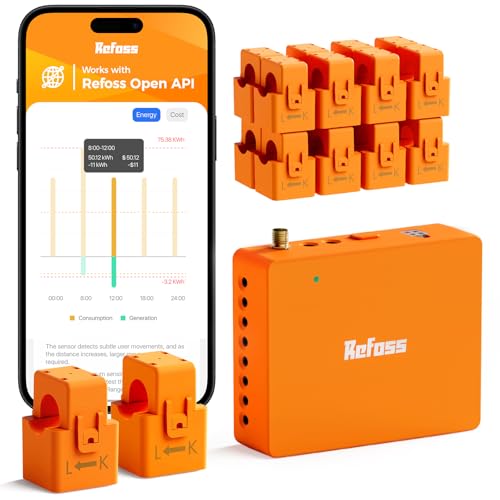
- Monitors 18 circuits with stated ±1% precision.
- Local Web UI, Open API, MQTT, and WebSocket support.
- Stores 5 years of daily data with CSV export.
Best For: Owners who want detailed local monitoring and Home Assistant support.
Simple Dual-Channel Tracking

- Two 80A channels for major circuits or appliances.
- Bi-directional tracking supports solar and backup setups.
- Clamp sensors simplify installation without wire cutting.
Best For: Landlords who want basic app-based monitoring for two loads.
Certified Whole-Home Choice
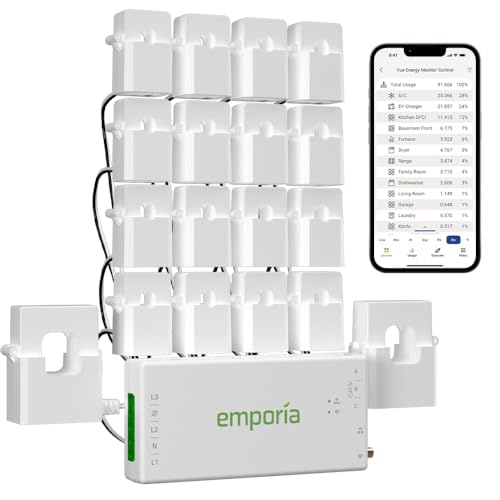
- UL Listed and CE Listed for safety.
- Includes 16 branch sensors for key household loads.
- Supports solar, net metering, and cost-saving automation.
Best For: Rental owners who want certified whole-home monitoring and strong app history.
Renter-Friendly Circuit-Level Tracker – Rental Homes & Shared Apartments Monitor
If you need smart home energy monitors for rental properties, this circuit-level monitor is built for detailed allocation and cost tracking. It uses clamp-on sensors for easy panel installation, supports multiple electrical systems, and gives real-time usage data with app history so you can see where power is going across bedrooms, common areas, and major appliances.
Best For: Landlords or property managers who want per-circuit electricity tracking and transparent bill allocation in rentals or shared homes.
Pros:
- Includes 16 circuit sensors for monitoring multiple rooms or appliances
- Supports customizable rate templates for peak, off-peak, and holiday pricing
- Works with Home Assistant and can run via MQTT for local-only use
- Provides real-time, app-based power and cost tracking
Cons:
- Panels with busbar-only access need separate flexible sensors
- Setup is panel-based, so it is not a simple plug-in device
- Best value comes from properties that actually need multiple circuit measurements
Overall, this is a strong fit when the goal is fair, transparent energy allocation across several tenants or spaces. Its combination of branch-level monitoring and cost templates makes it especially practical for rental billing workflows.
Solar-Ready Simple Monitor – Bi-Directional Wi-Fi Energy Tracker
For smart home energy monitors for rental properties where you want straightforward whole-home tracking, this Wi-Fi model keeps installation simple with two split-core CTs and configurable reporting. It is also bi-directional, so it can track both usage and export, which matters if the property has solar or battery storage.
Best For: Property owners who want a compact, easy-to-install monitor for whole-home usage and solar export tracking.
Pros:
- Uses only two 120A CTs for a simpler setup
- Tracks both consumption and power export for solar systems
- Compatible with the Smart Life app for alerts and automation scenes
- Supports dynamic load balancing and zero grid export mode
Cons:
- Measures whole-home usage rather than individual branch circuits
- Less suited to tenant-level billing than multi-circuit systems
- Limited to single-phase 3-wire system support
This model makes sense when the main need is reliable overall energy visibility, not detailed submetering. It is especially useful in rentals with solar where export tracking and automation are part of the plan.
Utility-Grade Panel Monitor – Siemens Inhab Circuit Tracker
This Siemens Inhab model is a strong option for smart home energy monitors for rental properties when you want panel-level visibility with a trusted brand behind it. It monitors both mains and up to 16 branch circuits, sends mobile app alerts, and adds advanced energy features that can help with peak demand and load management.
Best For: Rentals that need a tested, safety-certified monitor with both whole-home and circuit-level visibility.
Pros:
- Monitors up to 16 branch circuits plus main sensors
- Offers custom energy notifications for unusual usage
- Includes advanced features like time-of-use and peak demand management
- CE marked and UL Listed for the US and Canada
Cons:
- USA and Canada app support only
- Requires panel installation rather than simple outlet use
- May be more monitor than needed for small single-unit rentals
In practice, this is a good fit for landlords who want detailed monitoring with a more established compliance profile. Its mix of safety certification and advanced energy controls makes it appealing for managed properties.
Privacy-First Local Monitor – Open API Home Assistant Energy Meter
For smart home energy monitors for rental properties, this Refoss unit stands out if you want local control and no cloud dependency. It offers a built-in web UI, open API, and MQTT support, plus native Home Assistant integration, so landlords can manage energy data inside their own network even if the internet goes down.
Best For: Property owners who prioritize privacy, local automation, and Home Assistant integration.
Pros:
- Works locally with web UI, open API, and MQTT
- Native Home Assistant support with no firmware flashing
- Supports solar net metering and surplus solar automation
- Provides 16 branch sensors plus 2 main CTs for detailed tracking
Cons:
- Panel installation is required
- Most useful for users already set up for Home Assistant or MQTT
- Advanced automation features may be unnecessary for simple rentals
This is a particularly strong choice when privacy and local reliability matter as much as measurement accuracy. It combines detailed circuit-level visibility with flexible automation for properties that need more than basic usage stats.
Panel-Level Solar Monitor – Meross 18-Circuit Home Assistant Monitor
If you want smart home energy monitors for rental properties with circuit-level visibility, this Meross unit is built for detailed tracking without subscription costs. It monitors two main circuits plus 16 branch circuits, shows real-time usage from anywhere, and can help flag abnormal spikes before they turn into expensive surprises.
Best For: Landlords or property managers who want local, detailed energy monitoring with Home Assistant automation support.
Pros:
- Monitors 18 circuits total, including 2 main circuits and 16 branch circuits.
- ETL-certified and compliant with UL 61010 testing standard.
- Local data with no subscriptions, plus Open API and Home Assistant support.
- Smart alerts can help catch spikes, leaks, and faulty appliances early.
Cons:
- Requires installation inside the panel, so it is more involved than plug-in monitors.
- Best value comes when you actually use its automation and reporting tools.
For rental properties where you need more than just whole-home totals, this Meross model offers a strong mix of safety, visibility, and automation. It is especially useful if you want to analyze usage by circuit and keep all data local.
Whole-Home Utility Tracker – Eyedro Real-Time Power Monitor
For smart home energy monitors for rental properties, the Eyedro is a practical whole-home option when you want clear usage data without a complicated setup. It tracks consumption and production in real time, works over WiFi or Ethernet, and shows energy use in dollars, watts, amps, and volts through the MyEyedro cloud.
Best For: Owners who want straightforward whole-home or solar monitoring with wired or wireless connectivity.
Pros:
- Real-time whole-home monitoring with solar and net metering support.
- Includes two 200A sensors, Ethernet cable, and power adapter.
- Works with WiFi or wired Ethernet and uses MyEyedro cloud access with no subscription.
- Displays usage in dollars, watts, amps, and volts for easy interpretation.
Cons:
- A single unit cannot break out grid usage and solar generation at the same time.
- Net metering analysis requires two EYEDRO-HOME meters.
If you need a reliable, easy-to-read monitor for a rental property, Eyedro is a solid pick for basic whole-home insight. It is less about deep circuit detail and more about giving you usable, real-time energy information.
Local Data Circuit Monitor – Meross EM16 18-Circuit Monitor
This Meross option is a strong fit for smart home energy monitors for rental properties when you want circuit-level oversight and local control. It supports 18 circuits, stores up to 5 years of data, and sends smart alerts for unusual usage spikes so you can spot problems early.
Best For: Rental owners who want detailed circuit monitoring, local data, and Home Assistant automation.
Pros:
- Tracks 2 main circuits plus 16 branch circuits for precise visibility.
- Local data storage with no subscriptions or cloud lock-in.
- Home Assistant support can help automate high-use loads using solar surplus.
- Smart alerts and historical charts make usage trends easier to review.
Cons:
- Panel installation is more hands-on than a simple plug-in meter.
- Designed for compatible US electrical systems, so fit depends on your panel type.
For landlords who want detailed monitoring without ongoing fees, this Meross model offers a balanced feature set. Its local-first approach is especially appealing if privacy and long-term data access matter.
Local-First Monitoring – Refoss 18-Circuit Energy Monitor
For smart home energy monitors for rental properties, the Refoss system is a strong fit when you want detailed circuit-level visibility without depending on a cloud account. It monitors up to 18 circuits with stated ±1% precision, includes local web access, and supports Home Assistant, making it useful for owners who need practical control, privacy, and detailed usage records.
Best For: Landlords and property managers who want local data, multi-circuit monitoring, and Home Assistant integration.
Pros:
- Tracks up to 18 individual circuits with stated ±1% precision.
- Local Web UI, Open API, MQTT, and WebSocket support reduce cloud dependence.
- Stores daily data for 5 years and supports CSV export without subscription fees.
- Works with single-phase, split-phase, and 3-phase 4-wire Wye systems.
Cons:
- More complex than a basic two-channel monitor, so installation is more involved.
- Best suited to users comfortable with panel-level hardware setup.
- Some advanced features are aimed at technical users and Home Assistant setups.
Overall, the Refoss stands out for rental-property owners who want granular circuit insight and local control rather than a subscription-based cloud platform. If you care most about detailed audits, long-term records, and automation flexibility, it offers a very complete package.
Simple Dual-Channel Tracking – Tuya/Smart Life 2×80A Monitor
Among smart home energy monitors for rental properties, this dual-channel option is a straightforward way to track two major circuits or appliances without cutting into the wiring. It works with Tuya or Smart Life, shows real-time electrical data, and adds bi-directional monitoring for homes that also use solar or backup power.
Best For: Budget-conscious landlords who want simple, app-based monitoring for two key loads.
Pros:
- Two independent 80A channels cover major circuits or high-power appliances.
- Real-time app monitoring shows power, voltage, current, and power factor.
- Bi-directional tracking helps in solar, backup, or mixed-load setups.
- Clamp-style sensors simplify installation and avoid cutting wires.
Cons:
- Only monitors two channels, so it is less comprehensive than whole-panel systems.
- Requires a 2.4GHz Wi-Fi connection and app setup through Tuya or Smart Life.
- Best for common residential setups rather than advanced multi-circuit monitoring.
This monitor makes sense when you only need to watch a couple of high-impact loads in a rental unit. It is simpler than premium panel monitors, but still gives useful visibility into usage patterns and energy flow.
Certified Whole-Home Choice – Emporia Vue 3 with 16 Sensors
If you are comparing smart home energy monitors for rental properties, the Emporia Vue 3 is built for whole-home visibility with a strong emphasis on safety and broad monitoring coverage. It is UL listed, supports solar and net metering, and includes 16 branch sensors for tracking key loads like HVAC, water heating, laundry, and cooking appliances.
Best For: Rental owners who want a certified whole-home monitor with broad circuit coverage and cloud-based history.
Pros:
- UL Listed and CE Listed for safety confidence.
- Includes sixteen 50A branch sensors for critical loads.
- Supports solar, net metering, time-of-use, and peak-demand management.
- Cloud-based app access provides 1-minute, 1-hour, and longer-term records.
Cons:
- Requires 2.4GHz Wi-Fi plus an internet connection to monitor data.
- 1-second data is only retained for 3 hours unless viewed in the app while open.
- Cloud storage is part of the system, so it is not a fully local-first solution.
The Vue 3 is a well-rounded option if safety certification and broad appliance tracking matter more than local-only control. For landlords who want dependable visibility into a whole property’s usage and solar flow, it is an easy product to justify.
How We Picked the Best Smart Home Energy Monitors for Rental Properties
For Smart Home Energy Monitors for Rental Properties, we prioritized models that can handle whole-home monitoring, multi-circuit visibility, and clear app-based reporting. We also looked for features that matter in rentals: simple installation, reliable real-time data, solar compatibility where relevant, and options for local control or open APIs for owners who want to integrate with existing systems.
We favored monitors that can help distinguish base building loads from tenant usage, since that is often the biggest challenge in rental settings.
Quick Comparison
In general, the 2-CT and whole-home models are the best fit for straightforward property-level tracking, while multi-circuit systems are better when you need to monitor individual loads such as HVAC, water heating, or shared common-area circuits. If you want more privacy or smarter integrations, choose a monitor with local storage, web UI support, or an open API.
Key Buying Factors for Smart Home Energy Monitors for Rental Properties
Monitoring Scope
Decide whether you need whole-property data or circuit-level detail. For a single rental, whole-home monitoring may be enough. For duplexes, shared houses, or properties with common utilities, circuit-level monitoring offers much better insight.
Billing and Tenant Visibility
If you plan to allocate utility costs, look for accurate current sensing, stable app history, and exportable data. That makes it easier to document usage and explain charges.
Connectivity and Data Access
Cloud apps are convenient, but local data storage, web interfaces, and open APIs can be valuable for long-term ownership and better control over privacy.
Install Complexity
Most monitors require panel access and should be installed by a qualified electrician if you are not experienced with electrical work. Check CT clamp size, breaker compatibility, and whether the system supports 120V, 240V, or solar configurations.
Solar and Bi-Directional Support
If the rental has solar, choose a monitor that can measure import and export accurately. Bi-directional tracking helps separate grid usage from solar surplus.
Who Should Buy Which Smart Home Energy Monitors for Rental Properties?
Landlords who want simple, reliable property-level monitoring should lean toward whole-home CT-based systems. Property managers overseeing larger or multi-load rentals should consider circuit-level models for more detail. If you prefer fewer cloud dependencies, pick a monitor with local storage, Home Assistant support, or an open API. For solar-equipped rentals, choose a model explicitly built for net metering or bi-directional power tracking.
In short, the right choice depends on how much detail you need, how much control you want over the data, and whether the property includes solar or multiple monitored loads.
