

Smart home energy monitors with appliance detection can show where power is really going, helping you spot waste, manage solar, and cut electric bills with less guesswork.
If you want clearer usage data, easier automation, or better visibility into specific circuits and appliances, this roundup highlights strong options for different homes and budgets.
Best 10 Smart Home Energy Monitors with Appliance Detection Picks for 2026
Whole-Home Circuit Monitor
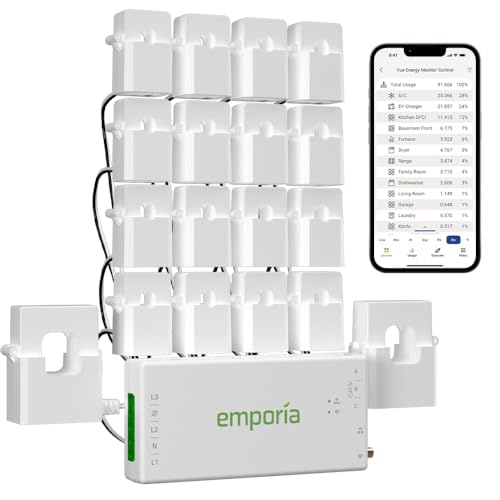
- 16 branch sensors for appliance-level circuit tracking
- Supports solar, net metering, and time-of-use automation
- UL Listed with real-time app monitoring and data export
Best For: Homeowners who want panel-level monitoring with appliance detection and solar support
Compact Plug Monitor
Kasa Matter Energy Tracking Plug

- Tracks energy usage for individual plugged-in devices
- Matter-compatible with Apple Home, Alexa, Google Home, and SmartThings
- Compact UL-certified design with 2-pack value
Best For: People who want simple per-device monitoring in a Matter-ready smart plug
Solar-Aware Panel Monitor
Meross 18-Circuit Energy Monitor

- Monitors 18 circuits for detailed appliance and load visibility
- Home Assistant support enables solar surplus automation
- Local data storage with no subscriptions
Best For: Solar homeowners and Home Assistant users who want local circuit-level monitoring
Utility-Style Panel Monitor

- Whole-home and circuit-level monitoring from the panel
- Alerts for abnormal usage like an oven left on
- Supports TOU, peak demand, excess solar, and net metering
Best For: Homeowners who want a trusted panel monitor with advanced energy management
Compact Single-Phase Monitor
Shelly EM Gen3 for real-time total power tracking

- Includes a 50A clamp for total power monitoring.
- Local 1-minute logging stores up to 10 days of data.
- Works with Alexa, Google Home, and Home Assistant.
Best For: Single-phase homes that want compact real-time monitoring and automation.
18-Circuit Solar Monitor
Meross for detailed branch-level energy tracking
- Monitors 2 main circuits plus 16 branch circuits.
- Stores up to 5 years of data with smart alerts.
- Home Assistant support helps automate solar surplus use.
Best For: Detailed circuit-level monitoring and solar-powered automation.
Local Privacy Monitor
Refoss for precise 18-circuit home energy audits
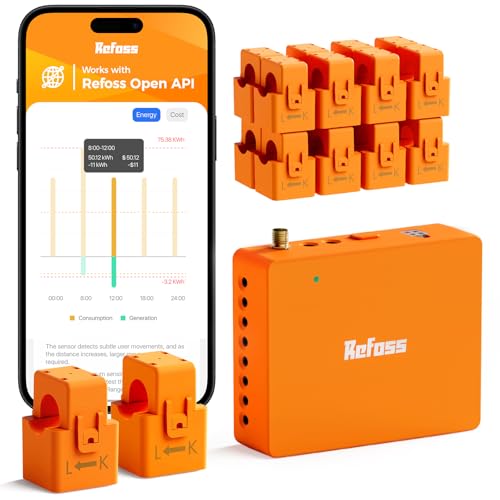
- Tracks 18 circuits with ±1% precision.
- Local Web UI, Open API, MQTT, and WebSocket support.
- Stores 5 years of data and can flag unusual appliance use.
Best For: Privacy-first users who want precise local energy auditing.
Rental Home Multi-Circuit Monitor
16-Sensor Real-Time Energy Tracking

- 16 branch sensors plus 2 main sensors
- Tracks real-time usage and electricity cost
- Works with Home Assistant and MQTT
Best For: Multi-room homes, rentals, and shared apartments
Privacy-First Solar Monitor
Local Home Assistant Energy Tracking

- No cloud required: Web UI, API, and MQTT
- Native Home Assistant and OpenClaw support
- Solar automation for EV chargers and water heaters
Best For: Privacy-minded solar homes and Home Assistant users
Three-Circuit Load Tracker
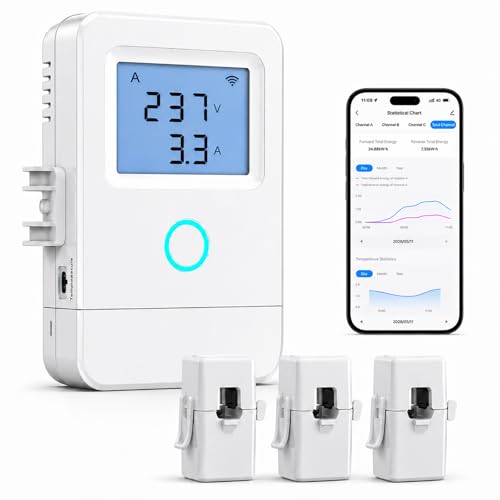
- Tracks up to 3 selected circuits
- Works with Smart Life/Tuya app
- Has temperature alerts and one remote control circuit
Best For: Users who only need a few major circuit readings
Whole-Home Circuit Monitor – Emporia Vue 3 with 16 Sensors
Emporia Vue 3 is a strong fit if you want smart home energy monitors with appliance detection at the circuit level. It uses clamp-on sensors in the electrical panel to track whole-home usage and up to 16 branch circuits, giving you practical visibility into loads like the air conditioner, furnace, water heater, washer, dryer, and range.
Best For: Homeowners who want panel-level monitoring with detailed circuit tracking and solar/net metering support.
Pros:
- Includes sixteen 50A branch sensors for monitoring major appliances and critical loads.
- Supports solar and net metering, plus automation for time-of-use and peak demand setups.
- UL Listed and CE Listed for added safety confidence.
- Real-time app, web, and mobile access with exportable cloud data.
Cons:
- Requires 2.4 GHz Wi-Fi and an internet connection.
- Install is panel-based, so it is less plug-and-play than a smart plug.
Overall, Vue 3 is best for users who want detailed electrical insight rather than just plug-level tracking. Its circuit sensors and energy-management features make it a practical choice for homes with multiple large appliances and solar setups.
Compact Plug Monitor – Kasa Matter Energy Tracking Plug
The Kasa Smart Plug is one of the simplest smart home energy monitors with appliance detection for individual devices. It tracks energy usage over time through a compact plug-in design, making it a practical way to watch smaller appliances without opening your panel.
Best For: Anyone who wants easy per-device energy monitoring in a Matter-friendly smart plug.
Pros:
- Energy monitoring helps you track usage patterns for connected appliances.
- Matter-compatible with Apple Home, Alexa, Google Home, and SmartThings.
- Compact, flame-retardant design helps avoid blocking adjacent outlets.
- UL certified with a 2-year limited warranty.
Cons:
- Limited to 15A/1800W devices.
- Works on 2.4 GHz Wi-Fi only.
This is a good pick when you want easy setup and broad smart-home compatibility more than whole-home analytics. It is best suited to a few compatible appliances rather than total household energy oversight.
Solar-Aware Panel Monitor – Meross 18-Circuit Energy Monitor
Meross is aimed at buyers who want smart home energy monitors with appliance detection and deeper automation. It monitors two main circuits and 16 branch circuits, then uses real-time alerts and Home Assistant support to help identify faulty appliances, energy leaks, and solar surplus opportunities.
Best For: Solar homeowners and Home Assistant users who want local data and circuit-level visibility.
Pros:
- Tracks 18 circuits total, including 2 mains and 16 branch circuits.
- Real-time alerts can flag abnormal spikes, faulty appliances, and energy leaks.
- Home Assistant integration supports solar surplus detection and automation.
- No subscriptions and local data storage support privacy-focused use.
Cons:
- Best features depend on Home Assistant integration.
- Panel installation is more involved than a smart plug.
Meross stands out if you want actionable energy data without cloud dependence. Its combination of circuit monitoring, local control, and solar-focused automation makes it especially useful for users trying to reduce waste and improve self-consumption.
Utility-Style Panel Monitor – Siemens Inhab Energy Monitor
The Siemens Inhab is built for homeowners who want smart home energy monitors with appliance detection at both the main and circuit level. It measures usage directly at the panel, supports up to 16 branch circuits, and adds mobile-app visibility for current and historical energy data.
Best For: Homeowners who want a trusted panel monitor with alerting and advanced energy-management features.
Pros:
- Monitors whole-home and circuit-level usage directly, rather than estimating loads.
- Supports up to 16 branch circuits plus 2 main sensors.
- Offers notifications for abnormal behavior like an oven left on.
- Includes advanced functions such as Time of Use, Peak Demand, Excess Solar, and Net Metering.
Cons:
- USA and Canada only.
- Requires panel installation, so it is not a quick plug-in solution.
Inhab is a strong option if you want a more utility-style monitoring system with practical alerting and energy controls. It is especially appealing for users who need both real-time insight and advanced load-management tools.
Compact Single-Phase Monitor – Shelly EM Gen3 for real-time total power tracking
If you want smart home energy monitors with appliance detection-style insight in a compact package, the Shelly EM Gen3 is built for total home tracking and appliance health monitoring on single-phase systems. It mounts in tight spaces, logs local data at 1-minute intervals for up to 10 days, and can work with Alexa, Google Home, and Home Assistant for practical automation.
Best For: Homeowners who want a compact, single-phase energy monitor for real-time tracking and basic appliance health insights.
Pros:
- Includes a 50A clamp and fits easily behind sockets, switches, or in tight spaces.
- Tracks total power consumption at the breaker box with real-time visibility.
- Local data logging at 1-minute intervals helps you review recent usage patterns.
- Can trigger a contactor to cut off non-essential appliances automatically.
Cons:
- Designed for single-phase systems, so it is not the broadest fit for larger panel setups.
- 10 days of local logging is useful, but not long-term storage.
- Appliance insights are based on power pattern monitoring rather than dedicated branch-circuit sensing.
The Shelly EM Gen3 is a good pick if you want a small, flexible monitor that emphasizes real-time tracking, local logging, and automation-friendly control. It is especially appealing when you need an easy-to-place unit with solid smart home compatibility.
18-Circuit Solar Monitor – Meross for detailed branch-level energy tracking
Among smart home energy monitors with appliance detection, the Meross EM16 stands out for its 18-circuit monitoring, smart alerts, and local control. It is designed for homes that want detailed circuit-level visibility, accurate power charts, and Home Assistant integration for solar and appliance automation.
Best For: Homes that need detailed 18-circuit monitoring, local data, and solar-focused automation.
Pros:
- Monitors 2 main circuits plus 16 branch circuits for detailed visibility.
- Offers minute/hour/day/month/year charts and stores up to 5 years of data.
- Supports smart alerts for unusual usage spikes and threshold breaches.
- Works with Home Assistant and can help automate solar surplus to appliances.
Cons:
- Installation is more involved than a simple plug-in monitor because it uses multiple clamps.
- Best features are aimed at users comfortable with circuit-level monitoring and automation.
- It is built for specific wiring setups, so compatibility needs to be checked carefully.
The Meross monitor is strongest when you want a serious panel-level energy audit tool with local privacy and no subscription fees. Its long data retention and solar automation support make it a practical choice for users who want to turn usage data into action.
Local Privacy Monitor – Refoss for precise 18-circuit home energy audits
If you are comparing smart home energy monitors with appliance detection capabilities, the Refoss EM16P is a strong choice for identifying energy hogs at the circuit level. It offers local control through a built-in Web UI, Open API, and MQTT, plus long-term data storage and smart alerts for spotting unusual appliance behavior.
Best For: Privacy-focused users who want precise 18-circuit monitoring and local automation tools.
Pros:
- Tracks 18 circuits with professional ±1% precision for detailed energy audits.
- Supports local Web UI, Open API, MQTT, and WebSocket without cloud dependence.
- Stores daily data for 5 years and exports CSV reports without a subscription.
- Smart alerts can flag unusually high appliance consumption, like a fridge or washer.
Cons:
- Installation is more advanced than basic energy monitors.
- Requires careful sensor placement in the panel to get the most accurate results.
- Best suited to users who will use the data and automation features regularly.
The Refoss EM16P is a compelling option if you want deep circuit visibility without giving up privacy or local control. It balances precise monitoring, long data retention, and Home Assistant support in a way that makes ongoing energy management more actionable.
Rental Home Multi-Circuit Monitor – 16-Sensor Real-Time Energy Tracking
If you want smart home energy monitors with appliance detection for a rental, shared apartment, or multi-room property, this SEM-Meter setup is built around circuit-level visibility. With 16 50A branch sensors plus 2 main 200A sensors, it can track individual appliances and dedicated circuits like an air conditioner, water heater, washer, dryer, or range while also showing real-time power usage and electricity cost tracking.
Best For: Landlords, property managers, and homeowners who need to allocate electricity fairly across multiple circuits.
Pros:
- Includes 16 branch sensors for monitoring multiple appliances or rooms at once.
- Supports real-time usage, historical data views, and electricity cost calculations.
- Works with Home Assistant and MQTT, with a privacy mode that can run without cloud access.
- Designed for rental homes and shared apartments with customizable rate templates.
Cons:
- Installation requires access to the electrical panel and clamp-on sensor placement.
- Not ideal if you only need to monitor a single appliance or outlet.
This is a strong option when you need appliance-level circuit tracking, especially for billing transparency or managing several loads in one property. The privacy-focused MQTT/Home Assistant support also makes it appealing for users who want local control instead of cloud dependence.
Privacy-First Solar Monitor – Local Home Assistant Energy Tracking
For buyers comparing smart home energy monitors with appliance detection, the Refoss model stands out for local control and solar automation. It offers native Home Assistant integration, a built-in web UI, Open API, and MQTT support, so you can monitor major appliances and circuit loads without depending on cloud services.
Best For: Privacy-focused smart homes and solar setups that want local monitoring and automation.
Pros:
- Local access through Web UI, Open API, and MQTT with no cloud required.
- Native Home Assistant integration plus OpenClaw support for automation.
- Tracks voltage, current, active power, and power factor with ±1% accuracy in normal ranges.
- Supports solar self-consumption and zero feed-in automation for appliances like EV chargers and water heaters.
Cons:
- Requires clamp-on installation in the electrical panel.
- Appliance monitoring is focused on major circuits rather than plug-in devices.
This is a good fit if your priority is data privacy, local smart home integration, and using surplus solar power more intelligently. The long-term data storage and alerting features make it useful for households that want both visibility and automation.
Three-Circuit Load Tracker – Smart Life Tuya Panel Monitor
If you need smart home energy monitors with appliance detection for a few high-draw circuits, this Tuya-compatible model keeps things simple. With three included CT clamps, it can track selected loads such as HVAC, a water heater, laundry equipment, garage gear, or solar-related circuits in real time through the Smart Life or Tuya app.
Best For: Homeowners or small property managers who only need to monitor a few important circuits.
Pros:
- Monitors up to three selected circuits at the same time.
- Displays voltage, current, power, and energy in the Smart Life/Tuya app.
- Useful for tracking major appliances, HVAC, solar-related lines, or workshop loads.
- Includes a temperature sensor with high-temp alerts and one 15A remote ON/OFF control circuit.
Cons:
- Only three CT clamps are included, so coverage is limited.
- Installation involves electrical wiring and may require a qualified electrician.
This monitor makes sense when you want focused circuit visibility instead of whole-panel coverage. It is best suited to a few major loads you want to compare, alert on, or control remotely through a mainstream app.
How We Picked the Best Smart Home Energy Monitors with Appliance Detection
We focused on Smart Home Energy Monitors with Appliance Detection that offer practical visibility, reliable app or local-data access, and installation options suited to different electrical panels. Priority went to models with circuit-level monitoring, strong smart-home compatibility, useful alerting, and features that support real-world decision-making rather than just raw readings.
Quick Comparison
Broadly, the 10 picks split into whole-home monitors, multi-circuit panels for detailed appliance tracking, and plug-in or clamp-based solutions for lighter setups. Whole-home models are best for overall consumption and solar insight, while multi-circuit systems are better when you want to identify which appliances or zones are driving usage. Simple plug or clamp solutions are easier to install but usually provide less detail.
Key Buying Factors for Smart Home Energy Monitors with Appliance Detection
Detection Method
Look at whether the system identifies appliances through circuit-level sensors, CT clamps, plug-level data, or software-based learning. Circuit monitoring is typically the most useful for permanent loads like HVAC, water heaters, ovens, and laundry equipment.
Compatibility and Data Access
Check support for Alexa, Google Home, Apple Home, Matter, Home Assistant, or open APIs if you want automation flexibility. Local storage or local control can also be important if you prefer faster response times and less cloud dependence.
Electrical Fit
Make sure the monitor matches your panel, amperage, and number of circuits. A 16- or 18-circuit system is often better for larger homes, while smaller setups may only need main-panel monitoring or a few smart plugs.
Solar, Cost Tracking, and Alerts
If you have solar panels, look for net-energy or surplus tracking. Cost estimates, usage alerts, and historical graphs make it easier to find standby loads, schedule appliances, and verify whether changes are actually saving money.
Who Should Buy Which Smart Home Energy Monitors with Appliance Detection?
Choose a whole-home monitor if you want a high-level picture of daily consumption and utility costs. Choose a multi-circuit monitor if your goal is appliance detection and identifying specific problem loads. Choose a smart plug-style option if you only need to monitor a few devices, or if you want the simplest setup for portable appliances and smaller energy-saving projects.
For renters, compact plug-based monitoring may be the most practical. For homeowners with panels, solar, or larger electrical loads, a hardwired monitor usually delivers better long-term value and more actionable insight.
