

Smart home energy monitors with real-time displays make it easier to see where electricity is going as it happens, not after the bill arrives. That instant feedback can help you spot waste, track solar output, and make faster decisions about how you use power.
In this roundup, we focus on monitors that balance accuracy, display quality, installation needs, app features, and circuit-level visibility so you can find the right fit for your home and budget.
Best 10 Smart Home Energy Monitors with Real-Time Displays Picks for 2026
UL-Certified Whole-Home Monitoring
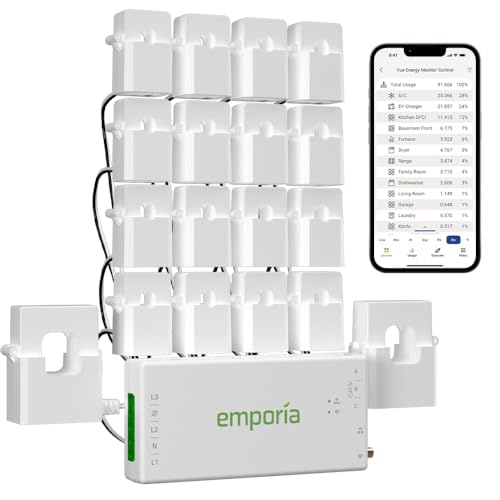
- UL Listed and CE Listed
- 16 branch sensors included
- Supports solar and net metering
Best For: Homeowners wanting safe, detailed whole-home monitoring
Voice-Ready Energy Tracking

- Works with Alexa and Google Home
- Live tracking by appliance
- Wireless DIY installation
Best For: Users who want voice control and live appliance monitoring
Local-First Smart Monitoring

- Local web UI, API, and MQTT
- Native Home Assistant support
- Solar automation and zero feed-in
Best For: Privacy-focused Home Assistant users
Panel-Level Precision
SIEMENS Inhab Smart Home Energy Monitor

- Whole-home and up to 16 circuit monitoring
- Real-time app tracking with custom alerts
- Advanced options for solar, TOU, and load shedding
Best For: Homeowners needing detailed panel insights and advanced energy controls
Local Automation Pick
Meross Smart Home Energy Monitor with 18 Circuit Monitoring

- 18-circuit monitoring with real-time alerts
- Home Assistant support with local data storage
- Solar surplus detection and no subscriptions
Best For: Solar and smart home users who want local automation and privacy
Straightforward Solar Meter

- Real-time whole-home and solar monitoring
- WiFi or Ethernet connection with no subscription
- Clear reporting in dollars, watts, amps, and volts
Best For: Households wanting simple solar-friendly monitoring and reporting
Whole-Panel Solar Focus
- Monitors 18 circuits with real-time power and cost tracking.
- Stores up to 5 years of data with exportable reports.
- Works locally with Home Assistant and no subscriptions.
Best For: homeowners who want circuit-level monitoring and solar automation
Privacy-First Power Audit
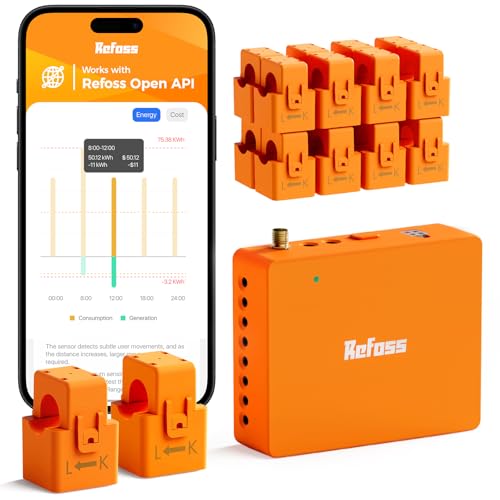
- Offers ±1% circuit monitoring with real-time energy data.
- Uses local Web UI, Open API, MQTT, and WebSocket support.
- Stores 5 years of data and supports solar optimization.
Best For: buyers who prioritize precision and local privacy
Rental-Friendly Load Tracking

- Tracks 16 circuits with real-time power and cost data.
- Built for shared homes, rentals, and room-by-room billing.
- Supports local MQTT/LAN use without cloud dependence.
Best For: rentals and shared homes that need fair bill allocation
UL-Certified Whole-Home Monitoring – Emporia Vue 3
If you want smart home energy monitors with real-time displays that focus on whole-home visibility, the Emporia Vue 3 is built for everyday tracking and cost control. It monitors electricity use through clamp-on sensors, supports solar and net metering, and feeds live data to the Emporia Energy app for quick checks on what’s running and what’s driving your bill.
Best For: Homeowners who want UL-listed whole-home energy monitoring with solar, net metering, and circuit-level insight.
Pros:
- UL Listed and CE Listed for added safety confidence
- Includes sixteen branch sensors for appliance-level monitoring
- Real-time app data with exportable cloud history
- Supports solar, net metering, and energy automation
Cons:
- Requires 2.4 GHz Wi-Fi and an internet connection
- 1-second data is only retained for a limited time in the app
- Panel compatibility depends on your home’s electrical system
The Vue 3 stands out if you want strong safety credentials and detailed circuit coverage in one monitor. Its mix of live usage data, app-based controls, and solar awareness makes it a practical fit for households trying to reduce waste and spot expensive loads fast.
Voice-Ready Energy Tracking – Square D WISEREMPV
For shoppers comparing smart home energy monitors with real-time displays, the Square D WISEREMPV leans into live tracking and easy smart-device integration. It works with Alexa, Google Home, Philips Hue, TP-Link, WeMo, and more, while the mobile app helps you check activity, spot appliances left on, and watch electricity use from anywhere.
Best For: Buyers who want a wireless DIY energy monitor with voice assistant compatibility and live appliance tracking.
Pros:
- Works with Alexa, Google Home, Philips Hue, TP-Link, and WeMo
- Live energy tracking with detailed appliance views
- Instant alerts for appliances left on or off
- Wireless DIY installation
Cons:
- Alert type is listed as motion only
- Less emphasis on solar or net metering features
- Product details focus more on app monitoring than on panel-level specs
This model is a good fit if you want straightforward live monitoring with broad smart-home compatibility. It’s especially useful for households that care about automations, alerts, and budget tracking without a more complex install.
Local-First Smart Monitoring – Refoss EM16
If you prefer smart home energy monitors with real-time displays that keep data local, the Refoss EM16 is designed around privacy and control. It offers a built-in web UI, Open API, and MQTT access without cloud dependency, plus native Home Assistant support for homes that already run serious automation.
Best For: Home Assistant users and privacy-focused buyers who want local energy monitoring with solar automation support.
Pros:
- Local access through web UI, Open API, and MQTT
- Native Home Assistant integration
- Supports solar homes and zero feed-in automation
- ETL certified with clamp-on installation
Cons:
- Best features are geared toward advanced smart-home setups
- Requires working with local network tools and integrations
- Installation still involves panel access and sensor placement
The EM16 is strongest when you want monitoring that doesn’t depend on the cloud. Its mix of local control, long-term data storage, and automation-friendly tools makes it a strong match for technically minded energy managers.
Solar-Friendly Bi-Directional Tracking – Blindsmart SDM02T-TW-120A
Among smart home energy monitors with real-time displays, this Blindsmart model is aimed at homes with solar or battery storage. It tracks both household consumption and power export to the grid with bi-directional monitoring, while the Smart Life app adds alerts, automation scenes, and live data analysis for everyday energy management.
Best For: Solar and battery-storage households that want bi-directional monitoring and Smart Life app control.
Pros:
- Bi-directional power monitoring for solar systems
- Class 1 accuracy for consumption and export tracking
- Smart Life app supports alerts and automation scenes
- Compact split-core CTs and pluggable terminals simplify setup
Cons:
- Only supports a single-phase 3-wire system
- Compatible device list is limited in the supplied details
- Product information is narrower than some whole-home systems
This is a practical choice if your main goal is to see both sides of solar energy flow and manage usage through an app. It focuses less on broad ecosystem support and more on efficient, solar-aware monitoring.
Panel-Level Precision – SIEMENS Inhab Smart Home Energy Monitor
If you want smart home energy monitors with real-time displays backed by panel-level data, the SIEMENS Inhab is built for detailed whole-home tracking. It monitors usage at the mains and at up to 16 branch circuits, so you can see where power is going instead of relying on estimates. It also adds app-based alerts and advanced energy management features for households that want more than basic watt tracking.
Best For: Homeowners who want detailed circuit-level monitoring plus advanced energy management features.
Pros:
- Tracks current and historical energy usage 24/7 through the mobile app.
- Measures both whole-home mains and up to 16 branch circuits directly at the panel.
- Supports alerts for unusual usage, such as an appliance left on.
- Adds features like Time of Use, Peak Demand, excess solar management, and load shedding.
Cons:
- USA and Canada only for the mobile app monitoring experience.
- Requires installation in the electrical panel, so it is not as simple as a plug-in monitor.
This is a strong pick if you want a monitor that goes beyond basic totals and gives you granular circuit insight. The feature set is especially appealing for households with solar, EV charging, or demand-management goals.
Local Automation Pick – Meross Smart Home Energy Monitor with 18 Circuit Monitoring
The Meross smart home energy monitor with real-time displays is a good fit if you want local control, solar awareness, and broad circuit monitoring. It tracks power, voltage, current, and power factor with app-based alerts, while keeping all data local through Home Assistant support. For buyers who want detailed consumption charts without subscriptions, this model stands out.
Best For: Smart homes and solar households that want local data, automation, and no ongoing fees.
Pros:
- Monitors 2 main circuits and 16 branch circuits for a total of 18 circuits.
- Supports Home Assistant, local data storage, and no subscriptions.
- Offers smart alerts, solar surplus detection, and exportable usage reports.
- ETL-certified, with a 2-year warranty and clamp-on installation.
Cons:
- Works with specific electrical systems only, so compatibility needs to be checked first.
- Designed for panel installation rather than casual plug-in use.
Meross is a practical choice if you want detailed monitoring and automation without cloud dependence. Its solar surplus detection and Home Assistant integration make it especially useful for homes trying to maximize self-consumption.
Straightforward Solar Meter – Eyedro Home Energy Monitor
The Eyedro Home Energy Monitor is a straightforward option among smart home energy monitors with real-time displays, especially if you want clear whole-home or solar tracking. It shows usage and production through the MyEyedro cloud and can be used for grid monitoring, solar monitoring, or net metering. If your goal is to see electricity use in familiar terms like dollars, watts, amps, and volts, this model keeps the setup focused and practical.
Best For: Homeowners who want a simple, cloud-based monitor for whole-home or solar tracking.
Pros:
- Provides real-time insight into electricity consumption and production.
- Works as a whole-home monitor, solar meter, or net metering device.
- Includes two 200A sensors plus Ethernet and WiFi connectivity options.
- Shows usage in dollars, watts, amps, and volts for easier understanding.
Cons:
- A single unit cannot monitor grid energy and solar generation separately at the same time.
- Tracking separate grid and solar data requires a second meter setup.
Eyedro is a solid fit if you want dependable energy visibility without a complicated feature set. It is especially appealing for households that value simple reporting, wired or wireless connectivity, and solar or net-metering support.
Whole-Panel Solar Focus – Meross 18-Circuit Monitor
If you want smart home energy monitors with real-time displays for full-panel visibility, this Meross unit is built for detailed circuit tracking. It monitors 18 circuits, gives minute-by-minute usage and cost charts, and stores years of data so you can spot spikes, compare trends, and trim waste without subscriptions.
Best For: Homeowners who want circuit-level monitoring, solar optimization, and local-only data control.
Pros:
- Tracks 2 main circuits plus 16 branch circuits with ±2% accuracy.
- Real-time alerts and usage charts by minute, hour, day, month, and year.
- Home Assistant support helps automate solar surplus use for EV chargers and water heaters.
- ETL-certified, locally stored data, and no subscription fees.
Cons:
- Designed for panel installation, so setup is more involved than plug-in monitors.
- Only works with supported home wiring configurations; no Delta systems.
Overall, this is a strong pick if you want detailed circuit visibility and local privacy in one package. The mix of real-time monitoring, smart alerts, and Home Assistant integration makes it especially useful for solar homes and users who want actionable data, not just basic readings.
Privacy-First Power Audit – Refoss 18-Circuit Monitor
For buyers comparing smart home energy monitors with real-time displays, this Refoss model stands out for accuracy and local control. It tracks 18 circuits with ±1% precision, shows where power is going in real time, and stores years of history so you can audit usage without depending on a cloud service.
Best For: Users who want precise local monitoring, solar self-consumption tools, and detailed long-term analytics.
Pros:
- Professional ±1% precision across 18 circuits.
- Local Web UI, Open API, MQTT, and WebSocket support without cloud dependence.
- 5 years of daily data storage plus CSV export for analysis.
- Smart alerts can flag unusual appliance energy use before bills spike.
Cons:
- Best features are geared toward users comfortable with local integrations like Home Assistant.
- Requires panel installation and supported wiring types.
This is a compelling option if privacy matters as much as accuracy. The combination of local control, solar optimization features, and detailed circuit reporting makes it a practical choice for households that want deeper energy insight without recurring fees.
Rental-Friendly Load Tracking – SEM-Meter 16-Sensor Monitor
This SEM-Meter model is a practical choice if you want smart home energy monitors with real-time displays for apartments, rentals, or shared homes. It includes 16 circuit sensors, shows live power and cost data in its app, and can help split usage by room or appliance without adding separate meters.
Best For: Rental properties, shared apartments, and households that need transparent circuit-by-circuit billing.
Pros:
- Supports real-time monitoring over 2.4GHz Wi-Fi with Android and Apple apps.
- Includes 16 50A sensors for appliances like HVAC, water heaters, washers, and dryers.
- Cost templates help calculate time-of-use billing for fair allocation.
- Can run in LAN-only or MQTT-only setups for added privacy.
Cons:
- Backed by a 1-year warranty, which is shorter than some alternatives.
- Panel installation is still required.
For landlords or households that need a clear way to track who uses what, this monitor is especially useful. Its real-time data, customizable tariffs, and multi-circuit setup make it a strong fit when bill sharing and accountability matter.
How We Picked the Best Smart Home Energy Monitors with Real-Time Displays
We looked for models that provide clear live usage data, dependable current-sensing hardware, and practical software features such as app access, history tracking, alerts, and integrations. We also favored systems that support whole-home monitoring or circuit-level monitoring, since those use cases solve different buyer needs.
Installation complexity mattered too. Some Smart Home Energy Monitors with Real-Time Displays are better for homeowners who want a deep electrical panel install, while others are more approachable for simpler whole-home monitoring. We also considered solar compatibility, local data options, and support for platforms like Home Assistant or open APIs.
Quick Comparison: What the 10-Product Set Tells You
This group spans basic whole-home monitors, advanced circuit-level systems, and models designed for smart home integrations. If you want broad visibility with less complexity, whole-home options are easier to start with. If you want to identify which appliances or circuits drive usage, circuit-level monitors are the better choice.
Some models emphasize local control and privacy, while others prioritize polished apps, solar net metering, or extensive circuit coverage. The right pick depends on whether your top goal is convenience, detail, integration, or energy optimization.
Key Buying Factors for Smart Home Energy Monitors with Real-Time Displays
Monitoring Scope
Decide whether you need whole-home monitoring, solar monitoring, or circuit-level detail. Whole-home monitors show total consumption trends, while circuit-level systems help isolate large loads like HVAC, laundry, and EV charging.
Display and App Experience
A real-time display is most useful when it is readable at a glance and paired with a reliable app. Look for clear live wattage, cost estimates, historical charts, and alerts if you want more than just instant readings.
Electrical Compatibility
Check panel type, phase configuration, breaker space, and CT sensor amperage before buying. The best Smart Home Energy Monitors with Real-Time Displays are the ones that match your electrical setup without forcing awkward workarounds.
Smart Home and Data Features
If you use Home Assistant, open APIs, or local storage, verify those features up front. Buyers who care about privacy or automation should prioritize local access over cloud-only software.
Who Should Buy Which Smart Home Energy Monitors with Real-Time Displays?
Choose a whole-home monitor if you want the fastest path to understanding your household’s overall electricity use. Choose a circuit-level monitor if you want actionable detail and a better shot at finding specific savings opportunities.
Homeowners with solar should prioritize net metering or surplus tracking. Privacy-minded users and DIY tinkerers should look for local data storage, native API support, or open integrations. Renters or anyone wanting simpler oversight may prefer a monitor with straightforward installation and minimal setup overhead.
