

Choosing the right hub can make or break a smart home setup. The best smart home hubs compatible with Z-Wave help you connect devices reliably, automate routines, and keep everything running smoothly.
Whether you want a simple starter hub or a more advanced platform for local control, this roundup focuses on options that balance compatibility, flexibility, and long-term value.
Best 10 Smart Home Hubs Compatible with Z-Wave Picks for 2026
Multi-Protocol Starter Hub
SmartThings Hub 3rd Generation

- Z-Wave, Zigbee, and cloud-to-cloud support
- Single-app monitoring and control
- Automations for door and presence events
Best For: easy control of mixed smart devices
Local USB Radio Adapter

- Z-Wave 800 series plus Zigbee 3.0
- Works with HomeAssistant and Z-Wave JS
- Local operation with no cloud necessary
Best For: DIY local-control smart home setups
Official Home Assistant Connector

- Official Home Assistant Z-Wave adapter
- Latest 800-series chipset
- Tuned for range and reliable setup
Best For: Home Assistant users adding Z-Wave
Local Automation Powerhouse

- Local automations with no cloud dependency
- Supports Z-Wave 800 LR plus Matter and Zigbee
- No mandatory subscription for core features
Best For: advanced users wanting local control
Dual-Protocol Network Radio

- Z-Wave Plus v2 800 series and Zigbee 3.0
- Ethernet or Wi-Fi placement flexibility
- Supports S2 Security, SmartStart, and NWI
Best For: Advanced users who want a network-placed Z-Wave and Zigbee interface
All-in-One Flow Hub

- Z-Wave Plus, Zigbee, Wi-Fi, BLE, and IR
- Creates automations with Homey Flows
- Works with Alexa, Siri Shortcuts, and Google Assistant
Best For: Homes that want broad protocol support and easy app-based automations
Long-Range USB Dongle

- Z-Wave 800 Series with S2 Security
- Supports Z-Wave Long Range
- External antenna and USB extension included
Best For: Home Assistant or openHAB users adding a dedicated Z-Wave radio
SmartThings-Ready Multi-Protocol Hub
Aeotec Smart Home Hub for Z-Wave, Zigbee & Matter
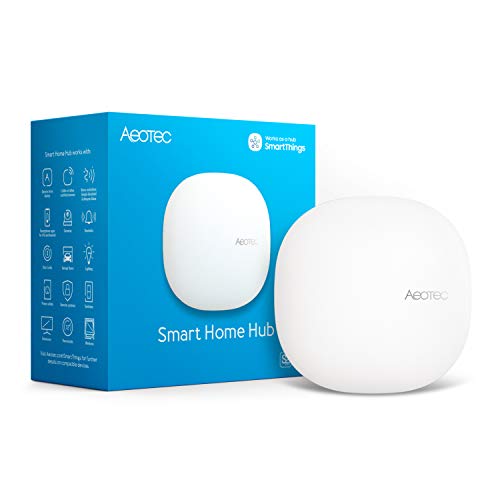
- Supports Z-Wave Plus, Zigbee, Matter, Wi-Fi, and SmartThings
- Runs automations locally for faster, more reliable routines
- Sets up with Wi-Fi or Ethernet and works with Alexa/Google Home
Best For: SmartThings users who want broad protocol support in one hub
Local-First Automation Hub
Homey Pro Early 2023 for Z-Wave Plus

- Includes Z-Wave Plus, Zigbee, Wi-Fi, BLE, infrared, Matter, and Thread
- Processes automations locally for less cloud dependence
- Supports 50,000+ devices across 1,000+ brands
Best For: Advanced users who want broad protocol support and local control
Expanded Memory Smart Hub
Homey Pro 2026 for Z-Wave Plus

- Adds double the RAM for more device capacity
- Supports Z-Wave Plus, Zigbee, Matter, Thread, and more
- Keeps automation processing local on the hub
Best For: Growing smart homes that need extra capacity and broad protocol support
Multi-Protocol Starter Hub – SmartThings Hub 3rd Generation
If you want a straightforward entry point into smart home hubs compatible with Z-Wave, the SmartThings Hub 3rd Generation is built around broad device support and app-based control. It can monitor and automate compatible devices from a single smartphone app, and it works with Alexa, Google Home, Zigbee, Z-Wave, and cloud-to-cloud protocols.
Best For: Homeowners who want an easy-to-manage hub for mixed smart devices and basic automations.
Pros:
- Supports Z-Wave alongside Zigbee and cloud-to-cloud protocols
- Controls compatible devices from one smartphone app
- Can automate actions based on events like doors opening or people coming and going
- Includes power adapter and LAN cable in the box
Cons:
- Notes emphasize app control more than advanced local processing
- Battery powered design may be less familiar than plug-in hubs
For shoppers who want a practical hub with broad compatibility rather than a highly specialized platform, this model covers the essentials well. Its strength is simple monitoring and automation across multiple protocols, making it a flexible fit for many starter setups.
Local USB Radio Adapter – Z-Stick 10 Pro
For advanced smart home hubs compatible with Z-Wave, the Z-Stick 10 Pro is a compact USB adapter that adds both Z-Wave and Zigbee radios to a local automation setup. It works with HomeAssistant, Zigbee2MQTT, Z-Wave JS, Open Z-Wave, and more, so it is aimed at users building or expanding their own controller-based system.
Best For: DIY smart home users who want a local Z-Wave and Zigbee radio for HomeAssistant-based control.
Pros:
- Dual-radio support for Z-Wave Plus Long Range and Zigbee 3.0
- Compatible with HomeAssistant, Zigbee2MQTT, Z-Wave JS, and Open Z-Wave
- Uses the latest Z-Wave 800 series chip with Long Range support
- Local operation with no cloud necessary on compatible systems
Cons:
- It is a USB adapter, not a standalone hub
- Requires a compatible platform such as HomeAssistant or another supported system
This is a strong choice if you already have a software-based smart home platform and want a capable radio adapter with long-range potential. Its slim design and local-first operation make it especially appealing for technically minded setups.
Official Home Assistant Connector – Home Assistant Connect ZWA-2
If your priority is a focused add-on among smart home hubs compatible with Z-Wave, the Home Assistant Connect ZWA-2 is designed specifically to connect and control Z-Wave devices in a Home Assistant setup. It uses the latest 800-series chipset, includes a tuned antenna and base, and is built to support reliable long-range Z-Wave performance.
Best For: Home Assistant users who want an official, purpose-built Z-Wave adapter.
Pros:
- Built for Home Assistant and Z-Wave JS
- Latest 800-series chipset with support for all Z-Wave devices
- Designed for reliable connection, better range, and improved battery life
- Includes a simple startup wizard and one-click firmware updates
Cons:
- Requires a Home Assistant system to operate
- Focused on Z-Wave, so it is not a general-purpose multi-radio hub
This adapter stands out for users who want a clean, official path into Home Assistant Z-Wave control. If you already run Home Assistant, it offers a straightforward, well-integrated way to add or migrate Z-Wave support.
Local Automation Powerhouse – Hubitat Elevation C-8 Pro
Among smart home hubs compatible with Z-Wave, the Hubitat Elevation C-8 Pro is aimed at users who want local control, broad protocol support, and no required subscription. It runs automations inside the home instead of on remote servers, and it supports Z-Wave 800 Series, Z-Wave Long Range, Zigbee 3.0, Matter 1.5, Bluetooth, and Wi-Fi.
Best For: Power users who want local automations and broad multi-protocol compatibility.
Pros:
- Local processing keeps automations working even if the internet drops
- Supports Z-Wave 800 Series and Z-Wave Long Range
- Also works with Matter 1.5, Zigbee 3.0, Bluetooth, and Wi-Fi
- No mandatory monthly fee for core features
Cons:
- Best suited to users comfortable with a more advanced hub experience
- AI suggestions and Rule Machine may be more than casual users need
If you want a hub that prioritizes speed, privacy, and reliability without cloud dependence, this is a compelling pick. Its broad protocol support and continuous no-cost updates make it a long-term platform for mixed-device homes.
Dual-Protocol Network Radio – HomeSeer Z-NET PRO
If you want smart home hubs compatible with Z-Wave and Zigbee on a single network radio, the HomeSeer Z-NET PRO is built for mixed-device setups. It connects over Ethernet or Wi-Fi, so you can place it closer to your devices instead of tying it to a USB port near your server, which can help improve coverage and reduce dropouts.
Best For: HomeSeer, Home Assistant, and openHAB users who want a centrally placed Z-Wave and Zigbee interface with modern radio support.
Pros:
- Supports Z-Wave Plus v2 800 series and Zigbee 3.0 from one device.
- Ethernet or Wi-Fi placement gives you more flexibility than a direct USB radio.
- Supports Z-Wave S2 Security, SmartStart, and Network-Wide Inclusion.
- Built-in web interface and status LEDs make setup and troubleshooting easier.
Cons:
- Best suited to advanced automation platforms rather than all-in-one consumer hubs.
- Requires network-based setup and integration instead of simple plug-in use.
Overall, this is a strong choice if you want more control over radio placement and need both Z-Wave and Zigbee in one interface. It is especially appealing for users building a more stable, centralized automation network.
All-in-One Flow Hub – Homey Bridge
The Homey Bridge is a practical option for shoppers comparing smart home hubs compatible with Z-Wave, especially if you also want Zigbee, Wi-Fi, BLE, and infrared in one unit. It is designed around Homey Flows, letting you combine devices and actions in the Homey app, and it can link with Alexa, Siri Shortcuts, or Google Assistant for voice control.
Best For: Home users who want broad protocol support and app-based automation across many popular brands.
Pros:
- Includes Z-Wave Plus, Zigbee, Wi-Fi, BLE, and infrared.
- Supports voice control through Alexa, Siri Shortcuts, and Google Assistant.
- Integrates with thousands of devices from brands like Sonos, Hue, Nest, Kwikset, Yale, and Aeotec.
- Privacy-first design with no profiling and no third-party sharing without consent.
Cons:
- Requires Homey Premium after the first five devices for full use.
- Compatibility still needs to be checked in the Homey App Store for specific devices.
Homey Bridge stands out as a flexible hub for mixed-device homes, but the subscription model is an important consideration. If your priority is broad compatibility and easy flow creation, it offers a lot in a compact package.
Long-Range USB Dongle – SONOFF Z-Wave 800 Dongle Plus
If you need smart home hubs compatible with Z-Wave and prefer adding a dedicated radio to an open-source setup, the SONOFF Z-Wave 800 Dongle Plus is a straightforward USB option. It uses the EFR32ZG23 chip, supports Z-Wave Long Range, and includes an external antenna plus a USB extension to help with signal stability and placement.
Best For: Home Assistant and openHAB users who want a compact Z-Wave 800 Series USB radio with long-range support.
Pros:
- Z-Wave 800 Series radio with S2 Security support.
- Supports Z-Wave Long Range for wider direct device communication.
- External 2dBi antenna and included USB extension improve placement options.
- Plug-and-play USB design works with Home Assistant and openHAB.
Cons:
- It is a Z-Wave dongle, not a full multi-protocol hub.
- Designed for open-source platforms rather than stand-alone smart home control.
This is a focused pick for users who already have a compatible platform and want reliable Z-Wave control without extra complexity. Its long-range support and antenna setup make it a sensible upgrade for cleaner signal performance.
SmartThings-Ready Multi-Protocol Hub – Aeotec Smart Home Hub for Z-Wave, Zigbee & Matter
If you want smart home hubs compatible with Z-Wave that also cover Zigbee, Matter, and Wi-Fi, the Aeotec Smart Home Hub is built for broad compatibility and everyday automation. It works with the SmartThings app for setup and control, and it can coordinate lights, sensors, switches, and other devices into routines that now run locally for better speed and reliability.
Best For: Households that want a SmartThings-based hub with wide protocol support and easy app control.
Pros:
- Supports Z-Wave Plus, Zigbee, Matter, Wi-Fi, and SmartThings compatibility
- Works with Alexa and Google Home for voice control
- Local automation support can improve speed and reliability
- Offers Wi-Fi or Ethernet setup in minutes
Cons:
- Z-Wave Plus support is listed for the V3 model only
- Designed for North America
- Best experience depends on using the SmartThings app
Overall, this is a practical pick if you want one hub to bridge several common smart home standards without giving up SmartThings automation. It is strongest for users who value broad device support and simple setup over niche advanced features.
Local-First Automation Hub – Homey Pro Early 2023 for Z-Wave Plus
For shoppers comparing smart home hubs compatible with Z-Wave, Homey Pro stands out for combining Z-Wave Plus with Zigbee, Wi-Fi, BLE, infrared, Matter, and Thread in a local-first hub. It is designed to manage devices from the Homey app or web app, with flows for automation, sensor alerts, and energy monitoring handled on-premise.
Best For: Users who want one advanced hub to unify many device types and keep control local.
Pros:
- Seven technologies in one hub, including Z-Wave Plus, Zigbee, Matter, and Thread
- Local-first processing reduces cloud dependence
- Works with over 50,000 devices from more than 1,000 brands
- Supports both Homey Flow and Advanced Flows for automation
Cons:
- Compatibility is broad, but some devices depend on official or community apps
- Advanced setup may be more involved than simpler hubs
- Product notes emphasize the Homey ecosystem, so brand support should be checked first
This is a strong choice if you want deep protocol coverage and flexible automation in a single controller. Its local processing and large device ecosystem make it appealing for users building a more capable smart home center.
Expanded Memory Smart Hub – Homey Pro 2026 for Z-Wave Plus
If you need smart home hubs compatible with Z-Wave and want room to grow, the Homey Pro (2026) builds on the same multi-protocol approach with double the RAM for adding even more devices. It combines Z-Wave Plus, Zigbee, Wi-Fi, BLE, infrared, Matter, and Thread, while keeping control local through the Homey app and web-based Advanced Flows.
Best For: Buyers who want Homey’s broad protocol support and extra headroom for larger setups.
Pros:
- Double the RAM for adding more devices than before
- Supports Z-Wave Plus, Zigbee, Matter, Thread, Wi-Fi, BLE, and infrared
- Local-first design keeps processing on-premise
- Works with over 50,000 devices from more than 1,000 brands
Cons:
- Compatibility still depends on supported Homey apps
- May be more hub than casual users need
- Best suited to those willing to manage automation in the Homey ecosystem
As an upgrade-minded hub, this model is aimed at users who expect their smart home to keep expanding. If you want broad protocol support plus extra capacity for future devices, it is the most growth-friendly Homey option in this group.
How We Picked These Smart Home Hubs Compatible with Z-Wave
We focused on hubs and controllers that support current Z-Wave standards, offer dependable device pairing, and fit real-world home automation needs. Priority went to platforms with strong ecosystem support, clear upgrade paths, and useful extras such as Zigbee, Matter, Wi-Fi, or local processing when they add value.
We also considered whether a hub is best for beginners, power users, or DIY builders. A great Z-Wave hub should not only connect devices, but also make automations easier to manage over time.
Quick Comparison
Some Smart Home Hubs Compatible with Z-Wave are all-in-one solutions designed for simple setup and broad compatibility. Others are USB dongles or bridge-style controllers made for Home Assistant, openHAB, or similar platforms. If you want the easiest experience, look for a full-featured hub. If you want maximum flexibility, a controller or dongle paired with your preferred software may be the better fit.
Key Buying Factors for Smart Home Hubs Compatible with Z-Wave
Z-Wave Version and Range
Look for newer Z-Wave generations such as 700 or 800 series hardware when possible. These can improve responsiveness, range, and long-term support. If your home has larger distances or thick walls, long-range support may matter more than flashy app features.
Local Control Vs Cloud Dependence
Local automation is often faster and more reliable than cloud-only control. If privacy, speed, or internet-outage resilience is important, prioritize hubs that can run automations locally.
Platform Compatibility
Make sure the hub works with your existing ecosystem. Some Smart Home Hubs Compatible with Z-Wave are built for Home Assistant, while others integrate more easily with Alexa, Google Assistant, or mixed-device smart homes.
Multi-Protocol Support
Many buyers benefit from hubs that also support Zigbee, Matter, Thread, Wi-Fi, or Bluetooth. Multi-protocol hubs can reduce clutter and simplify expansion, especially if you plan to add more device types later.
Setup Complexity
USB adapters and advanced controllers can offer excellent performance, but they may require more configuration. If you prefer a plug-and-play experience, choose an all-in-one hub with guided setup and broad app support.
Who Should Buy Which Smart Home Hubs Compatible with Z-Wave?
Beginners usually do best with an all-in-one hub that supports Z-Wave plus other major standards and offers straightforward mobile app setup. DIY enthusiasts and Home Assistant users may prefer a dedicated Z-Wave stick or controller for more control and customization. If you already have a mixed smart home, choose a hub that can bridge Z-Wave with other ecosystems without forcing a full rebuild.
For most shoppers, the best choice is the hub that matches your software preference first, then your device mix, and finally your budget. That approach helps ensure the system stays useful as your smart home grows.
