

Smart pet doors for cats can make life easier for both you and your cat, especially if you want controlled access without leaving a door open all day. The best models balance convenience, security, and pet-specific sizing.
In this roundup, we focus on options with microchip, RFID, collar-key, and app-based controls so you can choose the right fit for your home, routine, and multi-pet setup.
Best 10 Smart Pet Doors for Cats Picks for 2026
Selective RFID Indoor Door
Selective RFID 4-Tag Smart Cat Door

- Unlocks only for matching collar sensors
- 4-way locking adds room-level control
- Best suited for indoor use and multi-pet homes
Best For: multi-pet households needing selective indoor access
Microchip Entry Control
SureFlap Microchip Selective Entry Door

- Reads implanted microchips on entry
- Supports curfew scheduling
- Can learn up to 32 identities
Best For: cat owners who want microchip-based selective entry
Remote Collar Access
SmartPetDoor 3-Key Remote Cat Door
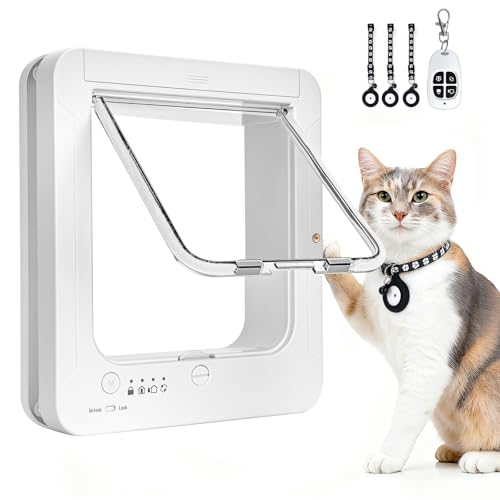
- Comes with 3 collar sensor keys
- Includes 1 remote control
- 4-way locking for flexible access
Best For: cat owners wanting simple collar-based control
App-Based Access Control
PetSafe Connected SmartDoor Medium

- Phone app controls lock/unlock remotely
- Custom schedules for each pet
- Notifications track use, lock status, and battery
Best For: owners who want app control and scheduling
Microchip Access
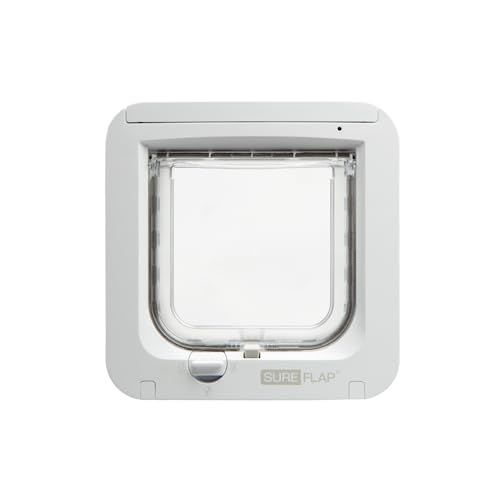
- Uses implanted microchip for selective entry
- Learns up to 32 identities
- Battery powered, up to 12 months estimated life
Best For: Cat owners who want microchip-based access control
Interior Privacy Door

- 2-way lock with locked/unlocked control
- Transparent hard flap for easy use
- Fits interior doors 1/2 in. to 2 in. thick
Best For: interior access to litter boxes or food rooms
RFID Access Control
Smart RFID Cat Door with Remote
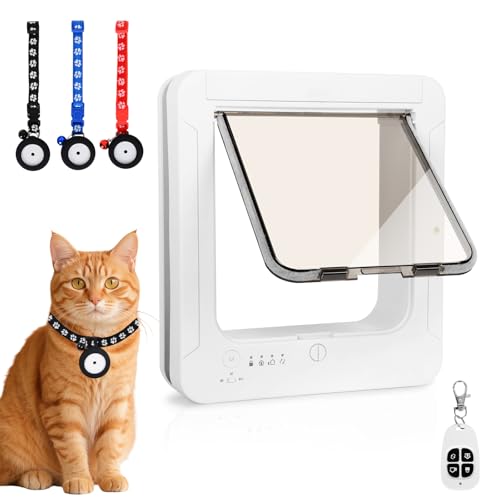
- Reads only programmed RFID collar keys
- 4 modes for controlled entry and exit
- Includes 3 keys plus remote control
Best For: multi-cat households needing selective access
Microchip Security Door

- Reads your cat’s microchip ID
- 4-way lock with enter/exit controls
- Magnetic latches help reduce drafts
Best For: microchipped cats needing secure access
Selective RFID Indoor Door – Selective RFID 4-Tag Smart Cat Door
If you want smart pet doors for cats that help manage room access without constant supervision, this RFID collar-activated option is built for selective entry. It unlocks only for matching collar sensors, making it a practical fit for litter box rooms, bedrooms, feeding areas, and other indoor spaces where you want controlled access.
Best For: Multi-pet homes that need simple, collar-based access control for indoor rooms.
Pros:
- Opens automatically for matching RFID collar sensors.
- Includes 4-way locking for added control over entry and exit.
- Designed for interior use with a compact ABS build and quiet operation.
- Helps reduce scratching while giving cats more independence.
Cons:
- Metal doors or walls may affect RFID tag reading.
- Maximum compatible thickness is limited to 3 inches.
This is a straightforward smart cat door for buyers who want selective indoor access without app setup or complicated controls. Its biggest strength is the collar-sensor approach, which is especially useful when you need one cat to enter a room while keeping others out.
Microchip Entry Control – SureFlap Microchip Selective Entry Door
Among smart pet doors for cats, this microchip-reading model stands out for selective entry that helps keep stray animals out. It scans on entry only, supports up to 32 identities, and can be programmed with a curfew so you can better control when your cat comes and goes.
Best For: Homes that want microchip-based entry control with simple scheduling.
Pros:
- Reads your pet’s implanted microchip on entry.
- Can learn up to 32 identities.
- Curfew settings let you lock and unlock on a schedule.
- Battery-powered design with a low-battery indicator.
Cons:
- Entry-only scanning means any animal can still exit.
- Programmable collar tags are sold separately for pets without microchips.
This is a good fit if you prefer microchip access instead of collar tags, especially for keeping unknown animals from entering the home. The tradeoff is that it’s more focused on entry control than full two-way restriction, so it works best when that limitation matches your setup.
Remote Collar Access – SmartPetDoor 3-Key Remote Cat Door
If you’re comparing smart pet doors for cats and want a simple collar-based setup, this model adds selective access with 3 sensor keys and a remote control. It’s designed for interior or exterior use and includes 4-way locking, so you can manage when your cat can move through the flap.
Best For: Cat households that want a basic smart door with remote control and collar sensors.
Pros:
- Includes 3 collar sensor keys plus 1 remote control.
- Supports interior and exterior installation.
- 4-way locking adds flexible access control.
- ABS construction keeps the design lightweight and simple.
Cons:
- Supplied notes provide limited detail beyond the core smart-door features.
- Weight capacity is listed at 20 pounds, so it is aimed at smaller pets.
This is a practical choice if you want a no-frills smart cat door that relies on collar sensors rather than a phone app. It covers the essentials well, but buyers looking for advanced scheduling or detailed feature info may want to compare it against more fully specified options.
App-Based Access Control – PetSafe Connected SmartDoor Medium
For buyers who want smart pet doors for cats with app-based control, this connected PetSafe model lets you manage access from your phone. You can set custom schedules, lock or unlock the door remotely, and get notifications when your pets use it, making it a strong pick for routine-based households.
Best For: Owners who want phone control, scheduling, and notifications for pet access.
Pros:
- App control lets you lock and unlock from anywhere.
- Custom schedules can be set for each pet.
- Sends notifications for pet use, lock status, and battery updates.
- Dynamic weather sealing and multi-point locking support energy efficiency and safety.
Cons:
- Uses a medium format, so fit and installation planning matter.
- Depends on app connectivity and firmware performance.
This is the most feature-rich option in the group for people who want remote control and monitoring rather than just a sensor-triggered flap. It’s especially appealing if you like schedule-based routines and want visibility into when your cat is using the door.
Microchip Access – SureFlap Microchip Cat Flap
If you’re comparing smart pet doors for cats, the SureFlap Microchip Cat Flap is a straightforward selective-entry option that uses your cat’s implanted microchip to control access. It is designed to help keep stray animals out while still giving your own cat a simple way back inside, and it can also work with programmable collar tags sold separately.
Best For: Cat owners who want microchip-based entry control without adding a collar-mounted key.
Pros:
- Reads 9, 10, and 15 digit microchip numbers for selective entry.
- Can learn up to 32 identities for multi-pet households.
- Battery powered with an estimated battery life up to 12 months.
- Can be installed in doors, windows, or walls with accessories.
Cons:
- Entry control is on entry only, not a full auto-locking system.
- Requires 4 AA batteries, which are not included.
- Programmable collar tags are sold separately if your cat is not microchipped.
This is a good fit if you want a pet door that prioritizes selective access and microchip compatibility. The opening size is compact, so it makes the most sense for cats rather than larger pets.
Selective Entry/Exit – PetSafe Electronic Pet Door
For buyers shopping smart pet doors for cats, the PetSafe Electronic Pet Door focuses on programmable control and simple collar-key access. It supports selective entry, exit, and auto-locking, so you can decide how your cat moves through the door while keeping other pets out unless they wear the matching key.
Best For: Households that want collar-key access with selective entry, exit, and auto-lock options.
Pros:
- Programmable selective entry, exit, and auto-locking features.
- Works with waterproof Electronic Pet Door Keys worn on the collar.
- Supports up to 5 keys, which is useful for multiple pets.
- Battery operated and designed for interior or exterior doors.
Cons:
- Requires 4 D-cell batteries, which are not included.
- Wall installation needs a separate wall install kit.
- Best suited to smaller pets, with a maximum weight capacity of 15 pounds.
This model is a practical choice if you prefer a collar-key system over microchip scanning. It offers more control than a basic flap, but it still stays relatively simple to install in a door.
RFID Collar Control – Smart Cat Door with Remote
If you’re narrowing down smart pet doors for cats, this RFID collar-activated cat door is built around controlled access with included sensor keys and a remote. It lets cats wearing the sensor key enter and exit freely, while helping block wild animals and other pets that do not have the matching key.
Best For: Cat owners who want a collar-sensor door with remote control and 4-way locking.
Pros:
- Includes 3 RFID sensor keys and 1 remote control.
- Uses a 4-way locking cat flap for added control.
- Designed for interior and exterior use.
- ABS construction with a 12×10 inch size.
Cons:
- Maximum compatible thickness is 3 inches.
- Uses collar sensors rather than a microchip reader.
- Product details do not list battery type or battery life.
This is a solid option if you want an RFID-based setup with a remote and locking modes. It is less focused on microchip compatibility and more on included accessories and simple access management.
Interior Privacy Door – PetSafe 2-Way Lock Cat Door
If you’re comparing smart pet doors for cats for an interior setup, this PetSafe option is a simple way to give your cat private access to a litter box, food area, or another room. It’s designed for interior doors, includes a transparent hard flap, and uses a 2-way lock so you can switch between locked and unlocked access as needed.
Best For: cat owners who want a straightforward interior pass-through with basic locking control.
Pros:
- 2 locking options: locked and unlocked
- Transparent hard flap designed for cat comfort
- Fits interior doors 1/2 in. to 2 in. thick
- Hardware, cutting template, and instructions included
Cons:
- Designed for cats up to 15 lb
- Not a microchip or RFID-controlled door
This is a practical choice if you mainly need a durable interior cat door with simple access control rather than advanced automation. The install kit is included, which makes it easier to plan around a standard door cutout.
RFID Access Control – Smart RFID Cat Door with Remote
For buyers focused on smart pet doors for cats, this RFID model adds selective access instead of a standard flap-only design. It recognizes pre-programmed RFID collar keys, supports up to 3 keys, and offers 4 modes so you can manage when your cat can enter or exit.
Best For: multi-cat homes that want RFID-based access control and mode switching.
Pros:
- Recognizes only programmed RFID collar keys
- Supports up to 3 included RFID keys
- 4 modes: locked, outside only, inside only, and fully open
- Includes remote control and waterproof collar sensor keys
Cons:
- Cannot be used on metal doors
- Requires 4 AA batteries, not included
- Must fit a location within 1.57 inches thick
This is the most feature-rich option in the group if you want selective entry rather than a basic cat flap. It’s worth considering when you need better control over pet traffic and have a compatible installation surface.
Microchip Security Door – PetSafe 4-Way Lock Cat Door
If you want smart pet doors for cats that rely on built-in identification, this PetSafe model reads your cat’s microchip instead of a collar tag. It supports exclusive access for programmed pets, includes a manual 4-way lock, and uses magnetic latches plus weather stripping to help block drafts and keep strays out.
Best For: homes that already use microchips and want controlled indoor/outdoor access.
Pros:
- Reads a cat’s unique 15-digit microchip ID
- Can program up to 40 pets total
- 4 locking modes: locked, unlocked, enter only, exit only
- Magnetic latches and weather stripping help reduce drafts
Cons:
- Programmable collar keys are sold separately for non-microchipped cats
- Metal, glass, brick, and wall installs need extra accessories
This is a strong pick if you want access control tied to your cat’s microchip rather than a wearable sensor. It balances convenience with security, especially for keeping out unwanted animals while still giving your cat freedom.
How We Picked the Best Smart Pet Doors for Cats
We looked for Smart Pet Doors for Cats that offer dependable access control, straightforward installation, and practical safety features. Priority went to models that support selective entry and exit, locking modes, and either microchip or RFID-based identification. We also favored doors with clear sizing information, since fit matters just as much as electronics.
Quick Comparison
The main choice is between microchip-read doors and collar-based systems. Microchip models are ideal for cats already chipped and help avoid collars, while RFID collar-key doors can work for cats without implanted chips. App-connected doors add scheduling and remote controls, which can be useful if you travel or want more oversight.
Key Buying Factors for Smart Pet Doors for Cats
Identification Method
Microchip doors are usually the cleanest solution because they use your cat’s existing ID. RFID collar systems are a good alternative for non-chipped pets, but they depend on a collar tag being worn consistently.
Locking and Access Modes
Look for 4-way locking or selective entry/exit settings so you can control when your cat can come and go. This helps manage nighttime access, litter box traffic, and outdoor safety.
Size and Installation
Check flap dimensions carefully, not just the marketing label. A cat door should fit your pet comfortably without being oversized, and it should also match your interior or exterior door thickness.
Power and Connectivity
Battery-powered models are common and easier to place, while app-controlled options may offer scheduling, phone notifications, and remote lock features. Choose based on how much control you actually want to manage.
Who Should Buy Which Smart Pet Doors for Cats?
If you want the simplest low-maintenance setup, choose a microchip model. If your cat is not chipped, an RFID collar-key door may be the better fit. For households with multiple pets or changing routines, app-connected Smart Pet Doors for Cats offer the most flexibility. If you only need basic room-to-room access indoors, a simpler lockable cat door may be enough.
In short, the best choice depends on whether you value convenience, tighter security, or advanced scheduling. Match the door to your cat’s identification method, your installation space, and how much control you want over access.
