

Smart speakers compatible with Matter can simplify your connected home by putting voice control, music, and automation in one place. The right model should do more than play audio—it should fit your ecosystem and daily routines.
Below, we focus on the best options for different rooms, budgets, and platforms, so you can choose a speaker that works well now and leaves room to grow.
Best 10 Smart Speakers Compatible with Matter Picks for 2026
Google Home Audio Speaker
Google Audio Bluetooth Speaker

- 30W woofer for room-filling sound
- Google Assistant with smart home control
- Wi‑Fi, Bluetooth, and stereo pairing
Best For: Google-centric homes that want simple voice control
Apple Matter Smart Speaker

- Supports Matter and Thread
- 4-inch woofer with five tweeters
- Room Sensing adjusts sound automatically
Best For: Apple users wanting premium audio and Matter support
Sonos Alexa Smart Speaker

- Detailed stereo sound with deep bass
- Wi‑Fi, Bluetooth, and line-in support
- Trueplay tuning for room optimization
Best For: Listeners who want a compact, versatile music speaker
Apple Compact Smart Speaker

- Small design fits tight spaces
- 360-degree sound with deep bass
- Siri and Apple device integration
Best For: Apple households needing a compact voice assistant speaker
Room-Filling Smart Audio

- Nearly 3x the bass versus Echo Dot (2022 release).
- Built-in smart home hub for Alexa-compatible devices.
- Omnisense routines can use temperature or presence detection.
Best For: Medium rooms and Alexa-first smart home control.
Compact Apple Audio

- Rich 360-degree sound with deep bass and crisp highs.
- Seamless works with iPhone, iPad, Mac, and Apple TV.
- Compact design fits easily into small rooms.
Best For: Apple households wanting a small smart speaker.
Everyday Alexa Speaker

- Plays music, audiobooks, podcasts, and Bluetooth audio.
- Voice control plus motion and temperature-based routines.
- Pairs with other Echo devices or Fire TV.
Best For: Small rooms and budget-friendly Alexa control.
Premium Room-Filling Choice

- Room-filling sound with Adjustable EQ
- Wi‑Fi, Bluetooth, AirPlay, and Google Cast
- Alexa+ voice control and multiroom support
Best For: Premium home audio and flexible multiroom use
Compact Alexa Smart Clock
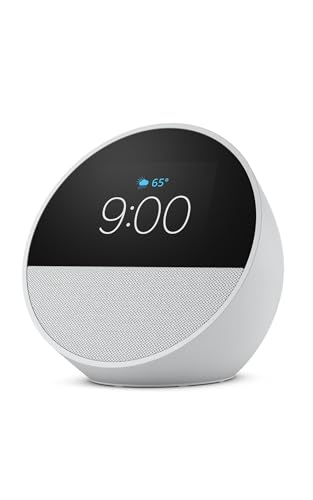
- Clock display with time, weather, and song titles
- Rich sound with Alexa and smart home control
- eero Built-in can extend Wi‑Fi coverage
Best For: Nightstands, offices, and kitchens
Open-Platform Sound Pick

- Hi-Res 24-bit/192 kHz playback
- AI RoomFit room correction
- Wide support for casting and multiroom audio
Best For: Hi-res listening and flexible connected audio setups
Google Home Audio Speaker – Google Audio Bluetooth Speaker
If you want smart speakers compatible with Matter-style connected home setups, this Google speaker is a practical pick for everyday listening and voice control. It combines Wi‑Fi and Bluetooth streaming, built-in Google Assistant support, and smart home control in a compact, room-filling design.
Best For: Households already using Google services and wanting easy voice control plus simple stereo pairing.
Pros:
- 30-watt woofer and tuning software deliver full, punchy sound for a small room.
- Works with other Nest speakers, Nest displays, Chromecast-enabled devices, and compatible speakers.
- Built-in Google Assistant supports voice commands, broadcasts, and intercom-style chatting.
- Offers both Bluetooth and Wi‑Fi connectivity for flexible streaming.
Cons:
- Only one speaker is included, so stereo sound requires a second unit.
- It is a corded speaker, so placement depends on outlet access.
This is a straightforward choice if you want a voice-controlled speaker that doubles as a home audio hub. It is less about premium smart-home ecosystem breadth and more about dependable Google integration and solid everyday sound.
Apple Matter Smart Speaker – HomePod 2nd Gen
This Apple smart speaker is a strong option if you want smart speakers compatible with Matter and you already live in the Apple ecosystem. It adds Siri voice control, Thread support, and room-adaptive audio in a compact tabletop design.
Best For: Apple users who want Matter and Thread support in a premium-sounding smart speaker.
Pros:
- Supports Matter smart home control and Thread for compatible smart-home setups.
- Features a 4-inch woofer and five beamforming tweeters for detailed, room-filling audio.
- Room Sensing automatically adjusts sound based on placement.
- Works with Siri, AirPlay, Spatial Audio, Bluetooth 5.0, and Wi‑Fi 4.
Cons:
- Requires the Apple ecosystem to get the most out of it.
- It is a single speaker, so stereo and whole-home audio need additional units.
For Apple-focused buyers, this model stands out because it combines smart-home compatibility with a more serious speaker design. It is a polished pick if audio quality and ecosystem integration matter equally.
Sonos Alexa Smart Speaker – Sonos Era 100
For shoppers comparing smart speakers compatible with Matter-adjacent connected-home systems, the Sonos Era 100 is a flexible wireless option with strong sound and broad playback support. It streams over Wi‑Fi, pairs over Bluetooth, and can be expanded with Sonos multi-room audio.
Best For: People who want a compact speaker for music first, with voice control and flexible connectivity.
Pros:
- Dual-tweeter architecture and a larger midwoofer provide detailed stereo separation and deeper bass.
- Supports Wi‑Fi streaming, Bluetooth pairing, and auxiliary input via Sonos Line-In Adapter.
- Trueplay tuning helps optimize sound for the room.
- Compact size works well on shelves, desks, counters, or nightstands.
Cons:
- Does not mention Matter support in the supplied details.
- Accessories may be needed for turntable or line-in use.
This is the most music-focused option in the group, especially if you want a small speaker that can scale into a larger Sonos setup. It is less of a pure smart-home pick and more of an all-around wireless listening speaker.
Apple Compact Smart Speaker – HomePod mini
If you are looking for smart speakers compatible with Matter in a small, easy-to-place design, the HomePod mini is the compact Apple choice. It offers Siri voice control, 360-degree sound, and seamless integration with Apple devices over Wi‑Fi and Bluetooth.
Best For: Apple users who want a small smart speaker for everyday voice control and music.
Pros:
- Compact size fits easily on desks, shelves, and side tables.
- Delivers 360-degree sound with deep bass and crisp highs.
- Works with Siri for smart home control and information requests.
- Integrates well with iPhone, iPad, Mac, and Apple TV.
Cons:
- The supplied details do not list Matter support for this model.
- It is designed as a single small speaker, so it is best for modest spaces.
The HomePod mini is a neat choice if space is limited and you want a simple Apple speaker that handles both audio and voice tasks. It is best viewed as a compact helper speaker rather than a full-size room-filling system.
Room-Filling Smart Audio – Amazon Echo Dot Max
If you want one of the smart speakers compatible with Matter-style modern smart home setups, the Amazon Echo Dot Max is built to do more than just play music. It delivers room-filling sound with nearly 3x the bass of the Echo Dot (2022 release), adapts playback to your space, and adds a built-in smart home hub for easier control of connected devices.
Best For: Medium-sized rooms where you want stronger bass, Alexa voice control, and built-in smart home handling in one speaker.
Pros:
- Nearly 3x the bass versus Echo Dot (2022 release), with enhanced clarity.
- Built-in smart home hub for controlling lights, locks, and thousands of Alexa-compatible devices.
- Omnisense technology can trigger routines based on temperature or presence detection.
- Can pair with other Echo devices or Fire TV for expanded audio setups.
Cons:
- Designed around Alexa, so it is not a universal speaker for every ecosystem.
- Best fit is medium-sized spaces rather than very large rooms.
- Smart home control depends on devices that work with Alexa.
This is a strong choice if you want an Echo speaker that combines noticeably bigger sound with practical smart home features. The built-in hub and automation support make it especially appealing for buyers who want fewer extra gadgets on the shelf.
Compact Apple Audio – HomePod mini
The Apple HomePod mini is a compact option for buyers looking for smart speakers compatible with Matter-style smart home ecosystems and tight Apple integration. It focuses on 360-degree sound, hands-free Siri control, and a small footprint that fits easily into bedrooms, offices, or other smaller spaces.
Best For: Apple users who want a small, stylish speaker for music, Siri, and smart home control.
Pros:
- Delivers rich 360-degree sound with deep bass and crisp high frequencies.
- Works seamlessly with iPhone, iPad, Mac, and Apple TV.
- Hands-free Siri support for music, information, and smart home control.
- Compact design makes it easy to place in almost any room.
Cons:
- Smaller form factor may not satisfy buyers wanting bigger room-filling output.
- Not water resistant, so placement options are more limited.
- Best experience is inside the Apple ecosystem.
The HomePod mini is a simple pick if you care more about integration and space-saving design than maximum output. It makes the most sense for Apple households that want a capable smart speaker with a polished everyday experience.
Everyday Alexa Speaker – Amazon Echo Dot
The Amazon Echo Dot is a practical pick for smart speakers compatible with Matter-style connected-home setups when you want an affordable Alexa option for everyday rooms. It plays music, audiobooks, and podcasts, supports voice control for compatible smart home devices, and adds built-in motion and temperature sensors for routines.
Best For: Bedrooms, dining rooms, and offices where you want a compact Alexa speaker with routine-based smart home control.
Pros:
- Supports music, audiobooks, podcasts, and Bluetooth playback.
- Controls compatible smart home devices by voice and routines.
- Built-in motion and indoor temperature sensors can trigger automation.
- Can pair with other Echo devices or Fire TV for multi-room audio and home theater setups.
Cons:
- Sound is described as vibrant, but it is still a smaller speaker class.
- Smart home features work best with devices that are compatible with Alexa.
- Less powerful than the Echo Dot Max for larger spaces.
This Echo Dot is the most straightforward option here if you mainly want Alexa convenience in a smaller room. It balances everyday listening, simple automation, and easy pairing without taking up much space.
Premium Room-Filling Choice – Bose Lifestyle Ultra Speaker
If you’re comparing smart speakers compatible with Matter-adjacent voice ecosystems and broader smart-home use, this Bose speaker is built more like a flexible whole-home audio hub than a basic compact speaker. It focuses on room-filling sound, with AirPlay, Google Cast, Wi‑Fi, Bluetooth, and Alexa+ voice control for everyday listening and home control.
Best For: Buyers who want a premium wireless speaker for immersive sound, multiroom listening, and voice control.
Pros:
- Room-filling sound with adjustable EQ for different genres and moods.
- Flexible connectivity: Wi‑Fi, Bluetooth, AirPlay, Spotify, and Google Cast.
- Can be used alone, paired for stereo, or expanded for multiroom audio.
- Alexa+ support adds voice control for entertainment and smart home tasks.
Cons:
- It is a speaker-first product, not a dedicated Matter hub.
- No battery option; it uses corded power only.
- Best suited to home audio setups rather than portability.
Overall, this is the strongest pick if sound quality and flexible streaming matter more than a tiny footprint. It fits best in rooms where you want one speaker to handle music, voice control, and multiroom expansion.
Compact Alexa Smart Clock – Echo Spot
For shoppers looking at smart speakers compatible with Matter-style smart home control through Alexa ecosystems, the Echo Spot is a compact pick that blends a display, clock, and speaker into one nightstand-friendly device. It is designed for quick access to time, weather, music, routines, and connected-home control from a small footprint.
Best For: Nightstands, offices, and kitchens where you want a compact Alexa speaker with a screen.
Pros:
- Smart alarm clock design shows time, weather, and song titles at a glance.
- Rich sound for its size, with clear vocals and deep bass.
- Controls compatible smart home devices with Alexa voice commands or touch.
- eero Built-in can add up to 1,000 sq. ft. of Wi‑Fi coverage to an existing eero network.
Cons:
- Focused on bedside and small-room use rather than big-room audio.
- Not a general-purpose display speaker for all streaming ecosystems.
- Sound and controls are optimized for convenience, not audiophile listening.
The Echo Spot is a practical all-in-one for people who want clock, speaker, and Alexa controls in one compact device. It makes the most sense when convenience and smart-home routines matter more than raw output.
Open-Platform Sound Pick – WiiM Sound Lite
If you want smart speakers compatible with Matter-like smart home ecosystems through Alexa and Google Assistant support, the WiiM Sound Lite is built around streaming flexibility and room-aware audio tuning. It emphasizes high-resolution playback, app control, and open casting options instead of locking you into one ecosystem.
Best For: Listeners who want hi-res sound, flexible streaming, and easy multiroom expansion.
Pros:
- Hi-Res Audio support up to 24-bit/192 kHz with a 100W peak amp.
- AI RoomFit technology adjusts sound for the room and speaker placement.
- Works with Google Cast, Spotify/TIDAL/Qobuz Connect, Alexa Cast, DLNA, and Roon/LMS.
- Supports stereo pairing and multi-room groups with compatible components.
Cons:
- No built-in screen or remote, so everything is streamlined around app/control methods.
- Voice control depends on compatible Alexa or Google Assistant devices.
- Best suited to users who are comfortable managing playback through apps and casting.
This is the most versatile streaming-focused option in the group, especially if you care about room correction and open platform support. It stands out for users building a connected audio setup that can grow over time.
How We Picked the Best Smart Speakers Compatible with Matter
We prioritized Smart Speakers Compatible with Matter that balance reliable smart home control, strong voice-assistant support, and practical everyday audio performance. We also looked at ecosystem fit, room size, connectivity, and whether the speaker makes sense as a primary hub for a bedroom, office, or living room.
Quick Comparison
For most buyers, the biggest differences come down to platform compatibility and intended room use. Apple-oriented homes may lean toward HomePod and HomePod mini models, Alexa-first households may prefer Echo options, while Sonos, Bose, Google, and WiiM appeal to buyers who want broader playback flexibility or more emphasis on sound quality.
Key Buying Factors for Smart Speakers Compatible with Matter
Assistant and Ecosystem Fit
Matter improves device interoperability, but your chosen speaker still needs to work smoothly with your preferred assistant and app ecosystem. Make sure it supports the voice platform and smart home stack you actually use every day.
Room Size and Sound Needs
Small speakers are great for desks, kitchens, and nightstands, while larger models are better for open-plan spaces and main living areas. If music matters as much as automation, prioritize fuller bass, wider soundstage, and better room-filling output.
Connectivity and Future-Proofing
Look for Wi-Fi, Bluetooth, and any supported casting or multi-room features you may use later. For buyers building a more flexible home setup, Smart Speakers Compatible with Matter are most useful when they can sit at the center of mixed-brand devices without creating app clutter.
Form Factor and Everyday Use
Some speakers are best as always-available voice assistants, while others are designed more like premium audio products. Consider display needs, portability, and whether the speaker will live on a nightstand, shelf, or media console.
Who Should Buy Which Smart Speakers Compatible with Matter?
Choose a compact model if you want a low-profile speaker for a bedroom, office, or kitchen. Go with a premium, larger speaker if sound quality is a top priority. If your home is already centered on Apple, Amazon, or Google, pick the model that matches that ecosystem first, then compare audio and size. If you want the most flexibility for mixed-brand smart homes, prioritize Smart Speakers Compatible with Matter that also offer strong multi-room and casting support.
