

Choosing among smart TVs for gaming means balancing speed, image quality, and the right features for your console or PC. The best sets make fast action feel responsive while still delivering strong contrast, bright HDR, and clean motion.
Below, we focus on models that stand out for gaming-first performance, including high refresh rates, VRR support, and modern HDMI capabilities. If you want a TV that works well for play and everyday streaming, this roundup will help narrow the field.
Best 10 Smart TVs for Gaming Picks for 2026
Balanced Mid-Range Gaming Pick

- 120Hz panel with Motion Rate 480
- QLED color with Dolby Vision and HDR10+
- Four HDMI inputs for gaming gear
Best For: Gamers seeking a balanced TV for consoles, sports, and streaming
Compact OLED Gaming Upgrade

- OLED HDR with deep blacks
- Motion Xcelerator 120Hz gaming support
- G-SYNC and FreeSync Premium included
Best For: Console gamers wanting OLED contrast in a smaller TV
Large-Screen Competitive Gaming Flagship
Hisense 65" U7 Mini-LED ULED 4K
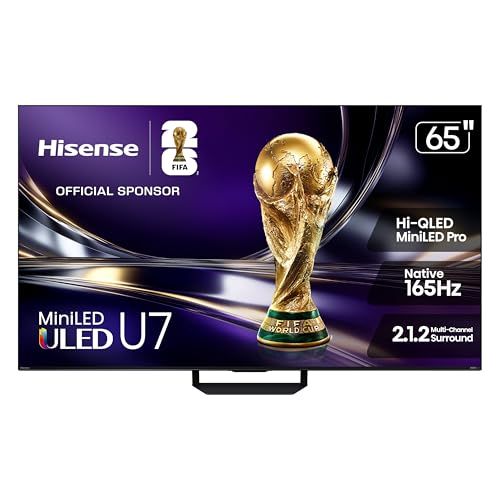
- Native 165Hz refresh rate
- Up to 3000 nits peak brightness
- Game Booster 330 with VRR support
Best For: Competitive gamers wanting a big, bright premium display
Top Pick for Smooth 4K Console Play

- 144Hz refresh rate with VRR up to 4K
- Mini LED contrast improves detail and brightness
- AI upscaling uses 20 neural networks
Best For: Gamers who want a bright 65-inch TV with fast motion handling
Best Large-Screen Gaming Upgrade
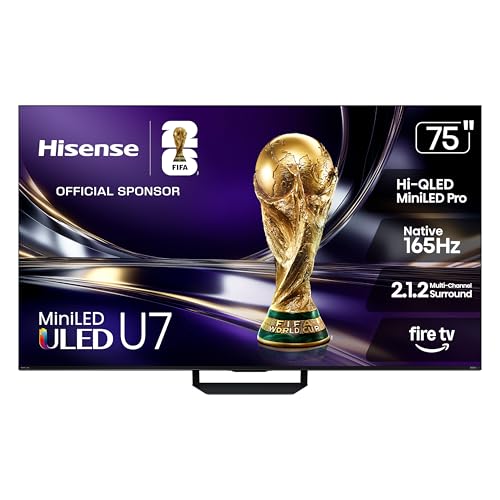
- Native 165Hz panel with Game Booster 330
- Up to 3000 nits and 3000 local dimming zones
- Anti-reflection layer helps in bright rooms
Best For: Competitive players wanting a huge, bright, high-refresh TV
Best Value for Console and PC Gaming

- 4K 120Hz with AMD FreeSync Premium Pro
- Up to 240fps at 1080p for PC play
- Full-array local dimming and 1000 nits peak brightness
Best For: Gamers who want a compact 50-inch TV with strong responsiveness
Bright 4K Value Pick
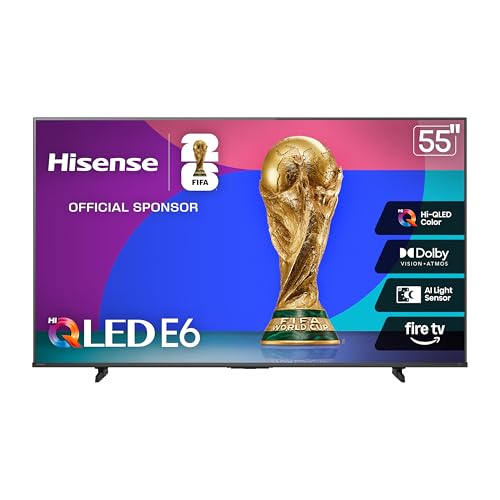
- Hi-QLED color with Total HDR Solution
- Game Mode Plus on a 60Hz 4K panel
- Dolby Vision, HDR10+, Dolby Atmos, Fire TV
Best For: Casual gamers wanting bright 4K HDR value
Premium High-Refresh Choice
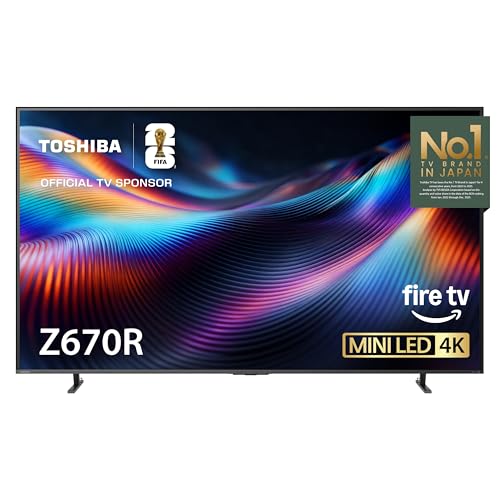
- Native 144Hz with Game Mode Pro
- AMD FreeSync Premium, VRR 144Hz, ALLM
- Mini-LED picture with Dolby Vision IQ
Best For: Next-gen console and PC gamers wanting 144Hz
Glare-Free Gaming Performer
Hisense U6 Pro Mini-LED Fire TV

- Native 144Hz for smooth gaming motion
- Glare-free Mini-LED with Hi-QLED color
- Built-in subwoofer with Dolby Vision IQ
Best For: Bright-room gamers who want 144Hz and low glare
Premium Bright-Room Gaming Choice – Hisense 55" U7 Mini-LED ULED 4K
If you’re shopping for smart TVs for gaming and want a display that stays punchy in bright rooms, this Hisense U7 is built around Mini-LED control, anti-reflection protection, and a native 165Hz panel. It also adds Game Booster 330 with a Game Bar, so fast-motion play can stay responsive while you keep an eye on FPS, VRR, and HDR settings.
Best For: Gamers who want a bright, glare-resistant TV with high refresh-rate support and quick tuning controls.
Pros:
- Native 165Hz refresh rate for smoother motion in games and sports
- Up to 3000 local dimming zones and up to 3000 nits peak brightness
- Anti-reflection and glare-free screen treatment for well-lit rooms
- Game Booster 330 with enhanced Game Bar for real-time game monitoring
Cons:
- Large feature set may be more than casual viewers need
- Gaming-focused specs may be overkill if you only stream occasionally
This model stands out if picture impact and gaming responsiveness matter equally. Between the Mini-LED backlight, AI picture processing, and 2.1.2-channel audio tuned by Devialet, it aims to deliver a premium all-in-one setup for console and streaming use.
Balanced Mid-Range Gaming Pick – TCL 55" T7 4K QLED Google TV
For shoppers comparing smart TVs for gaming, this TCL T7 aims for a practical mix of smooth motion, colorful QLED output, and easy console connectivity. The 120Hz panel, Motion Rate 480 with MEMC, and 4 HDMI inputs make it a straightforward fit for game rooms where one TV has to handle play, sports, and streaming.
Best For: Buyers who want a well-rounded gaming TV with strong motion handling and simple hookup options.
Pros:
- 120Hz panel refresh rate for smoother gameplay and sports
- QLED color with Dolby Vision, HDR10+, HDR10, and HLG support
- Motion Rate 480 with MEMC for added motion clarity
- Four HDMI inputs, including one with eARC, for consoles and accessories
Cons:
- Not as fast as higher-end gaming-focused panels with 144Hz or above
- Audio power is modest at 20 watts with a 2-channel layout
The TCL T7 makes sense if you want a capable gaming TV without moving into premium-tier pricing or specs. Its Google TV platform, voice control, and Dolby Atmos support round out a package built for everyday entertainment as much as play.
Compact OLED Gaming Upgrade – Samsung 48-Inch S85H OLED
If you want smart TVs for gaming in a smaller size, this 48-inch Samsung OLED focuses on picture depth and responsive play. The OLED HDR panel, NQ4 AI Gen2 processor, and Premium Gaming Pack with Motion Xcelerator 120Hz, NVIDIA G-SYNC, and AMD FreeSync Premium are aimed at making fast content feel smooth and controlled.
Best For: Players who want OLED contrast and gaming features in a compact 48-inch size.
Pros:
- OLED HDR for inky blacks and strong contrast
- Premium Gaming Pack with Motion Xcelerator 120Hz
- NVIDIA G-SYNC and AMD FreeSync Premium for tear reduction
- 4K AI upscaling and Pantone validated color
Cons:
- 48-inch screen may feel small for larger living rooms
- Gaming features are strong, but the spec focus is more on picture quality than brightness
This Samsung is a good fit if you value deep blacks and a premium-looking image in a space-saving format. Its AI processing and sound features add polish, while the gaming package gives you the core responsiveness many console players want.
Large-Screen Competitive Gaming Flagship – Hisense 65" U7 Mini-LED ULED 4K
For buyers prioritizing smart TVs for gaming on a bigger canvas, this 65-inch Hisense U7 builds on the same high-end gaming formula with Mini-LED backlighting, a native 165Hz refresh rate, and Game Booster 330. Its anti-reflection coating and very high brightness help it stay readable in brighter rooms, while the AI picture engine and motion system are tuned to keep fast scenes clear.
Best For: Gamers who want a large, bright, highly responsive TV for competitive play and shared viewing.
Pros:
- Native 165Hz refresh rate with up to 330Hz VRR support
- Up to 3000 local dimming zones and up to 3000 nits peak brightness
- Anti-reflection and glare-free screen treatment for daylight gaming
- 2.1.2-channel audio tuned by Devialet
Cons:
- Large 65-inch size may be too much for smaller rooms
- Premium gaming features may exceed the needs of casual players
This model is best viewed as a performance-first TV that still handles movies and streaming well. If you want a big screen with strong motion handling, bright-room visibility, and detailed contrast, it is one of the more complete options in this lineup.
Top Pick for Smooth 4K Console Play – Samsung Neo QLED 65" 4K 144Hz
If you want smart TVs for gaming that can also handle everyday streaming, this Samsung Neo QLED is built around speed, contrast, and AI upscaling. The Mini LED backlight and NQ4 AI Gen2 processor aim to sharpen detail, while the 144Hz panel helps keep fast action smooth and responsive.
Best For: Players who want a bright 65-inch 4K TV with high refresh-rate gaming and strong upscaling.
Pros:
- 144Hz refresh rate with VRR support up to 4K for smooth gaming
- Mini LED Neo QLED contrast for sharper, more precise scene detail
- AI processor uses 20 neural networks to upscale content to 4K
- Tizen platform includes thousands of free channels and easy app access
Cons:
- Built-in speakers are listed at 20 watts, so external audio may be preferable
- Only a 2-channel speaker description is listed despite surround formatting
This is a strong pick if you want a gaming-focused TV that prioritizes motion clarity and bright-room performance without giving up smart features. Its blend of Mini LED lighting, AI processing, and 144Hz gaming support makes it feel especially well-rounded.
Best Large-Screen Gaming Upgrade – Hisense U7 75" Mini-LED 165Hz
For smart TVs for gaming in a larger format, this Hisense U7 stands out with a native 165Hz refresh rate, high brightness, and a Fire TV interface. It is designed to keep motion clean in fast games while also helping colors and contrast pop in bright or dark rooms.
Best For: Competitive gamers and big-screen buyers who want a 75-inch TV with advanced motion and bright-room performance.
Pros:
- Native 165Hz refresh rate with Game Booster 330 and VRR support
- Up to 3000 local dimming zones and 3000 nits peak brightness
- Anti-reflection screen helps maintain clarity in bright rooms
- Fire TV platform includes smart recommendations and Alexa voice control
Cons:
- Its gaming feature set is extensive, which may be more than casual players need
- The 75-inch size may be too large for smaller rooms
This model leans hard into gaming-first performance, especially if you care about speed, brightness, and a screen that holds up in daylight. The combination of mini-LED precision, native 165Hz, and Game Booster features makes it one of the most aggressive gaming displays here.
Best Value for Console and PC Gaming – VIZIO Quantum Pro 50" 120Hz
If you’re comparing smart TVs for gaming and want a smaller set with strong console-friendly specs, this VIZIO Quantum Pro is easy to narrow down. It combines QLED color, full-array local dimming, and a 120Hz panel with support for 4K gaming up to 120fps.
Best For: Console or PC gamers who want a 50-inch 4K TV with 120Hz support and strong value.
Pros:
- 4K 120Hz panel with AMD FreeSync Premium Pro support
- Up to 1000 nits peak brightness with active full-array local dimming
- Can run up to 240fps at 1080p for PC gaming
- WiFi 6E, Chromecast, and Apple AirPlay add flexible connectivity
Cons:
- Smart TV functionality requires a VIZIO Account
- 50-inch size may be limiting for viewers who want a larger cinematic screen
This VIZIO is a practical gaming option if you want responsive performance without stepping up to a giant panel. Its mix of 120Hz 4K gaming, FreeSync support, and solid brightness makes it a versatile pick for both consoles and PCs.
Bright 4K Value Pick – Hisense 55 E6 Hi-QLED Fire TV
If you want smart TVs for gaming that also double as an everyday streaming screen, the Hisense 55E6QF makes a strong budget-friendly case. It pairs Hi-QLED color, Total HDR Solution, and Game Mode Plus with a 60Hz panel, so it’s aimed more at smooth, responsive casual play than top-tier competitive specs.
Best For: Casual gamers who want vivid 4K picture quality, HDR support, and an easy Fire TV setup.
Pros:
- Hi-QLED color and Total HDR Solution deliver bright, vivid 4K images.
- Game Mode Plus is included for a more gaming-friendly setup.
- Dolby Vision, HDR10+, Dolby Atmos, and Fire TV add strong entertainment value.
- AI Light Sensor and Wi-Fi 6 help the TV adapt well to changing rooms and streaming loads.
Cons:
- 60Hz refresh rate is not ideal for high-end competitive gaming.
- Lacks the native high-refresh gaming features found on premium models.
- Best suited to casual and mixed-use play rather than esports-first setups.
This is the kind of TV that makes sense if you want a bright, feature-rich screen without chasing the most advanced gaming specs. It offers a solid mix of picture quality, smart features, and gaming basics for everyday use.
Premium High-Refresh Choice – Toshiba Z670 Mini-LED Fire TV
For shoppers comparing smart TVs for gaming, the Toshiba 75Z670R stands out with a native 144Hz panel, Game Mode Pro, and support for AMD FreeSync Premium, VRR 144Hz, and ALLM. That combination makes it built for smoother motion and lower-latency play, especially with next-gen consoles and PC gaming.
Best For: Gamers who want a large-screen premium TV with native 144Hz support and advanced gaming features.
Pros:
- Native 144Hz refresh rate supports very smooth motion.
- Game Mode Pro adds AMD FreeSync Premium, VRR 144Hz, and ALLM.
- Mini-LED with Full Array Local Dimming boosts contrast and highlight control.
- Dolby Vision IQ, HDR10+, and Dolby Atmos round out the premium feature set.
Cons:
- 75-inch size may be too large for smaller rooms.
- Higher-end feature set is likely more than casual gamers need.
- Premium positioning may put it above basic gaming TV budgets.
If you want a TV that leans hard into gaming responsiveness, this Toshiba checks the right boxes. It combines a fast refresh rate, adaptive gaming tools, and a high-contrast Mini-LED picture in one large-screen package.
Glare-Free Gaming Performer – Hisense U6 Pro Mini-LED Fire TV
The Hisense 75U6SF Pro is a compelling option among smart TVs for gaming because it combines a native 144Hz refresh rate with Mini-LED contrast and a glare-free screen. That makes it a practical pick for fast action in bright rooms, while Hi-QLED color and AI picture tuning help keep games and sports looking sharp.
Best For: Gamers who play in bright rooms and want a fast 144Hz Mini-LED display.
Pros:
- Native 144Hz refresh rate helps keep gameplay smooth and clear.
- Mini-LED with Hi-QLED color delivers strong contrast and vivid color.
- Anti-reflection, glare-free screen is ideal for bright rooms.
- Built-in subwoofer, Dolby Vision IQ, and HDR10+ add extra entertainment value.
Cons:
- 75-inch size may be oversized for some setups.
- Gaming-focused strengths are best appreciated in larger viewing spaces.
- Fire TV interface may be more than you need if you only want basic TV use.
This model is a smart fit if room lighting is a constant problem and you still want fast gaming performance. It blends a responsive panel with strong contrast and low-glare viewing in a way that feels practical first and premium second.
How We Picked the Best Smart TVs for Gaming
We prioritized the specs that most affect gameplay: low input lag, high refresh rate support, VRR, strong HDR performance, and modern processing for smooth motion. We also looked for sets with enough screen brightness and contrast to handle both dark game scenes and bright daytime play.
Because Smart TVs for Gaming are often used for movies and streaming too, we favored balanced models with good built-in platforms, solid upscaling, and reliable feature sets rather than gaming-only displays.
Quick Comparison
For competitive players, 120Hz or higher matters most, especially on console titles and PC gaming. Mini-LED and OLED models tend to offer the best contrast, while QLED sets often deliver excellent brightness for well-lit rooms. Larger screens can be great for immersive single-player games, but smaller sizes may be better for desks and tighter setups.
Key Buying Factors for Smart TVs for Gaming
Refresh Rate and VRR
Look for native 120Hz, 144Hz, or higher if you want smoother motion and less tearing. VRR is especially useful for games with fluctuating frame rates.
HDMI Features
Check for HDMI 2.1 support if you plan to use a PlayStation 5, Xbox Series X, or a modern gaming PC. Features like ALLM and eARC can also improve setup flexibility.
Panel Type and Contrast
OLED usually gives the best black levels and per-pixel contrast, while Mini-LED can offer stronger brightness and excellent HDR impact. QLED models are often a good middle ground for bright rooms.
Gaming Modes and Processing
Dedicated game modes, fast image processing, and good motion handling help reduce blur and lag. Upscaling matters too, especially if you still play older consoles or stream lower-resolution content.
Who Should Buy Which Smart TVs for Gaming?
Competitive players should favor the fastest panels and strongest gaming feature sets. Movie-first gamers may prefer OLED for cinematic contrast. If your room is bright or you want a larger screen on a budget, Mini-LED and QLED options often provide the best overall value. For mixed-use households, choose the model that offers the best blend of gaming performance, smart platform convenience, and screen size for your space.
