

If you need reliable readings in severe heat, freezing cold, high wind, or heavy rain, the right station matters. The best smart weather stations for extreme climates pair rugged sensors with accurate forecasting and dependable connectivity.
Below, we focus on models that are easier to monitor remotely, built for tougher environments, and practical for homeowners, farms, cabins, and off-grid properties.
Best 10 Smart Weather Stations for Extreme Climates Picks for 2026
Extreme-Ready Smart Pick
Ecowitt WS90 7-in-1 Smart Sensor

- Haptic rain sensing with no moving parts
- IPX5 build with thermal insulation materials
- Bluetooth and Zigbee support smart automation
Best For: Durable outdoor monitoring and irrigation automation
Long-Range Yard Monitor
4900FT LoRa Smart Weather Station

- LoRa link reaches up to 4900 ft in open areas
- 7-in-1 solar sensor with bird spikes
- Console supports add-on sensors and CSV export
Best For: Large properties and remote outbuildings
Connected Home Choice
Ambient Weather WS-1965 Wi-Fi Station
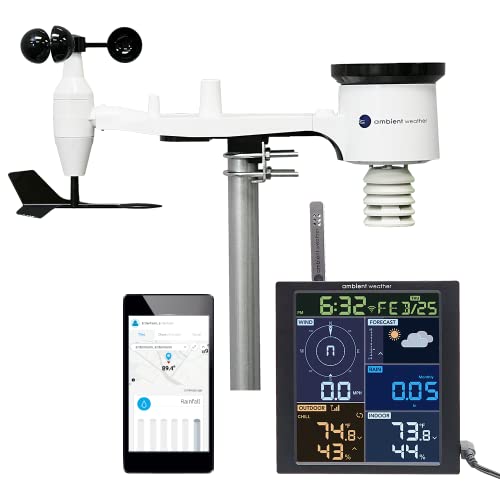
- Tracks core weather data with an all-in-one array
- 16-second updates and Wi-Fi remote monitoring
- Works with Alexa, Google Home, and IFTTT
Best For: Connected homes that want remote monitoring
Low-Maintenance Forecasting Pick
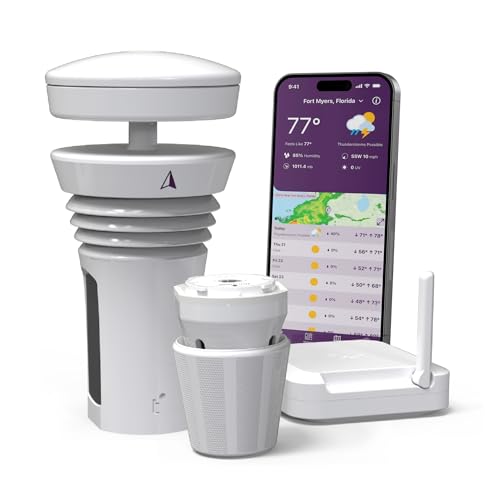
- No moving parts for low-maintenance use
- Tracks lightning, UV, solar radiation, and more
- Updates every 3 seconds with 1,000+ ft range
Best For: Hands-off monitoring with smart-home automation
Wind-First Outdoor Pick
Ambient Weather Falcon WS-8480A Fan Aspirated Smart WiFi Weather Station
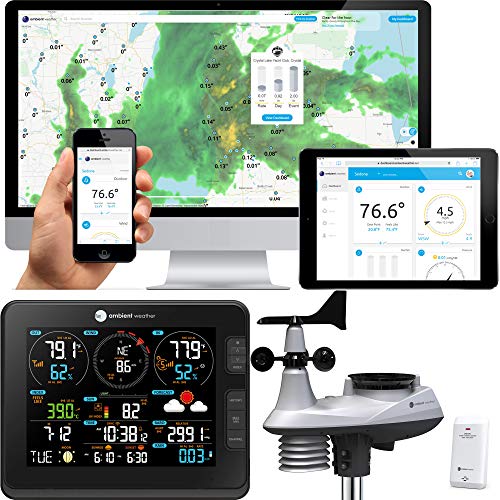
- Fan-aspirated outdoor sensor design
- Wi‑Fi remote monitoring and alerts
- Solar-powered with battery support
Best For: Outdoor wind and temperature monitoring in exposed home settings
All-in-One Forecasting Pick
Sainlogic 14-in-1 WiFi Smart Weather Station

- 14-in-1 sensor coverage for broad monitoring
- 24h/7-day forecasts with app alerts
- 2-year data storage and export
Best For: Broad home and property monitoring with forecasts and historical data
Smart Home Ready Pick
Ambient Weather WS-2902 Wi-Fi Smart Weather Station
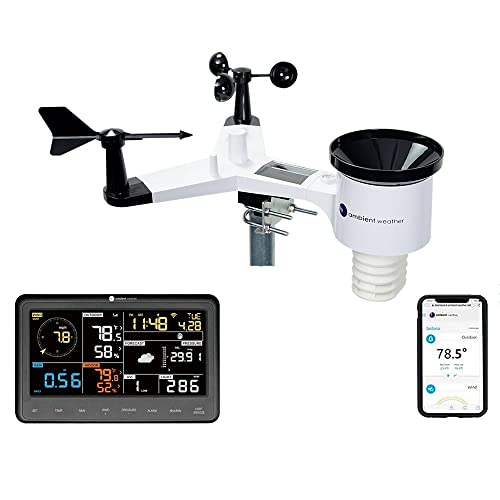
- Tracks wind, rain, UV, solar radiation, and more
- Wi‑Fi alerts with smart home compatibility
- Weather-resistant outdoor sensor array
Best For: Hyper-local backyard monitoring with smart home integration
All-Weather Connectivity
Sainlogic 5G/2.4G WiFi Smart Weather Station

- Dual-band 5G/2.4G WiFi for steadier connectivity
- 443 ft wireless range for remote sensor placement
- 2-year data storage with CSV export
Best For: Large properties and users who want stable, long-range weather monitoring
Easy-Read Forecasting
Sainlogic Smart WiFi Weather Station

- AI-driven 24/7 forecasts through the Weatherseed app
- High-contrast display with enlarged, bold fonts
- 2-year data storage with Excel export
Best For: Users who want a readable display and app-based weather alerts
Beginner-Friendly Forecasts
Sainlogic Smart WiFi Weather Station

- 2.4G WiFi with Weatherseed app alerts and forecasts
- High-contrast LCD with extra-large bold digits
- 2-year data archive with Excel export
Best For: Beginners who want simple setup and detailed weather history
Extreme-Ready Smart Pick – Ecowitt WS90 7-in-1 Smart Sensor
If you want smart weather stations for extreme climates, the Ecowitt WS90 is built around a rugged outdoor sensor that prioritizes reliable readings in harsh conditions. Its ultrasonic wind monitoring, haptic rain detection, IPX5 waterproofing, and thermal insulation materials make it a strong fit for challenging outdoor use, while Bluetooth and Zigbee connectivity support smart-home integration through compatible gateways.
Best For: Homeowners, gardeners, and small greenhouse setups that need durable outdoor sensing with automation-friendly data.
Pros:
- Haptic rain sensor detects rainfall start/stop with no moving parts.
- IPX5 waterproof design and thermal insulation materials help it handle rough weather.
- Built-in solar panel plus backup batteries support long-term outdoor operation.
- Long-range transmission reaches up to 150 m with obstacles or 300 m in open space.
Cons:
- Requires a gateway for use with the Shelly Smart Control app.
- No display is included on the sensor itself.
- Smart-home features depend on compatible Shelly and Zigbee gear.
For harsh-weather monitoring where durability matters as much as data quality, the WS90 stands out with sensor design choices aimed at dependable outdoor performance. It is especially appealing if you want weather data to feed irrigation or home automation routines.
Long-Range Yard Monitor – 4900FT LoRa Smart Weather Station
For smart weather stations for extreme climates, this LoRa-based model focuses on range and visibility. The 7-in-1 solar outdoor sensor covers core outdoor conditions, while the console adds a high-definition color display, app access, CSV export, and calibration tools for users who want to track data across large properties or remote structures.
Best For: Large backyards, farms, greenhouses, and detached buildings that need a stronger wireless link.
Pros:
- LoRa transmission reaches up to 4900 ft in open areas.
- 7-in-1 sensor tracks temperature, humidity, rain, wind, UV, and light.
- Adjustable solar panel helps extend battery life up to 2.5 years under typical conditions.
- Console supports add-on sensors plus CSV export and app monitoring.
Cons:
- Open-area range will be lower with obstacles.
- Battery life depends on sunlight and conditions.
- Feature-rich console may be more than casual users need.
This is a practical choice if distance is the main challenge, especially on acreage or between outbuildings. The combination of long-range LoRa, expandability, and data-export features makes it better suited to demanding monitoring setups than basic home stations.
Connected Home Choice – Ambient Weather WS-1965 Wi-Fi Station
The Ambient Weather WS-1965 is a straightforward pick for smart weather stations for extreme climates when you want reliable basics plus remote access. Its all-in-one sensor array measures temperature, humidity, barometric pressure, wind speed, wind direction, and rainfall, while Wi-Fi connectivity lets you send data to Ambient Weather Network and use smart-home platforms.
Best For: Users who want a dependable Wi-Fi station with app and smart-home integration.
Pros:
- All-in-one sensor array covers the key weather readings.
- 16-second updates keep console data current.
- Works with IFTTT, Google Home, and Alexa for automation.
- Optional Ambient Weather Network access adds remote sharing and dashboard customization.
Cons:
- Feature set is more focused on core weather metrics than specialty sensing.
- Some network and community features are optional.
- Less emphasis on extreme-range wireless performance than LoRa models.
This model is best if you want a dependable weather station that fits neatly into a connected home setup. It delivers the essentials cleanly, but buyers needing long-distance transmission or extra harsh-weather sensor design may want to compare other options.
Low-Maintenance Forecasting Pick – Tempest Weather Station
Tempest is a strong contender among smart weather stations for extreme climates because it combines broad sensing, wireless range, and near-zero maintenance design. The solar-powered outdoor sensor measures temperature, humidity, pressure, wind, rain, UV, solar radiation, and lightning, then sends real-time updates every 3 seconds for fast local awareness.
Best For: Users who want a maintenance-light station with rich sensor coverage and smart-home automation.
Pros:
- No moving parts, which helps reduce maintenance needs.
- Measures lightning, UV, solar radiation, wind, rain, and more from one device.
- Wireless range exceeds 1,000 feet.
- Integrates with Alexa, Rachio, IFTTT, and other smart-home platforms.
Cons:
- No display is included on the device.
- Depends on solar power and a lithium-ion battery.
- Premium feature set may be more than basic weather tracking requires.
If you want a set-it-and-forget-it station that still delivers broad, practical environmental data, Tempest is an easy recommendation. Its combination of fast updates, long wireless reach, and automation support makes it especially useful for weather-aware homes and irrigation setups.
Wind-First Outdoor Pick – Ambient Weather Falcon WS-8480A Fan Aspirated Smart WiFi Weather Station
If you want smart weather stations for extreme climates, the Falcon WS-8480A is built around practical outdoor monitoring with Wi‑Fi alerts and a fan-aspirated design. It tracks the conditions that matter most for exposed yards and gardens, while the solar-powered sensor setup helps keep the station running outdoors with minimal fuss.
Best For: Homeowners and gardeners who want reliable wind and temperature monitoring in an outdoor setup.
Pros:
- Fan-aspirated outdoor sensor design for more active airflow sampling.
- Wi‑Fi connectivity supports remote monitoring and alerts.
- Solar-powered operation with battery backup support for the sensor.
- Tracks outdoor wind speed, temperature, and humidity for yard use.
Cons:
- Temperature range is listed up to 50°C, which may limit very hot-climate coverage.
- Batteries are not included.
- Feature set is more focused than multi-sensor flagship systems.
This is a solid pick if you want a simpler smart station that emphasizes outdoor wind and general weather tracking. It fits best in gardens and exposed residential spaces where remote alerts and solar support matter.
All-in-One Forecasting Pick – Sainlogic 14-in-1 WiFi Smart Weather Station
For shoppers comparing smart weather stations for extreme climates, this Sainlogic model stands out for its 14-in-1 sensor package, app-based forecasts, and long-term data handling. It updates every five minutes, supports Wi‑Fi alerts, and gives you a large display plus historical charts when you need to watch changing conditions closely.
Best For: Buyers who want broad sensor coverage, app forecasts, and easy data review for home or property monitoring.
Pros:
- 14-in-1 monitoring with temperature, humidity, rainfall, wind, UV, and sunlight readings.
- Weatherseed app provides 24-hour and 7-day forecasts plus instant alerts.
- 2-year data storage and export support for long-term tracking.
- Large 8.5-inch display makes the station easy to read from across a room.
Cons:
- Only supports 2.4G Wi‑Fi.
- Batteries are not included.
- Setup and data tools may be more than casual users need.
This is a strong choice if you want a weather station that does more than basic readouts. Its app forecasting, exportable history, and wide sensor coverage make it especially useful when conditions change fast.
Smart Home Ready Pick – Ambient Weather WS-2902 Wi-Fi Smart Weather Station
The Ambient Weather WS-2902 is a practical choice if you want smart weather stations for extreme climates with remote monitoring and weather-resistant outdoor hardware. It measures the core outdoor variables that affect comfort and safety, and its Wi‑Fi connection makes it easier to keep an eye on conditions from anywhere.
Best For: Users who want hyper-local backyard data with smart home compatibility.
Pros:
- Measures wind speed and direction, temperature, humidity, rainfall, UV intensity, and solar radiation.
- Wi‑Fi remote monitoring and alerts help you stay informed off-site.
- Smart home integration support includes IFTTT, Google Home, and Alexa.
- Weather-resistant design is suited to outdoor installation.
Cons:
- Uses AAA batteries in addition to solar power.
- Display is LCD rather than a larger advanced touchscreen.
- Temperature range is listed from 14°F to 149°F, so the extremes are defined by the specs rather than a specialized cold-weather rating.
Overall, this model is a good middle-ground option for homeowners who want dependable outdoor readings and smart ecosystem support. It focuses on the weather data most people actually use, while still offering remote access and alerts.
All-Weather Connectivity – Sainlogic 5G/2.4G WiFi Smart Weather Station
If you want smart weather stations for extreme climates, this Sainlogic model stands out for stable connectivity and long-range sensor placement. The dual-band 5G/2.4G WiFi setup is designed to reduce lag and disconnections, while the 443 ft wireless range helps you monitor conditions from distant yards, sheds, or garden areas.
Best For: Users who need dependable remote monitoring, strong WiFi stability, and long-distance sensor coverage.
Pros:
- Dual-band 5G/2.4G WiFi aims to reduce signal lag and dropouts.
- 443 ft wireless transmission range supports remote outdoor placement.
- High-precision rainfall tracking records hourly through yearly totals.
- 2-year data storage with spreadsheet export for long-term analysis.
Cons:
- Outdoor setup still requires proper mounting and placement.
- Some features depend on app connectivity and WiFi setup.
This is a practical choice if you need a weather station that can stay connected across larger properties and log detailed rain history over time. The focus here is on monitoring reliability rather than extra display gimmicks.
Easy-Read Forecasting – Sainlogic Smart WiFi Weather Station
This Sainlogic pick fits the smart weather stations for extreme climates keyword well if you want readable, app-connected monitoring with rainfall tracking and alerts. It uses 2.4G WiFi and the Weatherseed app for AI-driven 24/7 forecasts, while the high-contrast display is built for quick reading at a glance.
Best For: Buyers who want clear on-screen data, app alerts, and easy long-term weather tracking.
Pros:
- Weatherseed app provides AI-driven 24/7 monitoring and forecasts.
- High-contrast display with enlarged fonts is easier to read.
- 2-year weather data storage with Excel export for trend review.
- Precision rain monitor logs hourly, daily, weekly, monthly, and yearly data.
Cons:
- Works with 2.4G WiFi only.
- Outdoor sensor placement needs careful installation for accurate readings.
Overall, this model leans into ease of use and visibility, which makes it a strong fit for users who want straightforward weather tracking without a complicated setup. Its data export and alert features add value for gardeners and home users alike.
Beginner-Friendly Forecasts – Sainlogic Smart WiFi Weather Station
For smart weather stations for extreme climates, this Sainlogic unit focuses on simple setup, app alerts, and dependable weather logging. It connects through 2.4G WiFi, uses the Weatherseed app for AI-driven forecasts, and adds a high-contrast display that keeps core data easy to read.
Best For: First-time users, gardeners, and property owners who want easy setup with detailed weather records.
Pros:
- AI-driven 24/7 weather tracking and smartphone alerts through the app.
- High-contrast LCD with extra-large bold digits for easier reading.
- 2-year data archive with Excel export supports longer-term analysis.
- Precision rain monitoring records hourly through yearly data points.
Cons:
- 2.4G WiFi only, so no 5GHz connection option.
- Accurate outdoor readings depend on following the installation guide.
This version is a good match if you want a weather station that is easy to install but still serious about data collection. It offers the basics needed for monitoring changing conditions without adding unnecessary complexity.
How We Picked These Smart Weather Stations for Extreme Climates
We focused on outdoor sensor durability, measurement breadth, wireless range, power options, alerting, and app or network access. For Smart Weather Stations for Extreme Climates, stability matters as much as feature count, so we prioritized systems that can keep reporting through harsh temperature swings, precipitation, and distance from the indoor console.
We also favored models with stronger ecosystem support, such as Wi-Fi apps, remote monitoring, and weather network access, since those features make it easier to spot changing conditions before they become a problem.
Quick Comparison: What Matters Most
If you want the simplest shortlist, look for three things first: sensor reliability, connectivity range, and alert quality. Ultrasonic wind sensing can reduce moving parts in exposed locations, while fan-aspirated designs may help with temperature accuracy in direct sun. Long-range wireless systems are especially useful for large properties, rural sites, and installations where the sensor must sit far from the display.
Forecasting features vary widely, so treat “AI” or app-based predictions as a convenience layer, not a replacement for well-placed sensors and good installation.
Key Buying Factors for Smart Weather Stations for Extreme Climates
Temperature and Wind Exposure
Choose a station rated for the temperature range you actually face, including winter lows and summer heat. In windy or storm-prone areas, look for secure mounting hardware and wind readings that remain stable in gusts.
Rain and Humidity Performance
For wet or coastal climates, pay attention to rain gauge design, splash resistance, and sensor housing. Humidity accuracy is especially important in places with fog, dew, or frequent precipitation.
Connectivity and Range
Wi-Fi is ideal for app alerts and cloud access, while long-range radio systems are better when the outdoor sensor is far from the house. If your property is large, range should be a top priority.
Power and Backup
Solar-assisted sensors reduce maintenance, but backup batteries still matter when sunlight is limited. If your site has long winters, confirm the station can operate reliably with minimal charging.
Display and Alerting
A clear console is helpful for quick checks, but smart alerts are what make these stations truly useful. Email, push, or app alerts can warn you about temperature drops, high wind, rainfall, or other thresholds that affect people, pets, crops, and equipment.
Who Should Buy Which Smart Weather Stations for Extreme Climates?
If you want the most advanced sensing and a modern smart-home-friendly setup, choose a higher-end station with stronger connectivity and fewer moving parts. If your priority is remote monitoring across a large rural property, long-range wireless models are usually the better fit. If you mainly want dependable everyday weather tracking for a house or backyard, a Wi-Fi station with solid alerts and a readable display is often the sweet spot.
For Smart Weather Stations for Extreme Climates, the best choice is the one that matches your site conditions first, then your app and forecast preferences second.
