

Smart weather stations for home use give you more than a basic forecast. They track the conditions around your property in real time, so you can monitor temperature, humidity, wind, rain, and alerts from your phone.
Whether you want a simple indoor-outdoor display or a connected system with app access and smart-home features, this roundup highlights the best options for accurate, practical home monitoring in 2026.
Best 10 Smart Weather Stations for Home Use Picks for 2026
Hyper-Local Wi-Fi Pick
Ambient Weather WS-2902 Smart Station
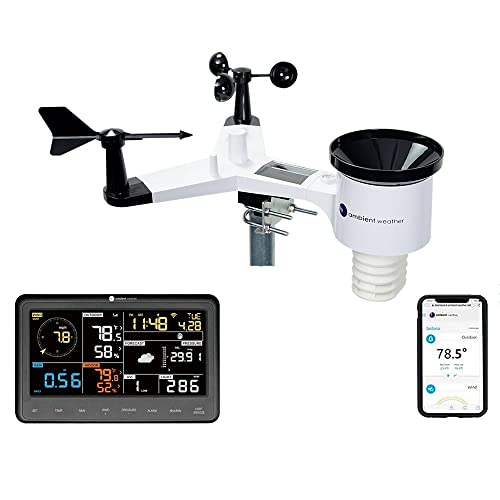
- Tracks wind, rain, UV, and solar radiation
- Wi-Fi alerts and remote monitoring
- Works with IFTTT, Google Home, and Alexa
Best For: homeowners who want connected, hyper-local weather data
Budget-Friendly Forecast Choice
AcuRite Iris 5-in-1 Wi-Fi Station
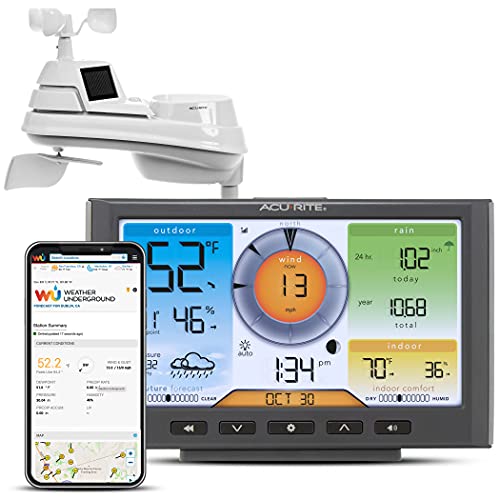
- 5-in-1 sensor covers wind, rain, pressure, temp, and humidity
- Connects to Weather Underground
- Large color LCD with dimmer and clock
Best For: buyers seeking an easy-to-use weather station with core readings
All-in-One Remote Monitor
Ambient Weather WS-1965 Wi-Fi Station
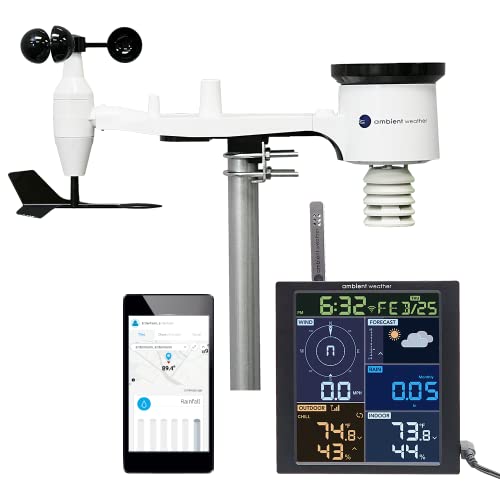
- All-in-one sensor array with six weather readings
- 16-second real-time console updates
- Wi-Fi alerts with optional AWN access
Best For: users who want a streamlined, connected outdoor sensor
AI Forecast Display
Sainlogic SA9 Plus Smart WiFi Station

- 7-in-1 outdoor sensor plus indoor thermo-hygrometer
- Weatherseed app adds AI forecasts and alerts
- 8.5-inch display with bold, easy-to-read fonts
Best For: users who want app forecasts and a large, readable display
Most Automated Outdoor Sensor
Ecowitt WS90 7-in-1 Weather Station

- 7-in-1 outdoor sensing with rain, wind, UV, and light
- Haptic rain sensor has no moving parts
- Works with Bluetooth, Zigbee, and Shelly-compatible gateways
Best For: Homeowners who want detailed outdoor monitoring and irrigation automation
Best App-Connected Display
BaldrTherm WiFi Weather Station

- 2.2-inch color display shows indoor/outdoor data and forecasts
- WiFi app alerts for temperature and humidity thresholds
- Supports up to 3 sensors with 180 m wireless range
Best For: Families or homeowners who want a readable display with app alerts
Best Premium Forecast Hub
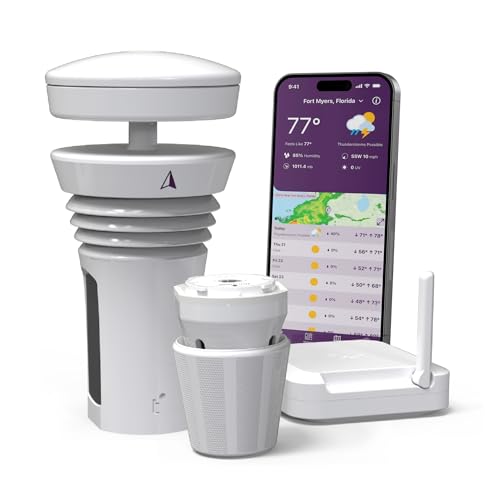
- Tracks temperature, wind, rain, UV, lightning, and more
- Solar-powered with wireless range over 1,000 feet
- Integrates with Alexa, Rachio, and IFTTT
Best For: Homeowners who want advanced forecasting and automation support
WiFi Home Monitor
Sainlogic Smart WiFi Weather Station

- Weatherseed app with AI-driven forecasts and alerts
- Easy-to-read high-contrast display
- Stores and exports up to 2 years of data
Best For: Homeowners and gardeners who want app-connected monitoring and rain data
Large Display Pick
Sainlogic 14-in-1 WiFi Smart Weather Station

- 8.5-inch display for easier reading
- 7-in-1 outdoor sensor tracks UV, sunlight, wind, and rain
- Weatherseed app adds forecasts, alerts, and 2-year data storage
Best For: Users who want a bigger screen and more weather metrics
Alert-First Monitor
Sainlogic Smart WiFi Weather Station with Rain Gauge

- Weatherseed app sends instant phone alerts
- Precision rain gauge with long-term records
- 2-year archive with Excel export support
Best For: Home users who want alerts and detailed rain tracking
Hyper-Local Wi-Fi Pick – Ambient Weather WS-2902 Smart Station
For shoppers comparing smart weather stations for home use, the Ambient Weather WS-2902 is a strong fit if you want rich backyard data and connected alerts. It tracks wind, rain, temperature, humidity, UV, and solar radiation, then lets you view and share the readings remotely through Wi-Fi.
Best For: Homeowners who want a feature-rich station with remote monitoring and smart home integrations.
Pros:
- Measures a wide set of conditions, including wind, rainfall, UV, and solar radiation.
- Wi-Fi remote monitoring and alerts support home automation with IFTTT, Google Home, and Alexa.
- Includes a color LCD console plus an outdoor sensor array with rain cup.
- Can transmit data to the Ambient Weather Network for dashboard customization and sharing.
Cons:
- Uses a separate sensor array and console, so setup is more involved than all-in-one designs.
- Advanced network and smart-home features may be more than casual users need.
Overall, the WS-2902 is a practical choice if you want broad environmental monitoring and the option to expand into app-based and smart-home workflows. It feels especially well suited to users who value hyper-local readings over basic indoor/outdoor temperature alone.
Budget-Friendly Forecast Choice – AcuRite Iris 5-in-1 Wi-Fi Station
If you want smart weather stations for home use with an easy setup and lots of everyday data, the AcuRite Iris 5-in-1 is a sensible option. It combines indoor/outdoor temperature and humidity with wind, pressure, and rainfall readings, then links to Weather Underground for remote viewing.
Best For: Buyers who want a straightforward Wi-Fi station with a strong mix of core weather readings.
Pros:
- Captures temperature, humidity, wind speed/direction, barometric pressure, and rainfall.
- Color LCD display shows time, date, and outdoor conditions clearly.
- Connects to Weather Underground for remote monitoring and sharing.
- Includes threshold alarms and historical tracking across more than 25 data points.
Cons:
- Uses battery power for the station, so power management matters.
- Accuracy is listed at +/- 2 degrees Fahrenheit, which may be modest for some users.
The Iris 5-in-1 stands out as a practical home station if you want a good balance of features without a complicated install. Its broad data set and Weather Underground support make it useful for everyday monitoring and sharing.
All-in-One Remote Monitor – Ambient Weather WS-1965 Wi-Fi Station
The Ambient Weather WS-1965 is a compact option for smart weather stations for home use when you want a simpler all-in-one sensor setup. Its outdoor array reports temperature, humidity, barometric pressure, wind speed, wind direction, and rainfall, while the color LCD display keeps the essentials in view.
Best For: Users who want an all-in-one outdoor sensor and remote monitoring without a multi-piece setup.
Pros:
- All-in-one sensor array measures six key weather conditions.
- 16-second real-time updates on the console.
- Wi-Fi support includes remote monitoring and optional Ambient Weather Network access.
- Compatible with alerts and smart-home integration through IFTTT, Google Home, and Alexa.
Cons:
- Battery-powered design may require more attention than a fully wired setup.
- Focuses on core weather data rather than the broader sensor list found on some higher-end stations.
This model is a solid pick if you prefer an all-in-one sensor and want dependable remote access. It keeps the package streamlined while still offering the connected features many home users look for.
AI Forecast Display – Sainlogic SA9 Plus Smart WiFi Station
The Sainlogic SA9 Plus is aimed at buyers who want smart weather stations for home use with app-based forecasting and a large, easy-to-read display. It combines an outdoor 7-in-1 sensor with an indoor thermo-hygrometer, and the Weatherseed app adds AI-powered forecasts plus exportable history.
Best For: Users who want app-connected forecasting, large-screen readability, and broad sensor coverage.
Pros:
- 7-in-1 outdoor sensor measures UV, sunlight, wind, rain, temperature, humidity, and pressure.
- Weatherseed app offers 24/7 AI-powered forecasts and alert thresholds.
- Supports Wi-Fi or Bluetooth setup, with optional Weather Underground integration.
- Large 8.5-inch display with bold fonts and adjustable backlight.
Cons:
- The feature set is broad, so casual users may not use every data point.
- Best experience appears tied to the app and connected services.
If you want a station that emphasizes readable data and app-based forecasting, the SA9 Plus is a compelling choice. Its large display and exportable history make it appealing for families, gardeners, and anyone who likes to track conditions over time.
Most Automated Outdoor Sensor – Ecowitt WS90 7-in-1 Weather Station
If you want smart weather stations for home use that can also support garden automation, the Ecowitt WS90 stands out for its sensor-first approach. It tracks temperature, humidity, wind, rainfall, UV, and illuminance, then connects through Bluetooth or Zigbee for smart-home workflows with Shelly devices and compatible gateways.
Best For: Homeowners who want detailed outdoor monitoring plus irrigation-friendly automation.
Pros:
- 7-in-1 outdoor sensor covers temperature, humidity, wind, rain, UV, and light data.
- Haptic rain sensor detects rainfall start/stop events with no moving parts.
- IPX5 weatherproof design, solar power, and backup batteries support outdoor reliability.
- Long-range transmission up to 150 m with obstacles or 300 m in open space.
Cons:
- Requires a gateway for use with the Shelly Smart Control app.
- No built-in display, so it is not a standalone indoor viewing station.
Overall, the WS90 is a strong pick if your priority is reliable outdoor sensing and smart irrigation control rather than a tabletop display. It is especially appealing for users already in the Shelly ecosystem or building one around Zigbee.
Best App-Connected Display – BaldrTherm WiFi Weather Station
For smart weather stations for home use that prioritize easy reading and app-based alerts, the BaldrTherm is a practical choice. Its large color display shows current indoor and outdoor readings, a 5-day forecast, and history details, while WiFi connectivity adds remote monitoring and push notifications.
Best For: Families or homeowners who want a readable display plus app alerts for daily climate tracking.
Pros:
- Large 2.2-inch color display makes readings and forecasts easy to scan.
- 5-day forecast and WiFi smart updates help you plan ahead.
- Remote app monitoring with custom temperature and humidity alerts.
- Supports up to 3 sensors and offers 180 m wireless range.
Cons:
- WiFi only supports 2.4 GHz, or combined 2.4/5 GHz connection.
- Less focused on outdoor smart-home automation than sensor-only systems.
In practice, this model is best if you want a straightforward home weather station with a visible screen and useful app features. It is a solid everyday monitoring option for indoor comfort, patio conditions, and basic planning.
Best Premium Forecast Hub – Tempest Weather Station
The Tempest is a premium option among smart weather stations for home use if you want a compact outdoor sensor with broad data coverage and strong smart-home integration. It measures temperature, humidity, pressure, wind, rainfall, UV, solar radiation, lightning, and more, then sends real-time updates and forecast-driven insights to connected apps and platforms.
Best For: Homeowners who want a low-maintenance weather station with advanced forecasting and automation support.
Pros:
- Monitors a wide range of conditions from a single outdoor device.
- Solar-powered, wireless design with 1,000+ foot transmission range.
- No moving parts for near-zero maintenance and long-term reliability.
- Integrates with Alexa, Rachio, IFTTT, and other smart home platforms.
Cons:
- No built-in display, so you will rely on the app or connected platforms.
- Uses a premium system approach that may be more than casual users need.
Tempest is a strong fit if you want a highly capable backyard weather sensor that can feed smarter automation across the home. Its combination of broad measurement coverage, low maintenance, and platform support makes it one of the more capable choices in this category.
WiFi Home Monitor – Sainlogic Smart WiFi Weather Station
If you want smart weather stations for home use that focus on clear readings and connected alerts, this Sainlogic model is built for practical day-to-day monitoring. It pairs a wireless indoor/outdoor layout with Weatherseed app access, so you can check conditions remotely and get notified when temperature, humidity, or pressure changes.
Best For: Homeowners and gardeners who want app alerts, rain tracking, and an easy-to-read display.
Pros:
- WiFi-connected Weatherseed app with AI-driven 24/7 forecasting and instant alerts
- High-contrast display with enlarged bold fonts for easier reading
- Supports up to 2 years of weather data storage and Excel export
- Includes precision rain monitoring with wireless coverage for home and garden use
Cons:
- Only supports 2.4G WiFi
- Data exports are limited to 30 days per download
- Outdoor sensor setup needs to follow the manual for accurate wind and temperature readings
Overall, this is a solid choice if you want a connected weather station that emphasizes readable data, rainfall monitoring, and long-term trend tracking without a complicated setup.
Large Display Pick – Sainlogic 14-in-1 WiFi Smart Weather Station
For shoppers comparing smart weather stations for home use, this Sainlogic model stands out for its larger 8.5-inch display and broader sensor set. It connects to the Weatherseed app over 2.4G Wi-Fi for forecasts, real-time monitoring, alerts, and long-term data review, while the 7-in-1 outdoor sensor adds extra measurements like UV and sunlight.
Best For: Users who want a large display and more detailed weather measurements for home, garden, or office.
Pros:
- 8.5-inch display makes readings easier to see from different angles
- Weatherseed app offers 24h/7-day forecasts, live monitoring, and alerts
- Tracks temperature, humidity, rainfall, wind, UV, and sunlight
- Stores and exports up to 2 years of data for trend analysis
Cons:
- Only supports 2.4G Wi-Fi
- Battery backup at night requires batteries, which are not included
- Data exports are limited to 30 days per download
This is the better pick if you value a bigger screen and a wider set of outdoor measurements, especially when you want an at-a-glance station that still connects to app-based forecasting.
Alert-First Monitor – Sainlogic Smart WiFi Weather Station with Rain Gauge
If you need smart weather stations for home use that prioritize alerts and historical tracking, this Sainlogic unit is a straightforward option. It links to the Weatherseed app over 2.4G Wi-Fi, gives AI-driven forecasts, and sends instant phone notifications when conditions shift, making it useful for homes, gardens, and outdoor planning.
Best For: Home users who want phone alerts, rain monitoring, and easy weather history access.
Pros:
- Instant smartphone alerts through the Weatherseed app
- 2-year weather archive with Excel export support
- Precision rain monitoring with hourly, daily, weekly, monthly, and yearly records
- High-contrast screen designed for easier reading
Cons:
- Only works with 2.4G Wi-Fi
- Outdoor sensor must be installed carefully to avoid inaccurate readings
- Data exports are limited to 30 days at a time
This model is a practical fit if your priority is app-based alerts and reliable weather logs rather than a huge display or extra sensor types.
How We Picked the Best Smart Weather Stations for Home Use
We focused on models that balance accurate sensing, reliable wireless connectivity, clear app or display access, and useful alerts for everyday homeowners. Priority went to stations with strong sensor sets, good forecast tools, and flexible installation options for yards, patios, rooftops, and indoor displays.
We also considered how easy each station is to live with over time: setup simplicity, data visibility, compatibility with weather networks or smart-home platforms, and whether the features are genuinely helpful rather than just flashy.
Quick Comparison: What Matters Most
When comparing Smart Weather Stations for Home Use, think about the core job you need it to do. Some buyers mainly want remote monitoring and app notifications. Others care most about wind and rain tracking, while some want the clearest local display for indoor convenience.
- Best for app-based monitoring: stations with strong Wi-Fi connectivity and remote dashboards
- Best for full outdoor tracking: stations with wind, rain, UV, and multi-sensor arrays
- Best for smart-home users: models with Alexa or automation support
- Best for simple everyday use: stations with easy displays and straightforward alerts
Key Buying Factors for Smart Weather Stations for Home Use
Sensor Coverage
Choose a station based on the conditions you actually want to track. Temperature and humidity are standard, but wind speed, wind direction, rainfall, UV, and solar radiation can make a big difference if you garden, grill, or live in a storm-prone area.
Connectivity and Alerts
Wi-Fi connectivity is one of the biggest advantages of Smart Weather Stations for Home Use. Look for dependable app alerts, remote access, and cloud syncing if you want to check conditions when you are away.
Display Quality
If you prefer a home console, a bright screen with readable data and adjustable backlight matters. Large displays are especially useful for shared spaces or users who want quick at-a-glance updates.
Forecast Accuracy and Data Source
Some stations use local sensor data only, while others combine local readings with AI or network-based forecasting. Local measurements are essential for real conditions at your house, but stronger forecast tools can help you plan ahead.
Installation and Maintenance
Check mounting needs, sensor placement guidance, power options, and battery requirements. A station is only useful if you can install it in a location that gives clean, representative readings and keep it running with minimal hassle.
Who Should Buy Which Smart Weather Stations for Home Use?
If you want a dependable all-around choice, pick a model with strong Wi-Fi monitoring, broad sensor support, and clear alerts. If your priority is weather network sharing or community data, look for platforms that connect easily to established networks. If you want a simpler setup for casual home monitoring, a station with a clean app, good forecast display, and core indoor-outdoor readings may be the best fit.
For households that treat weather as a daily planning tool, the best choice is usually the station that matches your habits: app-first convenience, display-first simplicity, or feature-rich tracking for more demanding outdoor conditions.
