

If you want to keep food safe during an outage, the right backup power matters more than raw wattage alone. The best solar generators for refrigerators balance battery capacity, startup surge support, and practical recharge options.
Below, we’ve focused on models that can realistically handle fridge and freezer loads, with a mix of home backup, camping, and portable use cases.
Best 10 Solar Generators for Refrigerators Picks for 2026
Whole-Home Fridge Backup
Anker SOLIX S2000 Portable Power Station
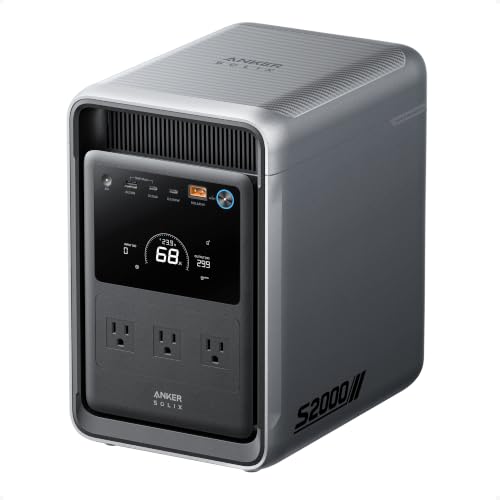
- Up to 35-hour fridge backup claim
- 1,500W output with 3,000W peak
- 2,010Wh LFP battery with up to 400W solar input
Best For: Home backup buyers wanting compact fridge support and essential-appliance coverage
Fast-Charge Fridge Companion
Jackery Explorer 1000 v2 Portable Power Station

- 1,500W AC output with 3,000W surge
- One-hour emergency charging mode
- 23.8 lb portable LFP design
Best For: Campers and outage prep buyers who value portability and rapid recharging
Compact High-Output Pick
Anker SOLIX C1000 Gen 2 Portable Power Station

- 2,000W output with 3,000W peak
- 49-minute recharge at 1,600W
- 600W solar input with 10 ms UPS
Best For: Buyers who want a compact fridge backup unit with very fast charging
Long-Run Home Backup
Jackery HomePower 3000 Portable Power Station

- 3,072Wh capacity with 3,600W output
- Keeps a refrigerator running 1 to 2 days
- <20ms UPS and fast hybrid recharging
Best For: Homeowners needing long fridge runtime and stronger whole-home essential backup
Ultra-Long Runtime Choice
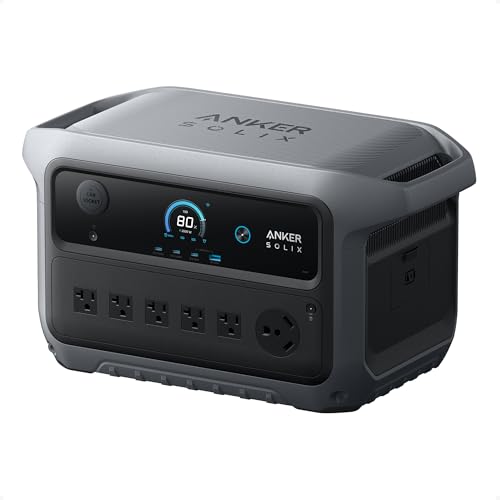
- 2,048Wh battery with 9W standby draw
- Runs a dual-door fridge up to 32 hours
- Expands to 4kWh and recharges in 58 minutes
Best For: Long fridge runtime with fast recharge and expansion potential
Quiet Home Backup Pick

- 2,042Wh capacity with 2,200W output
- 20ms UPS switching for outage protection
- Quiet mode runs at less than 30dB
Best For: Quiet home backup with seamless switching and compact 2kWh capacity
Compact Fridge-Ready Starter
Jackery Solar Generator 1000 v2

- 1,070Wh capacity with 1,500W AC output
- Includes a 200W solar panel
- Lightweight at 23.8 lb with fast charging
Best For: Compact, solar-ready backup for smaller refrigerator loads
Premium Home Backup
Jackery Explorer 2000 v2 Solar Generator

- 2042Wh LiFePO4 battery with 2200W output
- 20ms UPS support for outage protection
- Includes 2x200W solar panels
Best For: Indoor-safe backup for a refrigerator and other home essentials
Fast-Charge Compact Pick
OUPES 2000W Solar Generator Kit

- 2000W output with 4500W surge support
- 36-minute AC fast charging
- Includes 100W panel and app control
Best For: Quick-recharge backup for refrigerators and compact emergency setups
Balanced Smart Backup
EcoFlow DELTA 3 Classic Solar Generator
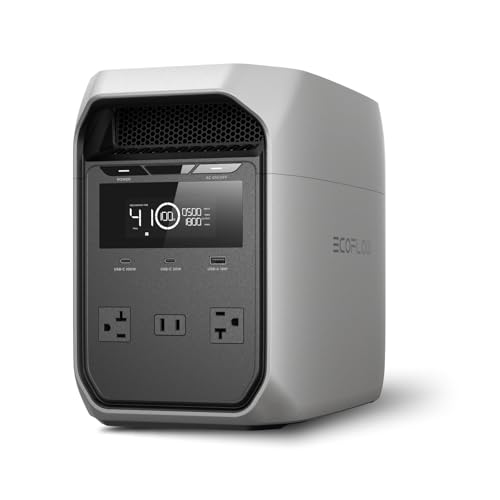
- 1024Wh LiFePO4 battery with 1800W output
- 3600W surge and under-10ms UPS switching
- Optional solar charging with app control
Best For: Compact refrigerator backup with fast charging and smart controls
Whole-Home Fridge Backup – Anker SOLIX S2000 Portable Power Station
If you’re comparing solar generators for refrigerators, the Anker SOLIX S2000 is built to keep a fridge running through an outage without taking up much space. Its 2,010Wh battery, 1,500W continuous output, and low idle draw make it a strong fit for practical home backup, especially when you want a compact unit that can also handle other essentials.
Best For: Homeowners who want a compact 2kWh-class backup unit for fridge support and other essentials.
Pros:
- Claims up to 35 hours of fridge backup with its 2,010Wh capacity and 6W idle draw.
- 1,500W continuous output with 3,000W peak helps cover nearly every home essential.
- Supports six recharge methods, including up to 400W solar input.
- Smaller and lighter than many 2kWh systems, at 35.7 lbs.
Cons:
- No 12V DC port, so vehicle-style accessories won’t plug in directly.
- Solar input is capped at 400W, which is less than some higher-input rivals.
- Best suited to fridge backup and essentials, not long-duration whole-home loads.
Overall, this is a balanced pick if you want solar generators for refrigerators that prioritize runtime, portability, and easy home use. It looks especially appealing for buyers who want a cleaner UPS-style setup without moving up to a much larger power station.
Fast-Charge Fridge Companion – Jackery Explorer 1000 v2 Portable Power Station
The Jackery Explorer 1000 v2 is a practical option if you want solar generators for refrigerators that are easy to move and quick to recharge. With 1,070Wh of capacity, 1,500W AC output, and a lightweight 23.8 lb build, it fits camping, emergency use, and short-term fridge backup where portability matters as much as output.
Best For: Campers and emergency users who want a lightweight, fast-charging fridge-capable power station.
Pros:
- 1,500W AC output and 3,000W surge can handle fridges and other small appliances.
- One-hour emergency charging mode is available through the Jackery app.
- LFP battery is rated for over 4,000 cycles and 10+ years of use.
- At 23.8 lbs, it’s notably easy to carry for road trips or outages.
Cons:
- Solar charging is limited to Jackery-compatible panels only.
- 1,070Wh capacity is smaller than larger home-backup units.
- The fastest charge requires app-enabled emergency charging mode.
This model makes sense if you want a middle-ground choice for fridge backup and mobile use rather than a heavy home-only system. Its real advantage is the mix of compact size, fast recharge options, and enough output for common appliance needs.
Compact High-Output Pick – Anker SOLIX C1000 Gen 2 Portable Power Station
For shoppers comparing solar generators for refrigerators, the Anker SOLIX C1000 Gen 2 stands out by pairing high output with fast charging in a compact form. Its 1,024Wh capacity and 2,000W output make it well-suited for keeping a fridge and several other devices powered during outages, camping trips, or off-grid use.
Best For: Users who want a compact, high-output battery for fridge backup and multi-device power.
Pros:
- 2,000W output with 3,000W peak supports demanding appliances.
- 49-minute recharge at 1,600W is extremely fast for outage prep.
- Can recharge from up to 600W of solar in about 1.8 hours.
- 10 ms UPS switchover helps keep vital equipment running smoothly.
Cons:
- 1,024Wh capacity is smaller than larger home-backup models.
- Solar recharge depends on a fairly high 600W input for best speed.
- Best for essential loads, not extended household backup.
If you want a smaller unit that still delivers serious output, this is a smart refrigerator backup option. It is especially appealing for buyers who care about fast turnaround times and UPS-like continuity for critical devices.
Long-Run Home Backup – Jackery HomePower 3000 Portable Power Station
If your priority is keeping food cold during longer outages, the Jackery HomePower 3000 is one of the strongest solar generators for refrigerators in this group. With 3,072Wh of capacity, 3,600W output, and a UPS that switches within 20ms, it is designed for serious home backup rather than just short-term emergency power.
Best For: Homeowners who need longer fridge runtime and higher-capacity backup for essential appliances.
Pros:
- 3,072Wh capacity and 3,600W output are well suited to fridge backup and household essentials.
- Can keep a refrigerator running for 1 to 2 days, according to the supplied notes.
- <20ms UPS helps support sensitive loads like security cameras and medical refrigerators.
- Fast recharging options include hybrid AC/DC in 1.7 hours or solar support with two 200W panels.
Cons:
- At 59.52 lbs, it’s much heavier than smaller portable units.
- Solar charging to 80% takes 9 hours with two 200W panels, which is slower than some fast-charge rivals.
- Its size and output may be more than casual campers need.
This is the most home-focused option here, and it makes sense if refrigerator runtime is your top priority. It delivers the kind of capacity and output that can carry a household through outages with less compromise.
Ultra-Long Runtime Choice – Anker SOLIX C2000 Gen 2
If you want solar generators for refrigerators that can keep food cold for long stretches, the Anker SOLIX C2000 Gen 2 is built around runtime and fast recovery. Its 2,048Wh LiFePO4 battery, low 9W standby draw, and expandable capacity make it a practical option for home backup, camping, and emergency use.
Best For: Users who want long fridge runtime with fast recharging and room to expand capacity.
Pros:
- Low 9W standby use helps a dual-door fridge run for up to 32 hours, according to the product notes.
- Expandable to 4kWh with an extra battery, extending dual-door fridge runtime up to 64 hours.
- Fully recharges in 58 minutes with AC and solar charging support.
- 2,400W rated output and 4,000W peak power can handle multiple appliances at once.
Cons:
- Expanded runtime requires an additional battery purchase.
- At 41.7 lb, it is portable but not lightweight.
- The focus is on higher output and capacity, so it may be more unit than some small-backup users need.
This model stands out if your main priority is keeping a refrigerator running longer between charges. The combination of efficient standby use, rapid recharge, and expandable storage makes it a strong emergency and home-backup pick.
Quiet Home Backup Pick – Jackery Explorer 2000 v2
For shoppers comparing solar generators for refrigerators, the Jackery Explorer 2000 v2 offers a balanced mix of capacity, output, and quiet operation. Its 2,042Wh battery, 2,200W output, and 20ms UPS switching make it a solid fit for keeping refrigerator essentials powered during outages.
Best For: Home backup users who want a quieter 2kWh-class unit with seamless backup switching.
Pros:
- 2,042Wh capacity and 2,200W output support home backup and other household essentials.
- 20ms seamless switching helps keep sensitive loads running through outages.
- Silent Charging mode operates at less than 30dB for low-noise use.
- Lightweight for its class at 39.5 lb, with compact Cell-to-Body construction.
Cons:
- Solar panel is optional, so complete solar setup costs more.
- Full solar charging depends on 400W panels and up to 6 hours.
- It is strong for backup use, but the notes do not give a direct fridge runtime figure.
This is a good all-around backup station if you want a quiet, compact unit with enough capacity for household essentials. It is especially appealing when seamless power transfer and low noise matter as much as battery size.
Compact Fridge-Ready Starter – Jackery Solar Generator 1000 v2
If you are looking at solar generators for refrigerators and want a smaller, easier-to-carry setup, the Jackery Solar Generator 1000 v2 is a practical entry point. With 1,070Wh of capacity, a 1,500W AC output, and the included 200W solar panel, it can cover smaller fridge needs while staying portable.
Best For: Campers, RV users, and emergency shoppers who want a compact solar-ready backup for smaller fridge loads.
Pros:
- 1,070Wh capacity and 1,500W AC output can power multiple appliances, including fridges.
- Includes a 200W solar panel, so the solar setup is ready out of the box.
- Very portable at 23.8 lb with a foldable handle.
- Can charge to 80% in 6 hours with the 200W panel, or fully in 1 hour with emergency charging.
Cons:
- Smaller capacity than the 2kWh-class models in this roundup.
- Notes list a 2-hour runtime, so it is better for shorter backup windows.
- Best suited to lighter refrigerator loads rather than longer whole-home backup.
This model makes sense if you want a compact solar generator that is easier to move and still capable of supporting a refrigerator. It offers a lower-capacity, lower-weight path for users who do not need a full-size backup unit.
Premium Home Backup – Jackery Explorer 2000 v2 Solar Generator
If you want solar generators for refrigerators that can also cover broader home-backup needs, the Jackery Explorer 2000 v2 is built around a 2042Wh LiFePO4 battery and a 2200W AC output. It is a strong fit for keeping a refrigerator running during outages while also handling other essential electronics, and the included 2x200W panels give you a practical solar charging setup.
Best For: Homeowners who want quiet, indoor-safe backup power for a refrigerator plus other essentials.
Pros:
- 2042Wh capacity and 2200W output are well suited to refrigerator backup and other household loads.
- 20ms UPS switching helps keep power flowing during outages.
- LiFePO4 battery, silent operation, and no fumes make it a cleaner indoor-friendly option.
- Includes 2x200W solar panels for immediate solar charging use.
Cons:
- At 66.8 pounds, it is not the lightest unit to move frequently.
- Solar charging is slower than AC charging and depends on panel conditions.
- The higher-capacity design may be more than some users need for simple backup.
This is a well-rounded choice if your priority is dependable refrigerator backup with enough capacity to stretch into whole-home essentials. It favors usability, safety, and fast emergency readiness over ultra-compact portability.
Fast-Charge Compact Pick – OUPES 2000W Solar Generator Kit
For shoppers comparing solar generators for refrigerators, the OUPES Mega 1 stands out with a 1024Wh LiFePO4 battery, 2000W pure sine wave output, and a 4500W surge rating. That combination makes it a practical pick for mini-fridges and refrigerator startup demands, while the included 100W panel helps you begin solar charging right away.
Best For: Campers and emergency buyers who want fast recharge times in a compact solar kit.
Pros:
- 2000W output with 4500W surge can handle demanding appliance startup loads.
- 36-minute AC fast charging is one of its standout features.
- Expandable capacity up to 5120Wh offers room to grow.
- Includes a 100W solar panel and app-based monitoring.
Cons:
- 1024Wh is smaller than larger home-backup units for extended outages.
- Solar input maxes at 800W, so larger setups depend on additional panels and conditions.
- Best suited to short-term or targeted backup rather than full-house coverage.
This model is a good fit if you want a refrigerator-capable power station that recharges quickly and stays relatively portable. It balances speed, surge power, and expandability in a compact package.
Balanced Smart Backup – EcoFlow DELTA 3 Classic Solar Generator
The EcoFlow DELTA 3 Classic is a strong middle-ground option among solar generators for refrigerators, with a 1024Wh LiFePO4 battery, 1800W AC output, and 3600W surge support through X-Boost. It is designed to cover refrigerators and other everyday essentials, while its fast AC charging and optional solar recharge make it easy to keep ready for outages.
Best For: Buyers who want a compact, smart backup power station for a refrigerator and electronics.
Pros:
- 1800W output with 3600W surge helps power refrigerators and similar appliances.
- 45-minute 0-80% AC charging is fast for emergency prep.
- <10ms UPS switching is useful for sensitive electronics.
- LiFePO4 battery and app control add long-term reliability and convenience.
Cons:
- Solar panel is optional, so solar use requires a separate purchase.
- 1024Wh capacity is not as large as higher-end home backup units.
- Best for essential loads, not heavy whole-home use.
This is an easy recommendation if you want a smarter, lighter backup option that can support a refrigerator without taking up too much space. It is especially appealing if fast charging and app-based control matter to you.
How We Picked the Best Solar Generators for Refrigerators
For Solar Generators for Refrigerators, we prioritized battery capacity, continuous AC output, surge handling, inverter quality, and recharge speed. We also looked at LiFePO4 battery chemistry for long cycle life, plus portability and UPS-style switching for home backup scenarios.
Quick Comparison
Smaller 1,000Wh-class units are better for short outages or efficient refrigerators, while 2,000Wh-class models offer more breathing room and longer runtime. Larger home-backup systems are the safest choice if you need to run a refrigerator alongside a modem, lights, or other essentials.
Key Buying Factors for Solar Generators for Refrigerators
Starting Surge Vs. Running Wattage
Refrigerators draw a higher surge when the compressor starts, so a generator’s inverter must handle that spike without tripping. Look for a unit with enough headroom above your fridge’s running wattage, not just a number that matches it on paper.
Battery Capacity and Expected Runtime
Capacity in watt-hours determines how long your fridge can stay powered. Efficient compact refrigerators may run fine on around 1,000Wh for shorter outages, while full-size models or frequent door opening usually benefit from 2,000Wh or more.
Output, Ports, and Charging Speed
A strong AC output helps ensure stable operation, and fast wall charging can be a major advantage when grid power returns briefly. Solar input is useful too, but for emergency fridge backup, the ability to recharge quickly from AC is often more important than panel wattage alone.
Battery Type and Longevity
LiFePO4 batteries are a smart pick because they typically last longer and handle repeated cycling better than older lithium chemistries. That matters if you plan to use the system regularly rather than only during rare outages.
Who Should Buy Which Solar Generators for Refrigerators?
If you only need a short-term backup for a single refrigerator, a 1,000Wh to 1,100Wh unit can be enough. If you want longer runtime, fewer recharge interruptions, or more flexibility for a fridge-plus-router setup, choose a 2,000Wh model. For whole-home essential backup, larger high-output stations are the best fit, especially when your fridge is part of a wider emergency power plan.
