

Choosing the right portable power setup can make RV travel far more comfortable, whether you need backup power at a campground or dependable energy off-grid.
These solar generators for RVs focus on battery capacity, output, charging flexibility, and portability so you can match a system to your travel style and power needs.
Best 10 Solar Generators for RVs Picks for 2026
RV-Ready Solar Kit
OUPES 2000W Mega 1 with 240W Panel

- Includes 240W solar panel
- 1024Wh LiFePO4, 2000W AC output
- Expandable to 5120Wh with add-on battery
Best For: RV travelers who want a solar-ready kit with app control and expansion options
Heavy-Duty RV Backup
Jackery HomePower 3600 Plus with 2x200W Panels
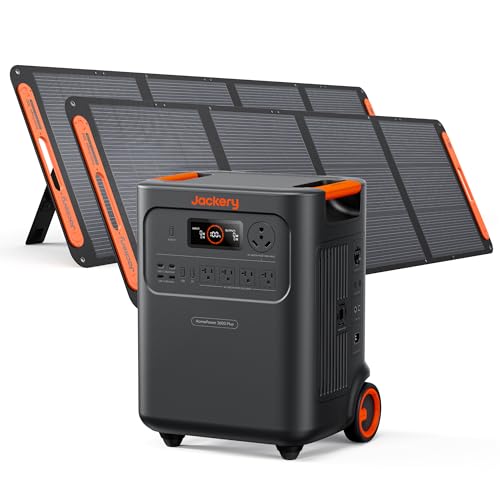
- 3584Wh capacity, 3600W output
- Expandable up to 21kWh per unit
- Wheels and telescopic handle aid mobility
Best For: RVers who need high-output backup power for larger appliances and extended stays
Ultra-Light RV Starter
Jackery Solar Generator 300 with 40W Panel

- Only 7.5 lbs for easy carry
- 292Wh capacity with 300W output
- Includes 40W solar panel
Best For: RV travelers who need a compact, lightweight option for small electronics and short trips
Balanced RV Backup
Jackery HomePower 3000 with 2x200W Panels

- 3072Wh LFP battery, 3600W output
- Built-in TT-30 RV port
- ≤20ms UPS for seamless backup
Best For: RV owners who want a practical mid-size solar generator with a dedicated RV port
Ultra-Portable Pick
EcoFlow RIVER 2 256Wh Fast-Charge Generator

- 256Wh LFP battery with 600W output
- Recharges to full in 1 hour via AC
- Only 7.7 lbs with built-in handle
Best For: Weekend RV trips and lightweight essential-device charging
RV-Ready Capacity Pick
BLUETTI Elite 300 3kWh Solar Kit
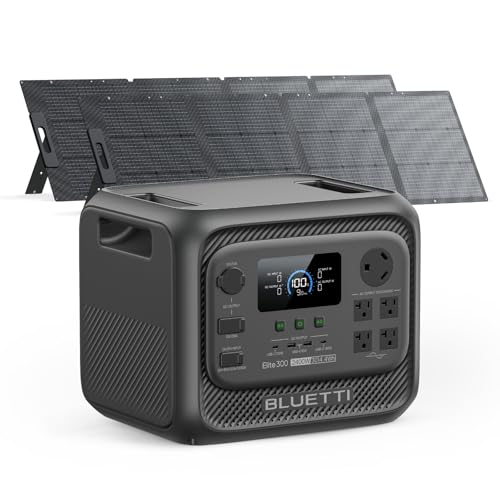
- 3014.4Wh capacity with 2400W output
- Includes 2x200W solar panels
- TT-30 and 12V/30A ports for RV use
Best For: RV owners wanting a turnkey high-capacity solar kit
Whole-RV Power Pick
EcoFlow DELTA Pro 3 4096Wh Solar Generator

- 4096Wh battery with 4000W output
- Supports 120/240V and 6000W surge
- Includes a 400W solar panel
Best For: Large RVs and high-demand off-grid power needs
High-Capacity All-Rounder
UDPOWER S2400 for RV Power Needs

- 2083Wh LiFePO4 battery with 4000+ cycles
- 2400W output, 3000W peak for bigger loads
- 6 AC outlets plus USB, DC, and car port
Best For: RV travelers needing high capacity and many outlets
Fast-Charge Compact Pick
EcoFlow DELTA 3 Classic for RVs
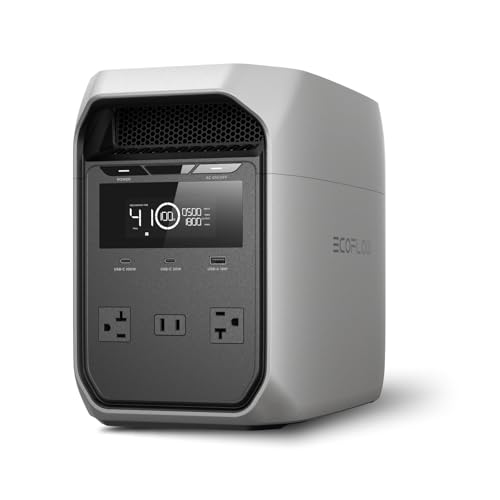
- 1024Wh LiFePO4 battery in a compact body
- Charges to 80% in about 45 minutes
- 1800W output with <10ms UPS switching
Best For: RV owners who want fast charging in a smaller unit
Heavy-Duty Off-Grid Choice
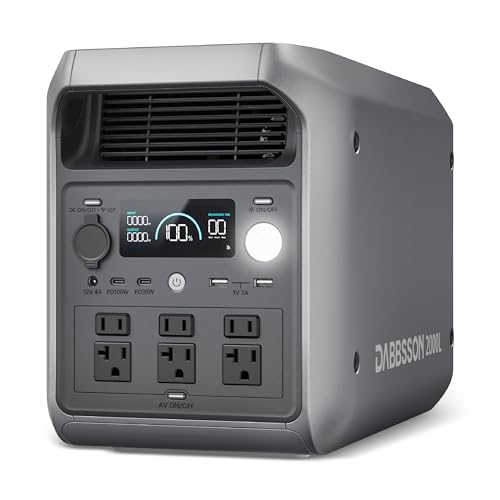
- 2048Wh semi-solid LiFePO4 battery
- 2200W output, 3300W power boost
- Up to 800W solar input and 1-hour AC recharge
Best For: RV travelers needing strong output and flexible charging
RV-Ready Solar Kit – OUPES 2000W Mega 1 with 240W Panel
If you want solar generators for RVs that come as a ready-to-use kit, the OUPES Mega 1 is built for straightforward travel power. The included 240W panel helps recharge the 1024Wh LiFePO4 station in about 5-8 hours under good sunlight, while the 2000W AC output can cover common RV essentials like a fridge, CPAP, and electronics.
Best For: RV owners who want a compact solar kit with app monitoring, UPS backup, and room to expand later.
Pros:
- Includes a 240W monocrystalline panel for a true solar-ready setup.
- 2000W output with 1024Wh LiFePO4 capacity handles core RV devices.
- Can expand with a B2 battery to reach 5120Wh total capacity.
- Dual charging and 20ms UPS support improve convenience and continuity.
Cons:
- Best charging times depend heavily on sunlight conditions.
- Expandability requires adding the separate B2 battery later.
This is a practical pick if you want a balanced RV system that starts useful out of the box and can scale as your power needs grow.
Heavy-Duty RV Backup – Jackery HomePower 3600 Plus with 2x200W Panels
For buyers comparing solar generators for RVs and also wanting serious backup power at home, the Jackery HomePower 3600 Plus sits in a much larger class. Its 3584Wh capacity and 3600W output can handle demanding loads, and the included 2x200W panels support solar recharging when you are parked or off-grid.
Best For: RV users who need high-capacity power for bigger appliances and want a generator that can also serve as home backup.
Pros:
- Large 3584Wh LFP battery with 3600W output for demanding loads.
- Expandable up to 21kWh per unit, with even more capacity in multi-unit setups.
- Four charging options, including hybrid AC+DC fast recharge.
- Wheels and a telescopic handle make a big unit easier to move.
Cons:
- At 77.2 pounds, it is not a lightweight portable option.
- Its size and output are likely more than many casual RV setups need.
This model makes the most sense when your RV power needs are closer to home-backup territory than weekend-camping territory.
Ultra-Light RV Starter – Jackery Solar Generator 300 with 40W Panel
For shoppers looking at solar generators for RVs but prioritizing portability over brute force, the Jackery Solar Generator 300 is an easy fit. Its 292Wh battery and 300W pure sine wave AC outlet are well suited to lighter travel gear, while the included 40W panel supports simple off-grid top-ups.
Best For: RV travelers who want a compact, lightweight solar generator for small devices and travel essentials.
Pros:
- Very light at 7.5 lbs, so it is easy to carry and store.
- Comes with a 40W solar panel for basic solar charging.
- LiFePO4 battery is rated for over 4,000 cycles.
- Offers multiple ports for phones, laptops, cameras, drones, and more.
Cons:
- 300W output is not intended for larger RV appliances.
- 292Wh capacity is better for short trips and smaller loads.
If your RV setup is mostly about keeping small electronics charged, this is one of the easiest solar bundles to live with.
Balanced RV Backup – Jackery HomePower 3000 with 2x200W Panels
The Jackery HomePower 3000 is a strong middle-ground choice among solar generators for RVs, especially if you want enough capacity for essentials without stepping up to a massive unit. With 3072Wh of LFP storage, 3600W output, and a built-in TT-30 RV port, it is designed for practical plug-and-play RV power as well as home outage support.
Best For: RV owners who want a portable backup unit with a dedicated RV port and enough power for core appliances.
Pros:
- 3072Wh capacity and 3600W output cover a wide range of essentials.
- Built-in TT-30 RV port makes RV hookup more convenient.
- UL-certified UPS switches within ≤20ms for uninterrupted support.
- Can recharge quickly with hybrid AC+DC or via the included 2x200W solar setup.
Cons:
- At 59.5 pounds, it is still a substantial unit to move around.
- Solar charging to 80% takes longer than a fast wall-charge cycle.
It is a sensible pick if you want RV-friendly output, fast recovery options, and backup-ready reliability in one package.
Ultra-Portable Pick – EcoFlow RIVER 2 256Wh Fast-Charge Generator
If you want solar generators for RVs that are easy to carry and quick to recharge, the EcoFlow RIVER 2 is built for light-duty travel power. Its 256Wh LFP battery, 600W output, and fast AC charging make it a practical choice for keeping small essentials running on the road, especially when you value portability over huge capacity.
Best For: Weekend RV trips, charging small electronics, and users who want a lightweight solar-ready backup.
Pros:
- 1-hour AC recharge is unusually fast for quick turnarounds.
- 600W output can handle up to 6 essential appliances at once.
- Very light at 7.7 lbs with a built-in handle for easy transport.
- LFP battery is rated for more than 3000 cycles to 80% capacity.
Cons:
- 256Wh capacity is small for larger RV loads.
- Solar charging cable is not included.
- Best suited to essentials rather than heavy appliances.
For RV travelers who mainly need a compact solar generator for phones, lights, and other small devices, the RIVER 2 keeps the setup simple. It is more of a grab-and-go power station than a whole-RV solution, but that makes it a strong fit for lighter camping needs.
RV-Ready Capacity Pick – BLUETTI Elite 300 3kWh Solar Kit
Among solar generators for RVs, the BLUETTI Elite 300 stands out for combining real travel-friendly capacity with RV-specific output options. This kit includes the power station and two 200W solar panels, plus a TT-30 outlet and 12V/30A DC port, so it is designed for straightforward connection to RV gear and longer off-grid stays.
Best For: RV owners who want a high-capacity solar kit with adapter-free RV connections.
Pros:
- 3014.4Wh battery offers substantial energy for extended use.
- Dedicated TT-30 outlet and 12V/30A DC port are RV-ready.
- Two 200W panels are included for a complete solar setup.
- 2400W output and 4800W surge support more demanding appliances.
Cons:
- At 58 pounds, it is not as easy to move as smaller units.
- Solar recharge time depends on conditions and can take 7-15 hours.
- Better suited to larger RV systems than ultra-light travel.
This is a strong choice if you want one solar generator kit to cover both RV convenience and meaningful backup power. The included panels and dedicated RV ports make it more turnkey than many separate-component setups.
Whole-RV Power Pick – EcoFlow DELTA Pro 3 4096Wh Solar Generator
If your search for solar generators for RVs is really about running more of the coach without compromise, the EcoFlow DELTA Pro 3 is the most heavy-duty option here. With a 4096Wh battery, 4000W output, 120/240V support, and a 400W portable solar panel included, it is designed for serious RV power, backup, and longer stays.
Best For: Large RV setups, high-demand appliances, and buyers who want near-home backup capability on the road.
Pros:
- 4096Wh capacity and 4000W output support demanding loads.
- 120/240V compatibility expands what it can power.
- Includes a 400W portable solar panel for renewable charging.
- Quiet operation as low as 30 dB is RV- and campsite-friendly.
Cons:
- At 150 pounds, it is far heavier than portable travel units.
- Shipped in separate packages, which may complicate delivery timing.
- Its size and power level are more than casual campers need.
This is the most capable choice for buyers who want a solar generator that can do far more than top up devices. It is best treated as a serious power system for larger RVs, not a small grab-and-go portable.
High-Capacity All-Rounder – UDPOWER S2400 for RV Power Needs
If you want solar generators for RVs with plenty of headroom, the UDPOWER S2400 is built for running multiple devices at once. Its 2083Wh LiFePO4 battery, 2400W output, and 6 AC outlets make it a practical fit for trips where you need to power appliances, charge gear, and keep essentials online.
Best For: RV travelers who need a high-capacity station for multiple appliances and fast backup power.
Pros:
- 2083Wh LiFePO4 battery with over 4000 charge cycles for long service life.
- 2400W rated output with 3000W peak for heavier appliances like microwaves and coffee makers.
- 6 AC outlets plus USB-C, USB-A, DC, and car port for charging many devices at once.
- Fast recharge options, including up to 440W solar input and 1600W AC charging.
Cons:
- At 41 lbs, it is portable but still heavier than smaller RV power stations.
- Solar input is supported, but the solar panel is not included in the base unit.
For RV use, the S2400 stands out when capacity and outlet count matter more than ultra-compact size. It is a strong choice if you want a versatile backup unit that can also handle off-grid charging through solar.
Fast-Charge Compact Pick – EcoFlow DELTA 3 Classic for RVs
The EcoFlow DELTA 3 Classic is a practical option in solar generators for RVs if you value quick charging and a lighter build. With a 1024Wh LiFePO4 battery, 1800W output, and support for solar recharging, it fits well for short trips, backup power, and everyday campsite use.
Best For: RV owners who want a compact, fast-charging power station for lighter daily loads.
Pros:
- 1800W output with 3600W surge and X-Boost support for common appliances.
- Very fast AC charging, reaching 0-80% in about 45 minutes.
- <10ms UPS switch helps protect sensitive electronics from downtime.
- Solar recharge support up to 500W, plus app control for monitoring and settings.
Cons:
- 1024Wh capacity is smaller than high-capacity RV power stations.
- Solar panel is optional, so full off-grid use requires an added purchase.
This model makes sense if you want fast turnaround between charges and a compact footprint for travel. It is especially appealing for RV users who prioritize convenience and smart control over maximum battery size.
Heavy-Duty Off-Grid Choice – DABBSSON 2000L for RV Trips
If your solar generators for RVs need to support heavier loads, the DABBSSON 2000L is built for high output and fast recharging. It pairs a 2048Wh semi-solid LiFePO4 battery with 2200W continuous output, 3300W power boost, and up to 800W solar input for flexible off-grid use.
Best For: RV travelers who want strong output, fast charging, and long-term battery durability.
Pros:
- 2048Wh semi-solid LiFePO4 battery with 4000+ deep cycles and 10+ year lifespan claim.
- 2200W continuous output with 3300W boost for appliances like refrigerators and heaters.
- Fast 1-hour AC recharge plus AC, solar, car, and hybrid dual-input charging options.
- <10ms EPS switching and app control for backup protection and monitoring.
Cons:
- At 41 lbs, it is still a substantial unit to move and store in an RV.
- Solar panel is optional, so solar charging requires a separate panel purchase.
The 2000L is a strong RV option when you want more than basic camping power and need support for demanding appliances. Its combination of high output, flexible charging, and safety features makes it a capable all-around backup station.
How We Picked These Solar Generators for RVs
We looked for models that balance usable capacity, AC output, solar charging support, battery chemistry, and ease of transport. For RV use, the best options also need dependable pass-through charging, clear power management, and enough outlets for common appliances and electronics.
We favored LiFePO4-based units where possible, since they generally offer longer cycle life and better long-term value for frequent travelers.
Quick Comparison
Smaller units are best for phones, laptops, fans, lights, and short weekend trips. Mid-size systems work well for portable fridges, CPAP machines, and regular campsite use. Larger-capacity models are better for extended boondocking, higher-wattage appliances, or travelers who want more whole-RV backup flexibility.
Key Buying Factors for Solar Generators for RVs
Battery Capacity
Look at watt-hours first. A 300Wh to 1,000Wh unit suits light use, while 2,000Wh or more is better for serious RV travel. Higher capacity gives you more runtime, but it also usually means more weight.
AC Output and Surge Handling
Make sure the inverter can support what you actually plan to run. Continuous wattage matters for everyday loads, while surge rating matters for startup spikes from appliances like fridges or some power tools.
Solar Input and Recharge Speed
Fast wall charging is useful between stops, but solar input matters most for off-grid travel. Check whether the system can accept enough panel wattage to recharge efficiently during daylight hours.
Portability and Form Factor
If you move your power station often, size and weight matter just as much as capacity. Smaller units are easier to carry, while larger units may be better left in one spot inside the RV or storage bay.
Ports and RV Compatibility
USB-C, standard AC outlets, and 12V outputs cover most RV needs. If you want to power sensitive electronics, a pure sine wave inverter is the safer choice.
Who Should Buy Which Solar Generators for RVs?
Weekend campers and light-duty RV users should lean toward compact, lower-capacity models. Travelers running fridges, communication gear, and several devices at once should consider mid-range units around 1kWh to 2kWh. Full-time RVers, boondockers, and anyone wanting more appliance support should focus on higher-capacity systems with stronger output and faster solar recharging.
In short, the best choice depends on how long you stay off-grid, what you power, and how much weight and space you can spare.
