

Choosing the right backup battery can make outages far less stressful, especially when you need quiet, indoor-safe power for essentials like lights, routers, and refrigeration.
This roundup of the best whole-home backup batteries for power outages focuses on output, storage capacity, expandability, charging speed, and real-world home backup value.
Best 10 Whole-Home Backup Batteries for Power Outages Picks for 2026
Compact Whole-Home Backup
Jackery HomePower 3000 for Essential Outage Coverage

- 3600W output with 7200W surge
- 3072Wh LiFePO4 battery with 4,000 cycles
- ≤20ms UPS and fast recharge options
Best For: Homes needing portable essential backup during outages
Expandable Home Power Add-On
Anker SOLIX BP3800 Expansion Battery for Longer Runtime

- 3840Wh LiFePO4 expansion battery
- Designed for home and RV emergency use
- Stated 10-year lifespan
Best For: Existing Anker SOLIX owners needing more outage runtime
Fast-Charge Essential Backup
EcoFlow DELTA 3 Classic for Quick Outage Power
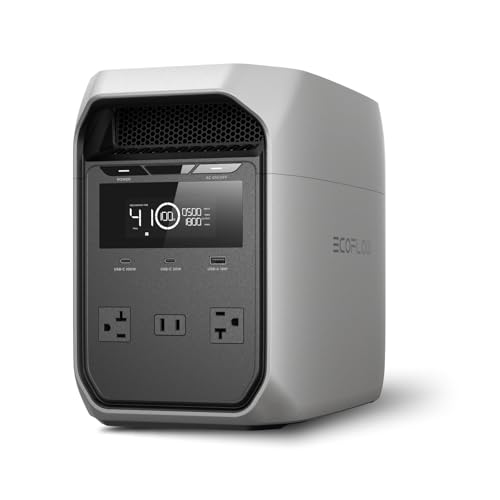
- 1800W output with 3600W surge
- 0-80% charge in 45 minutes on AC
- <10ms UPS plus app-based backup modes
Best For: Fast backup for critical devices and lighter household loads
High-Capacity Home Backup
Jackery HomePower 3600 Plus for Long Outages

- 3600W output, 7200W in parallel
- 3584Wh base capacity expands to 21kWh per unit
- Dual 120V/240V support with wheels and handle
Best For: Longer outages and larger households needing expandable capacity
Fast-Charge Compact Backup
Anker SOLIX C1000 Portable Power Station

- 1056Wh LiFePO4 battery with 1800W output
- 80% recharge in 43 minutes, full in under an hour
- 11 ports and optional 600W solar charging
Best For: essential home backup with fast recharging and portability
Whole-House Scalable Power

- 6144Wh system with 7200W 120/240V output
- Expandable up to 90kWh for long outages
- 0-ms transfer time and app-based circuit control
Best For: large homes needing scalable backup for major appliances
Quiet Long-Life Backup

- 2042Wh LiFePO4 battery with 2200W output
- 0 to 80% in 66 minutes and under 30dB operation
- 20ms UPS switching with UL1778 certification
Best For: quiet essential-home backup with fast charging
Compact Backup Pick
Anker SOLIX S2000 Portable Power Station
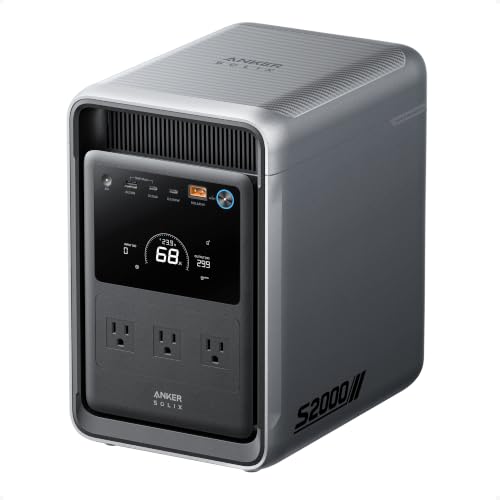
- 2,010Wh LiFePO4 battery with 1,500W output
- Up to 35-hour fridge backup and <10 ms UPS
- Compact 35.7 lb design with 8 outlets
Best For: Short outages, fridge backup, and essential home devices
Expandable High-Capacity Pick
ABOK Ark3600 Portable Power Station

- 3,840Wh battery expands to 11,520Wh
- 3,600W rated output with 4,500W peak
- 15 ports and fast AC + PV charging
Best For: Longer outages and households that need expandable backup power
Whole-Home Heavy-Duty Pick
Anker SOLIX F3800 Plus Home Power Panel

- 6,000W AC output with 120V/240V dual voltage
- Expandable from 3.84kWh to 26.9kWh
- Works with solar, generators, and app monitoring
Best For: Whole-home backup with heavier appliances and expandable runtime
Compact Whole-Home Backup – Jackery HomePower 3000 for Essential Outage Coverage
For buyers comparing whole-home backup batteries for power outages, the Jackery HomePower 3000 is built to keep essentials running without the complexity of a permanent install. With 3600W output, a 3072Wh LiFePO4 battery, and fast recharge options, it is aimed at short-to-mid outage coverage for household basics like refrigeration, lighting, WiFi, and small appliances.
Best For: Homeowners who want a portable backup battery for essential circuits and fast outage response.
Pros:
- 3600W output with 7200W surge handles essentials like fridges, lights, fans, and routers.
- ≤20ms UPS switching helps keep sensitive devices running through outages.
- 3072Wh LiFePO4 battery is rated for 4,000 cycles and 70% capacity retention.
- Recharges in 1.7 hours via hybrid AC/DC or 2.2 hours on AC.
Cons:
- Solar panels are optional, so off-grid recharge requires extra purchase if you want solar.
- Its 3kWh class capacity is better for essentials than for whole-home, long-duration backup.
This model makes the most sense if you want a strong, portable backup battery with UPS-style protection and quick recharge times. It is less about running everything in the house and more about keeping the most important devices online when the grid fails.
Expandable Home Power Add-On – Anker SOLIX BP3800 Expansion Battery for Longer Runtime
The Anker SOLIX BP3800 is an expansion battery rather than a standalone backup system, so it fits best into a larger setup for whole-home backup batteries for power outages. With 3840Wh of LiFePO4 storage and a long-life design, it is meant to extend runtime for a compatible home or RV power system.
Best For: Buyers who already have an Anker SOLIX system and want more battery capacity for outages.
Pros:
- 3840Wh LiFePO4 capacity adds meaningful extra runtime.
- Built for home and RV use as an emergency expansion battery.
- LiFePO4 chemistry is paired with a stated 10-year lifespan.
Cons:
- It is an expansion battery, so it is not a complete backup solution by itself.
- Compatibility depends on the system it is paired with.
In practical terms, this is a capacity extender, not the heart of a backup setup. It is a good fit if you are already invested in the right Anker ecosystem and want longer runtime during outages.
Fast-Charge Essential Backup – EcoFlow DELTA 3 Classic for Quick Outage Power
If you want one of the more agile whole-home backup batteries for power outages, the EcoFlow DELTA 3 Classic stands out for speed and flexibility. Its 1024Wh LiFePO4 battery, 1800W AC output, and under-10ms UPS function make it a practical choice for keeping electronics and smaller appliances running without much downtime.
Best For: People who want a compact, fast-charging backup battery for critical devices and lighter home loads.
Pros:
- 1800W output with 3600W surge supports refrigerators, microwaves, laptops, and more.
- Charges from 0-80% in just 45 minutes via AC.
- <10ms UPS switching helps protect PCs, servers, and medical devices.
- Smart app control supports Storm Alert and Self-Powered modes.
Cons:
- 1024Wh capacity is modest for long outages or larger households.
- Solar panel is optional, so solar charging requires extra hardware.
This is a strong choice when speed matters more than raw capacity. It is best viewed as a reliable, quick-recovery backup for important devices rather than a full-home, all-day power source.
High-Capacity Home Backup – Jackery HomePower 3600 Plus for Long Outages
For shoppers prioritizing whole-home backup batteries for power outages, the Jackery HomePower 3600 Plus is the largest and most ambitious option in this group. It combines 3600W output, 240V support in parallel, and a 3584Wh base battery that can be expanded to 21kWh per unit, making it a serious option for longer outages and heavier household loads.
Best For: Households that want high-capacity backup with expandable runtime and easy roll-around portability.
Pros:
- 3600W output, or 7200W in parallel, can run pumps, heaters, and dryers.
- 3584Wh base capacity expands to 21kWh per unit or 43kWh with multiple units.
- Dual voltage 120V and 240V in parallel supports more demanding home needs.
- Plug-and-play setup with wheels and telescopic handle makes it easier to move.
Cons:
- At 77.2 pounds, it is still a substantial piece of gear despite its portable design.
- Expandable capacity and dual-voltage capability are most useful in a more complex setup.
This model is the closest here to a true long-duration home backup battery. If you want more than just emergency essentials and need flexibility for bigger loads, it is the most capable pick in the lineup.
Fast-Charge Compact Backup – Anker SOLIX C1000 Portable Power Station
If you want whole-home backup batteries for power outages in a compact, portable format, the Anker SOLIX C1000 is a strong fit for light-to-moderate emergency use. Its 1056Wh LiFePO4 battery, 1800W output, and fast recharge times make it practical for keeping essential devices and appliances running without a long wait between charges.
Best For: Homeowners who want a smaller backup battery for essentials, quick recharging, and portable emergency power.
Pros:
- 80% charge in 43 minutes and full charge in under an hour with UltraFast recharging.
- 1800W output with SurgePad up to 2400W and 11 ports for broad device compatibility.
- LiFePO4 battery rated for 3,000 cycles and a 10-year lifespan.
- Optional solar input up to 600W for faster off-grid recharging.
Cons:
- 1056Wh capacity is smaller than true whole-house backup systems.
- UltraFast recharging requires AC input plus app control on a smartphone.
Overall, this is better suited to essential-load backup than full-home coverage. If you value speed, portability, and long battery life over maximum capacity, the C1000 is an efficient emergency power choice.
Whole-House Scalable Power – EF ECOFLOW DELTA Pro Ultra
For buyers comparing whole-home backup batteries for power outages, the EcoFlow DELTA Pro Ultra stands out as a high-capacity system built for heavy household loads. With a 6144Wh battery, 120/240V support, and 7200W AC output, it is designed to handle demanding appliances and scale far beyond basic emergency coverage.
Best For: Homeowners who want expandable backup power for large loads, long outages, and whole-house planning.
Pros:
- 7200W AC output with 120/240V support for heavy appliances.
- Expandable from 6kWh up to 90kWh for much longer backup runtimes.
- Can recharge a 6kWh battery in 2 hours via multiple charging options.
- 0-ms transfer time and app-based circuit prioritization for sensitive home use.
Cons:
- At 186.4 pounds, it is far less portable than compact power stations.
- Its size and capability place it in a much more serious, system-style category.
This is the most capable option in the group if your priority is real home backup rather than portable convenience. It makes the most sense for users who need scalable energy storage and support for major appliances during outages.
Quiet Long-Life Backup – Jackery Explorer 2000 v2
The Jackery Explorer 2000 v2 is a strong middle-ground choice for whole-home backup batteries for power outages when you want more capacity than a compact unit without jumping to a full home battery system. Its 2042Wh LiFePO4 battery, 2200W output, and UPS-style 20ms switching make it well suited to essential devices, while still staying relatively manageable to move.
Best For: Households that want a quiet, compact 2kWh backup battery for essential circuits and emergency use.
Pros:
- 2042Wh capacity with 2200W output from three AC ports.
- Charges from 0 to 80% in 66 minutes with AC fast charging.
- 20ms seamless switching with UL1778 UPS certification for outage protection.
- Silent Charging mode runs at under 30dB for quieter use.
Cons:
- Not expandable to the scale of a true whole-house battery setup.
- Solar charging depends on separate panels and takes longer than AC charging.
For users who want reliable backup power without the footprint of a large home battery, this model is a practical compromise. It emphasizes quiet operation, fast charging, and long battery life over maximum system size.
Compact Backup Pick – Anker SOLIX S2000 Portable Power Station
If you want whole-home backup batteries for power outages in a compact package, the Anker SOLIX S2000 is built around practical essentials rather than full-panel replacement. Its 2,010Wh LiFePO4 battery, 1,500W output, and UPS function make it a strong fit for keeping key devices running, especially when you need a portable unit that is easy to move and quick to set up.
Best For: Keeping the fridge, office gear, and core household essentials powered during short outages.
Pros:
- Up to 35-hour fridge backup with low 6W idle draw.
- 1,500W continuous output with 3,000W peak output for most home essentials.
- Compact 35.7 lb build that is 30% smaller and 25% lighter than the industry average.
- UPS switchover under 10 ms for cleaner backup of home office equipment.
Cons:
- 2,010Wh capacity is better for essentials than for whole-house, long-duration use.
- No 12V DC port.
- Not expandable like larger home-backup systems.
Overall, this model makes sense if you want a portable backup battery that is efficient, easy to store, and focused on the most important loads during an outage. It is not the largest option here, but it stands out for size, runtime efficiency, and straightforward home backup use.
Expandable High-Capacity Pick – ABOK Ark3600 Portable Power Station
For buyers comparing whole-home backup batteries for power outages, the ABOK Ark3600 is the capacity-first option in this group. It starts at 3,840Wh and can expand to 11,520Wh, while its 3,600W rated output and 4,500W peak power are aimed at running a broad range of household appliances when the grid goes down.
Best For: Households that want a large portable backup battery with fast charging and room to expand.
Pros:
- 3,840Wh base capacity expands up to 11,520Wh.
- 3,600W rated output and 4,500W peak power support 99% of household appliances.
- Fast charging options: fully charged in 1.29 hours with AC + PV combined or about 3 hours on AC alone.
- 15 output ports plus wheels and a telescoping handle for easier transport.
Cons:
- Large capacity and high output mean it is bigger than more compact emergency backup units.
- Requires compatible solar panels and inverters.
- Charging is temperature-sensitive below 32°F (0°C).
In practical terms, the Ark3600 is a strong fit if you want serious backup capacity without jumping straight to a permanently installed system. Its expansion options, high output, and flexible charging make it especially appealing for users who expect longer outages or want more headroom for multiple appliances.
Whole-Home Heavy-Duty Pick – Anker SOLIX F3800 Plus Home Power Panel
If your goal is true whole-home backup batteries for power outages, the Anker SOLIX F3800 Plus is the most ambitious system here. With 6,000W AC output, 120V/240V dual-voltage support, and expansion up to 26.9kWh, it is designed to power more appliances simultaneously and cover heavier household loads than smaller portable stations.
Best For: Homes that need high-output backup with dual-voltage support and expandable runtime.
Pros:
- 6,000W output with the option to reach 12,000W max AC output when paired.
- 120V/240V dual-voltage support for appliances like a dryer.
- Expandable from 3.84kWh to 26.9kWh with additional batteries.
- Works with solar or gas generators and includes remote monitoring through the Anker app.
Cons:
- System ships in separate items, so setup may not be instant.
- Much larger and more complex than a basic portable power station.
- Expansion to full potential requires additional batteries and possibly a second unit.
For buyers who want the strongest home-backup posture in this roundup, the F3800 Plus stands out because it combines high output, dual-voltage capability, and large-scale expansion. It is the best match here for users who need a battery system that can grow from one-day backup into a much longer outage solution.
How We Picked These Whole-Home Backup Batteries for Power Outages
We looked for systems that balance usable capacity, AC output, surge handling, recharge speed, battery chemistry, and expansion potential. For home backup, the most important question is not just how much energy a unit stores, but whether it can start appliances, keep critical circuits running, and recharge quickly after an outage.
We also favored models with LiFePO4 or LFP batteries for better cycle life and long-term reliability, plus units that support solar input, pass-through use, or transfer-panel integration where applicable.
Quick Comparison
Smaller portable stations are best for essentials and short outages, while larger modular systems are better suited to powering more of a home. Midrange options can bridge the gap by covering refrigerators, internet, medical devices, and selective lighting without the cost or complexity of a full installer-style setup.
In general, look at three numbers together: watt-hours for runtime, watts for appliance support, and recharge time for how fast you can recover between outages.
Key Buying Factors for Whole-Home Backup Batteries for Power Outages
Capacity and Runtime
Watt-hours determine how long your battery can run devices. A larger battery helps, but runtime depends on the load. A fridge, modem, and a few lights draw far less than a well pump or central HVAC equipment.
Output and Starting Surges
Many appliances need a higher startup surge than their running wattage. Make sure the inverter can handle both continuous output and short surges, especially for refrigerators, sump pumps, and power tools.
Expandability
If you may add more circuits or want longer backup later, choose a modular system. Expandable Whole-Home Backup Batteries for Power Outages can be a smarter long-term value than buying a larger unit upfront and outgrowing it quickly.
Charging Speed and Inputs
Fast AC charging and solar compatibility are important during extended outages. Faster recharge times can help you stay powered through repeated interruptions or multi-day events.
Installation and Portability
Some systems are plug-and-play, while others work better with a home power panel or transfer switch. Portable units are easier to move and set up, but integrated systems are usually better for whole-home coverage.
Who Should Buy Which Whole-Home Backup Batteries for Power Outages?
If you want the simplest setup for essentials, choose a compact portable station. If you need longer runtime for a refrigerator, internet, and medical devices, step up to a mid-to-large expandable model. If you want the closest thing to a true home backup solution, a high-output modular system with panel integration is the best fit.
In short, match the battery to your outage needs, not just the biggest spec sheet. The best choice is the one that can reliably power your critical loads, recharge quickly, and scale with your home over time.
