

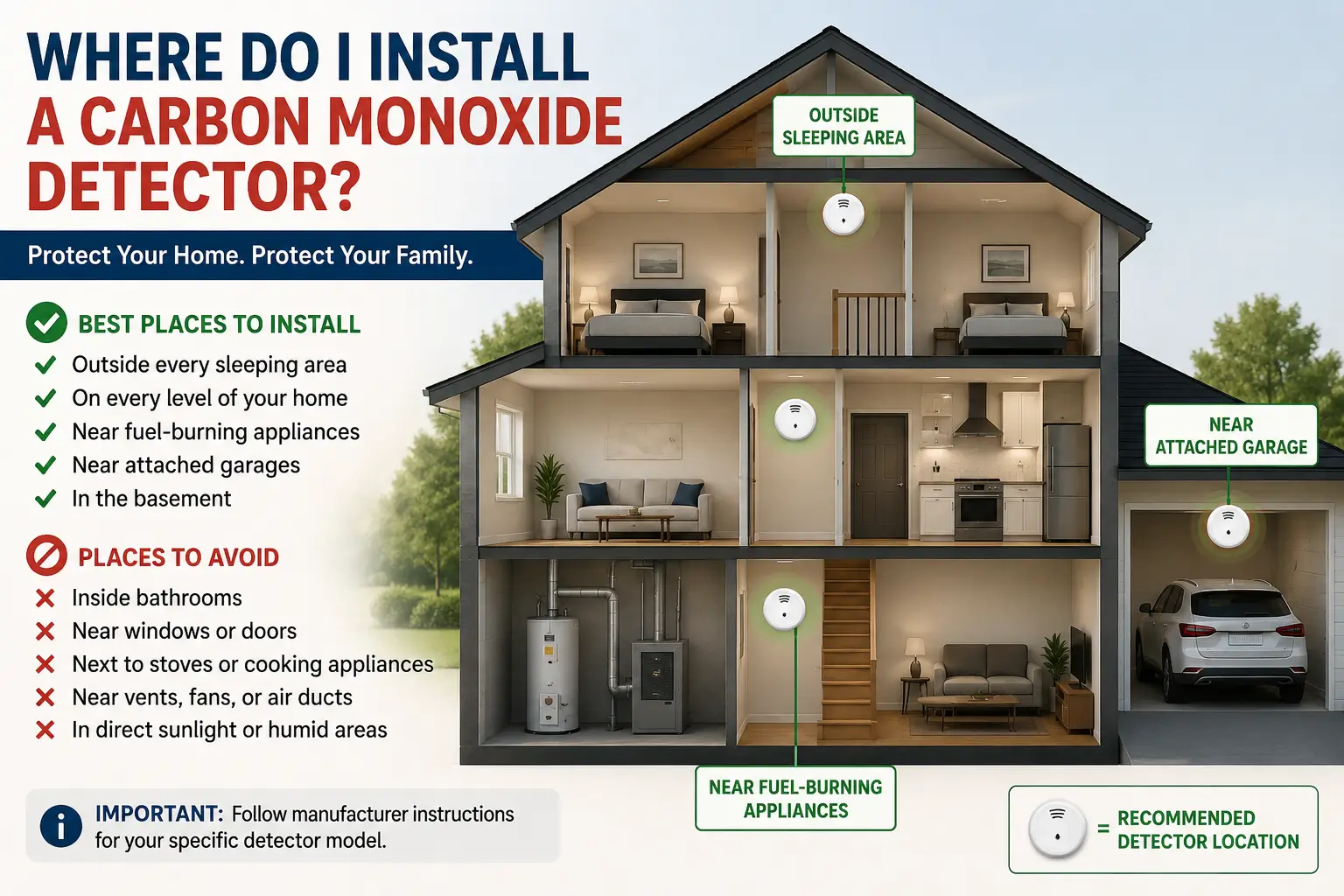
If you are wondering where do I install a carbon monoxide detector, the short answer is: place one on every level of your home, near bedrooms, and close to fuel-burning appliances for the best protection.
Carbon monoxide (CO) is called the “silent killer” because it has no smell, color, or taste. A properly installed detector can alert your family before dangerous CO levels become life-threatening.
Quick Answer Table
| Topic | Recommendation |
|---|---|
| Best location | Near bedrooms and on every floor |
| Ceiling or wall? | Follow manufacturer instructions |
| Distance from appliances | 15–20 feet away |
| Near kitchen? | Avoid placing too close |
| Near bathroom? | Not recommended |
| Battery or hardwired | Either works if properly maintained |
| Installation difficulty | Easy |
| Time required | 15–30 minutes |
Table of Contents
Where Do I Install a Carbon Monoxide Detector?
The best place to install a carbon monoxide detector is:
- Outside sleeping areas
- On every level of the home
- Near attached garages
- Close to fuel-burning appliances
- In basements
You should avoid placing detectors directly beside windows, vents, fans, or humid areas because airflow and moisture can affect readings.
Why Proper Placement Matters
A carbon monoxide detector only works well when installed in the right location.
Poor placement can:
- Delay alerts
- Cause false alarms
- Leave dangerous areas unprotected
For example, placing a detector right next to a gas stove may trigger unnecessary alerts. Installing one too far from bedrooms may prevent sleeping family members from hearing the alarm in time.
Best Places to Install Carbon Monoxide Detectors
1. Outside Every Bedroom
This is the most important location.
Carbon monoxide poisoning often happens at night while people sleep. Installing a detector outside sleeping areas helps ensure everyone hears the alarm quickly.
Expert Tip
If your home has multiple sleeping areas, place a detector near each one.
2. On Every Floor of the Home
Install at least one detector on:
- Basement level
- Main floor
- Upstairs level
- Finished attic if applicable
Even small homes should have multiple detectors for complete coverage.
3. Near Fuel-Burning Appliances
Install detectors near:
- Furnaces
- Water heaters
- Fireplaces
- Gas dryers
- Boilers
However, keep the detector about 15 to 20 feet away to reduce false alarms.
4. Near Attached Garages
Cars left running in garages can produce dangerous CO levels quickly.
Place a detector near the door connecting the garage to your home for added safety.
Where NOT to Install a Carbon Monoxide Detector
Avoid these locations:
| Location | Why Avoid It |
|---|---|
| Inside bathrooms | Humidity affects sensors |
| Above stoves | Can trigger false alarms |
| Near windows | Fresh air disrupts readings |
| Near vents/fans | Airflow may dilute CO |
| In direct sunlight | Heat can damage sensors |
| Inside garages | Exhaust fumes cause false alarms |
Should Carbon Monoxide Detectors Go on the Ceiling or Wall?
Most modern CO detectors can be installed on:
- Walls
- Ceilings
- Tabletops
Always follow the manufacturer’s instructions first.
Unlike smoke, carbon monoxide mixes evenly with air. That means the detector height is usually less important than proper room placement.
Wall Placement Tips
If wall mounting:
- Place the detector about 5 feet from the floor
- Keep it away from corners
- Avoid dead-air spaces
How Many Carbon Monoxide Detectors Do You Need?
A good rule is:
- One detector per floor
- One near each sleeping area
Larger homes may need extra units for better coverage.
Example Setup for a Two-Story Home
| Area | Detector Needed |
|---|---|
| Basement | Yes |
| Main hallway | Yes |
| Upstairs bedrooms | Yes |
| Attached garage area | Recommended |
Common Carbon Monoxide Sources in Homes
Understanding where CO comes from helps you place detectors more effectively.
Common sources include:
- Gas furnaces
- Fireplaces
- Portable generators
- Gas stoves
- Water heaters
- Vehicles
- Charcoal grills
- Wood-burning stoves
Step-by-Step: How to Install a Carbon Monoxide Detector
Step 1: Choose the Right Locations
Start with:
- Hallways near bedrooms
- Every floor
- Garage entry points
Step 2: Follow Manufacturer Instructions
Some detectors are:
- Plug-in models
- Battery-powered
- Hardwired units
Each type may have slightly different mounting recommendations.
Step 3: Mount the Detector
Use the included hardware to:
- Mark the location
- Drill holes if needed
- Secure the mounting plate
- Attach the detector
Step 4: Test the Alarm
Press the test button after installation to confirm it works properly.
Troubleshooting Common Carbon Monoxide Detector Problems
Detector Keeps Beeping
Possible causes:
- Low battery
- End-of-life warning
- Sensor malfunction
- Real CO detection
Try replacing the batteries first.
False Alarms Near Kitchen
Move the detector farther away from:
- Gas stoves
- Ovens
- High humidity areas
Detector Won’t Turn On
Check:
- Battery installation
- Power connections
- Expiration date
Most detectors last 5–10 years.
Carbon Monoxide Detector vs Smoke Detector
| Feature | Carbon Monoxide Detector | Smoke Detector |
|---|---|---|
| Detects | Carbon monoxide gas | Smoke/fire |
| Smell of threat | Odorless | Often smoky |
| Placement focus | Bedrooms/appliances | Ceilings/hallways |
| Main purpose | Poisoning prevention | Fire safety |
Many modern devices combine both features in one unit.
Important Safety Tips
- Test detectors monthly
- Replace batteries twice yearly
- Replace expired units
- Never ignore alarms
- Keep manuals for reference
Warning
Do not use generators, grills, or fuel-burning heaters indoors even if detectors are installed.
Frequently Asked Questions
Can I install a carbon monoxide detector in the kitchen?
Yes, but keep it at least 10–20 feet away from cooking appliances. This helps reduce nuisance alarms from normal cooking fumes.
Should I put a carbon monoxide detector in every bedroom?
It is better to place detectors outside bedroom doors. Large homes may benefit from additional bedroom units.
How high should a carbon monoxide detector be installed?
Most manufacturers recommend wall mounting around eye level or following included instructions. Carbon monoxide mixes evenly in the air.
Do carbon monoxide detectors need maintenance?
Yes. Test them monthly and replace batteries regularly to keep them working properly.
Can one detector protect the whole house?
Usually not. Multiple detectors are needed because carbon monoxide can build up in different areas.
How long do carbon monoxide detectors last?
Most detectors last between 5 and 10 years. Check the expiration date printed on the device.
Where Do I Install a Carbon Monoxide Detector for Maximum Safety?
Knowing where do I install a carbon monoxide detector can make a major difference in home safety. The best setup includes detectors on every floor, outside bedrooms, and near fuel-burning appliances while avoiding humid or high-airflow areas.
Proper placement, regular testing, and routine maintenance help ensure your family stays protected from dangerous carbon monoxide exposure.
Citations
Consumer Product Safety Commission (CPSC): Carbon Monoxide