

Looking for smart light switches without WiFi? The best options can add app-free, hub-based, or direct-switch control without depending on a home network.
This roundup focuses on practical picks for different wiring setups, installation needs, and smart home ecosystems in 2026.
Best 10 Smart Light Switches Without WiFi Picks for 2026
No-App RF Outlet Sync
Switcheroo No-App Smart Outlet Control

- No Wi-Fi, Bluetooth, or app required
- RF signal works through walls
- Sync multiple outlets by channel
Best For: Simple room-by-room outlet and light syncing without wireless networks
Matter Wired Switch
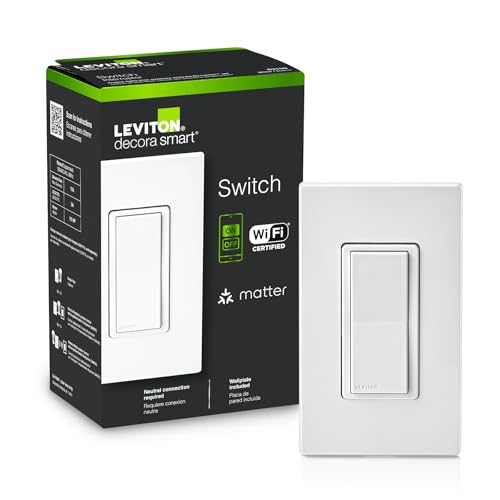
- Works with Matter, Alexa, Google, Apple Home
- Remote control via My Leviton app
- Neutral wire required for install
Best For: Connected homes that want broad platform support and voice control
Retrofit RF Switch Kit
SURAIELEC No-Neutral Remote Kit

- No Wi-Fi and no in-wall rewiring
- No neutral wire required
- Up to 100 ft RF range
Best For: Retrofit installs and older homes needing an extra switch location
Zigbee Hub Wall Switch
SONOFF ZBM5 Zigbee Wall Switch

- Works with or without a neutral wire
- Requires SONOFF Zigbee Gateway
- Home Assistant and voice assistant support
Best For: Zigbee-based smart homes that want flexible wall switch wiring
Tempered-Glass Basic Pick
1-Button 1000W No-WiFi Touch Switch

- Supports up to 1000W lighting load
- No neutral wire required
- Tempered glass panel with soft indicator light
Best For: Simple on/off control in older wiring setups
Flexible Wiring Pick

- Works with neutral and non-neutral wiring
- App, touch, and voice control options
- Tempered glass panel with soft backlight
Best For: Homes where wiring compatibility matters most
No-App RF Outlet Sync – Switcheroo No-App Smart Outlet Control
If you want smart light switches without WiFi but still need an easy way to sync outlets and lighting zones, Switcheroo takes a different approach with proprietary RF control. It works without Wi-Fi, Bluetooth, phone apps, or a remote, and it can function through walls, which makes it useful for simple room-by-room control where rewiring would be a hassle.
Best For: Homeowners who want a no-app, no-WiFi way to coordinate multiple outlets or light zones.
Pros:
- Uses RF technology, so it works through walls without line of sight.
- No Wi-Fi, Bluetooth, remote control, or phone app required.
- Multiple channel options help sync several outlets by room or area.
- Interchangeable units can be added on the same channel.
Cons:
- It is designed for outlet/light switching, not a standard in-wall smart switch.
- Only 8 amps / 880 watts, so heavy loads are out.
- Requires matching channel setup to get the desired pairing.
For buyers prioritizing simplicity over app-based automation, Switcheroo is one of the more straightforward smart light switches without WiFi. Its strength is dependable RF syncing, not ecosystem integration.
Matter Wired Switch – Leviton Decora Smart Switch
Leviton’s Decora Smart Switch is a strong option if you’re searching for smart light switches without WiFi, but still want modern app and voice features through a connected ecosystem. It uses Wi-Fi, supports Matter, and works with Alexa, Google Assistant, Apple Home/Siri, SmartThings, and Home Assistant, so it suits buyers who want broad compatibility rather than a local-only setup.
Best For: Buyers who want a wired smart switch with broad ecosystem support and remote control.
Pros:
- Works with Matter and multiple major smart home platforms.
- Supports voice control with Alexa, Google Assistant, and Siri.
- Can be controlled remotely through the My Leviton app.
- Designed for wired or wirefree 3-way setups and requires a neutral wire.
Cons:
- It does use Wi-Fi, so it does not fit a no-network setup.
- Neutral wire is required, which limits some older homes.
- Installation may be less flexible than wireless alternatives.
If your priority is compatibility and app control, this Leviton switch is polished and widely supported. It is less relevant for truly offline use, but it is a solid premium option for connected homes.
Retrofit RF Switch Kit – SURAIELEC No-Neutral Remote Kit
SURAIELEC’s wireless receiver kit is a practical choice for smart light switches without WiFi when you need to add a switch location without opening walls. It uses 433.92MHz RF, works up to 100 feet in open areas, and does not require a neutral wire, making it especially appealing for older homes or retrofit projects.
Best For: Older homes and retrofit installs where adding a wired switch would be difficult.
Pros:
- No Wi-Fi and no in-wall rewiring needed.
- No neutral wire required for the receiver setup.
- RF range reaches up to 100 feet and works through walls and doors.
- Can expand into simple 3-way or 4-way control setups.
Cons:
- Limited to 2 amps / 100W LED, so it is not for high-load circuits.
- Uses remote control rather than app-based automation.
- Best suited to lamps and similar loads, not whole-house smart switching.
For retrofit flexibility, this kit stands out because it solves switch placement without depending on Wi-Fi. It is a focused RF solution for homeowners who want convenience without network setup.
Zigbee Hub Wall Switch – SONOFF ZBM5 Zigbee Wall Switch
SONOFF’s ZBM5 is a solid option if you want smart light switches without WiFi in the sense of avoiding direct Wi-Fi dependence, but you are willing to use a Zigbee hub. It works with or without a neutral wire, supports Alexa and Google Home, and can also integrate with Home Assistant through Zigbee2MQTT, giving it a more flexible smart-home profile than many basic wireless switch kits.
Best For: Users who want a Zigbee wall switch with hub-based control and flexible wiring support.
Pros:
- Neutral wire is optional, which helps with more home wiring setups.
- Works with SONOFF Zigbee Gateway and supports Home Assistant via Zigbee2MQTT.
- Voice control is available through Alexa and Google Home.
- Includes timers and scene automation in the eWeLink app.
Cons:
- Requires a SONOFF Zigbee hub for operation.
- Not a no-hub solution, so setup is less direct than RF switches.
- Rated for 10 amps / 120 watts, which may not suit every load.
Compared with simpler RF options, this SONOFF switch is better for users already building a Zigbee-based home. It gives you stronger ecosystem integration while still avoiding a direct Wi-Fi switch dependency.
Tempered-Glass Basic Pick – 1-Button 1000W No-WiFi Touch Switch
If you want smart light switches without WiFi in the simplest form possible, this 1-button touch switch is really a basic on/off wall control rather than an app-connected smart switch. It fits single-gang installations, does not require a neutral wire, and supports up to 1000W, which makes it a practical option for straightforward lighting setups.
Best For: Homeowners who want a no-frills touch wall switch for standard on/off lighting control.
Pros:
- 1000W rating handles higher-wattage lighting loads.
- No neutral wire required, which helps in some older wiring setups.
- Tempered glass panel is easy to wipe clean.
- Soft indicator light helps you find the switch in the dark.
Cons:
- Not dimmable.
- WiFi and Zigbee are not supported.
- Single-gang size means you should verify wall box dimensions first.
For buyers focused on reliability and a clean touch-panel look, this switch keeps the feature set intentionally simple. It is best viewed as a basic wired wall switch with a modern finish, not a networked smart-home device.
Hub-Based Automation Pick – Aqara No-Neutral Zigbee Switch
Among smart light switches without WiFi, this Aqara model stands out for buyers who want automation through Zigbee rather than a direct WiFi switch. It requires an Aqara Hub, but once set up it can support remote control, schedules, timers, scenes, and voice-assistant integration through the compatible ecosystem.
Best For: Users who already plan to use an Aqara hub and want a compact no-neutral switch for automation.
Pros:
- No neutral wire required.
- Works with Aqara Hub-based automation, including schedules, timers, and scenes.
- Compatible with HomeKit, Google Assistant, Alexa, and SmartThings.
- Has built-in safeguards like flame-retardant materials and overheat shutdown.
Cons:
- Aqara Hub is required and sold separately.
- Not a direct WiFi switch; it depends on the hub connection.
- Load limits are lower for LED/CFL than for incandescent.
This is a strong choice if you want a hub-based smart switch that fits no-neutral wiring and broader smart-home automation. Just make sure you are comfortable adding the required Aqara hub to the setup.
Flexible Wiring Pick – Neutral-Optional Touch Switch
If you are comparing smart light switches without WiFi alternatives for an older house, this touch switch is notable because it supports both neutral and non-neutral wiring. It is still a WiFi-based model, but the flexible wiring requirement can make installation easier in homes where you are not sure what the wall box contains.
Best For: Buyers who need a switch that can work with either neutral or non-neutral wiring.
Pros:
- Compatible with both neutral and non-neutral wiring.
- Works with app, touch, and voice control.
- Tempered glass panel is waterproof and dustproof for easy cleaning.
- Soft backlight helps you locate the switch at night.
Cons:
- Requires 2.4GHz Wi-Fi despite the flexible wiring support.
- 5A current rating is lower than some heavier-duty options.
- Still needs app setup for the full feature set.
This is best treated as a practical installation-friendly touch switch rather than a true no-WiFi product. If wiring compatibility matters more than eliminating network dependence, it offers a useful middle ground.
Z-Wave Range-Extending Pick – Enbrighten Almond Z-Wave Plus Toggle Switch
If you’re shopping for smart light switches without WiFi, this Enbrighten Z-Wave Plus model is a strong fit for homes already built around a Z-Wave hub. It supports manual on/off use on its own, but really stands out when paired with a compatible hub for app control, voice commands, scheduling, and automation.
Best For: Households that want a hardwired Z-Wave switch with range extension and 3-way readiness.
Pros:
- Z-Wave Plus connectivity, so it works without WiFi and needs a compatible hub instead
- Repeats the Z-Wave signal to extend network range by up to 150 ft
- 3-way ready with support for up to four add-on switches
- Compatible with Alexa and Google Assistant through a certified hub
Cons:
- Neutral wire required for installation
- Wallplate not included
- Hub required for smart features and voice control
This is a practical choice if you want a stable in-wall switch that can strengthen a Z-Wave setup while still handling everyday lighting control reliably.
No-Neutral WiFi Option – MOES Single Live Wire Push Button Switch
This MOES switch is a useful option if you’re comparing smart light switches without WiFi requirements, but actually need a WiFi-based model that avoids a neutral wire. It installs on a single live wire, connects to the Smart Life app over 2.4 GHz WiFi, and works with Alexa or Google Home for voice control.
Best For: Installations that need no-neutral wiring and app control over standard 2.4 GHz WiFi.
Pros:
- No neutral wire required, which simplifies retrofits
- No capacitor required for normal and stable use
- Works with Alexa and Google Home via the Smart Life app
- Supports remote control, manual control, and multi-control association
Cons:
- Requires 2.4 GHz WiFi, so it is not a true no-WiFi switch
- Only supports 1-way circuit use
- Minimum load is 7W
For buyers focused on wiring flexibility, this model is compelling, but it does not fit the strict no-WiFi category because its smart features depend on WiFi connectivity.
Zigbee No-Neutral Choice – MOES Zigbee 1-Gang Smart Switch
For shoppers searching for smart light switches without WiFi, this MOES Zigbee switch is a better match because it relies on Zigbee instead of WiFi and requires a MOES Zigbee Hub. It also gives you wiring flexibility, since it can be installed with or without a neutral wire, and it adds app-based scheduling plus remote control through the MOES/Tuya app.
Best For: Buyers who want a Zigbee switch with flexible wiring and hub-based control.
Pros:
- Zigbee connectivity means it does not use WiFi for its smart functions
- Can be wired with or without a neutral wire
- Supports Alexa and Google Assistant through the required hub
- Offers timers, schedules, scenes, and remote control in the app
Cons:
- Requires a MOES Zigbee Hub
- Not usable as a dimmer or 3-way switch
- Limited to 2.4 GHz network support per the notes
This is the most aligned pick here for buyers who want to avoid WiFi while still keeping app control and voice-assistant compatibility through a Zigbee setup.
How We Picked the Best Smart Light Switches Without WiFi
We prioritized switches that work without a WiFi dependency, including Z-Wave, Zigbee, wired receiver kits, and no-app alternatives. We also weighed wiring compatibility, neutral-wire flexibility, 3-way support, ecosystem support, and ease of installation for real-world homes.
Quick Comparison
Compare your shortlist by control method first: hub-based smart switches for automation, receiver kits for retrofit convenience, and direct switch replacements for a more permanent upgrade. Then check whether your home needs neutral wire support, a 3-way setup, or a specific hub such as Zigbee or Z-Wave.
Key Buying Factors for Smart Light Switches Without WiFi
Wiring Compatibility
Start with the box in your wall. Some Smart Light Switches Without WiFi require a neutral wire, while others are designed for older homes with no neutral. Matching the switch to your wiring is the most important step.
Hub or No Hub
Many non-WiFi switches still need a hub for remote control and automation. If you want app access, scenes, or voice assistant integration, confirm the hub requirement before buying. If you want the simplest setup, look for options that work as direct replacements or receiver-based solutions.
Control Style
Some users want a traditional wall switch feel, while others prefer touch panels or relay-based receiver kits. Pick the format that fits your room and how often the light is used.
Load and Circuit Support
Check wattage limits, single-pole versus 3-way compatibility, and whether the switch is intended for LEDs, ceiling fixtures, or multiple loads. This matters more than cosmetic features.
Who Should Buy Which Smart Light Switches Without WiFi?
If you live in an older home with limited wiring, choose a no-neutral option or a wireless receiver kit. If you already use Alexa, Google Home, Apple Home, Z-Wave, or Zigbee, a hub-based switch can be the better long-term choice. For straightforward rooms where you want dependable control without WiFi, prioritize fit, wiring support, and ecosystem compatibility over extra app features.
In short, the best Smart Light Switches Without WiFi are the ones that match your wiring, your hub, and the way you actually use the room.
