

Smart load management systems for homes help you use electricity more efficiently by monitoring demand and controlling which circuits run first. That can mean fewer overloads, better backup power performance, and less pressure to replace a service panel too soon.
In this roundup, we focus on practical systems for whole-home monitoring, generator support, and circuit prioritization, so you can match the right setup to your home and electrical needs.
Best 10 Smart Load Management Systems for Homes Picks for 2026
ABB Smart Load Balancer

- Keeps home load under a preset threshold
- Avoids costly panel or service upgrades
- Uses app-based monitoring and control
Best For: Homes needing modular load control without a panel upgrade
Refoss Local Energy Monitor
No-Cloud Web UI Energy Monitor

- Local Web UI, Open API, and MQTT control
- Native Home Assistant support with automation
- Solar-focused monitoring with ±1% accuracy
Best For: Privacy-minded homes that want local monitoring and solar automation
Siemens EV Load Manager

- Uses real-time panel data to manage capacity
- Supports 2-pole loads up to 60A
- Compatible with 100A-225A load centers
Best For: Adding EV or other large 240V loads without a panel upgrade
Dual-Channel WiFi Energy Meter

- Monitors two independent 80A channels
- Provides bi-directional tracking for solar or backup power
- Clamp-style install with Tuya/Smart Life app control
Best For: Simple two-circuit monitoring in a Tuya or Smart Life setup
Generator Load Manager
Briidea 50A Smart Management Module

- Automatically protects a generator from overload.
- Prioritizes essential circuits during outages.
- Works with any home standby generator and transfer switches.
Best For: Homeowners needing automatic generator load protection and circuit prioritization.
Home Energy Audit Monitor
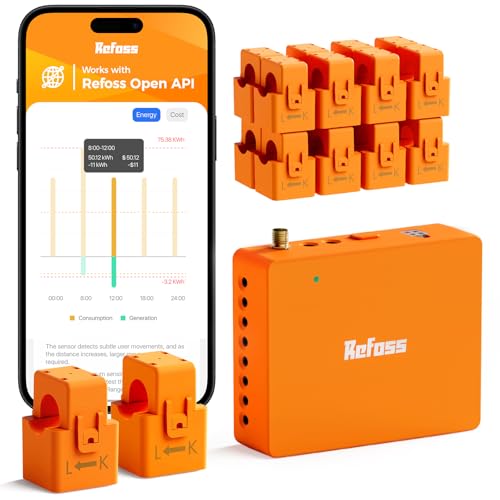
- Tracks 18 circuits with ±1% precision.
- Offers local data storage and open API control.
- Useful for solar optimization and usage alerts.
Best For: Homeowners who want private, detailed circuit-level energy monitoring.
8-Zone Load Distributor
exuberant 100A 8-Zone Load Manager

- Distributes loads across 8 zones for 240V systems.
- Includes overload protection and a lock feature.
- Built with a compact industrial-grade housing.
Best For: 240V backup setups needing stable multi-zone load distribution.
System Admin Time-Saver Pick
Time Management for System Administrators

- Teaches practical interruption management
- Covers routines, calendars, and prioritization
- Highlights documentation and automation
Best For: system admins and productivity-focused readers
Whole-Home Energy Monitor Pick
Leviton LWHEM-2R Energy Monitor

- Wi-Fi monitoring with My Leviton app support
- Tracks whole-home usage and production in real time
- Can control compatible smart circuit breakers
Best For: Leviton homeowners wanting app-based energy visibility
Generator Load Control Pick
50 Amp Smart Management Module
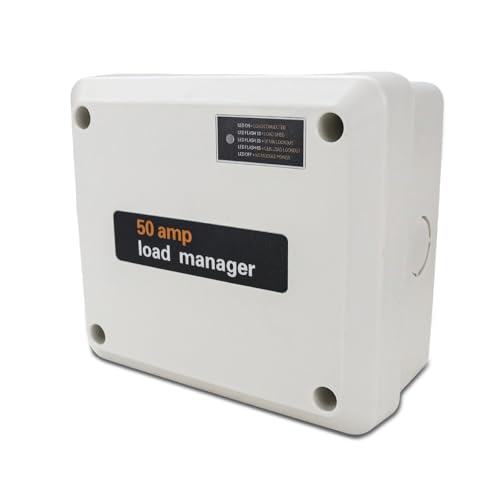
- Auto-sheds nonessential loads during overload risk
- Supports 8-zone priority-based control
- LED indicators show load status at a glance
Best For: homes needing generator-focused circuit prioritization
ABB Smart Load Balancer – ReliaHome Flex Kit
If you’re comparing smart load management systems for homes, the ABB ReliaHome Flex Kit is built to keep total electrical demand under a preset threshold by managing large appliances automatically. It’s aimed at homes that want to avoid a costly panel upgrade while still supporting EV chargers, water heaters, induction ovens, and other high-demand loads.
Best For: Homeowners who want modular load control and panel-upgrade avoidance.
Pros:
- Manages total home load by intelligently controlling large appliances.
- Designed as a lower-cost alternative to main panel or service upgrades.
- Hub connects via Ethernet for reliable internet access.
- Works with the ReliaHome App for monitoring and control.
Cons:
- Includes only 1 hub and 2 wireless controllers, so coverage may be limited for larger setups.
- Best fit is load optimization rather than detailed energy analytics.
- Requires integration into an electrical system, so installation is not a simple plug-in task.
The Flex Kit stands out for practical load optimization and appliance-friendly control, especially when avoiding expensive infrastructure changes matters most. If your goal is to stay within panel limits without interrupting normal appliance use unnecessarily, it’s a strong contender.
Refoss Local Energy Monitor – No-Cloud Web UI Energy Monitor
For buyers focused on smart load management systems for homes, the Refoss Smart Home Energy Monitor is less about switching loads and more about giving you detailed, local visibility into electricity use. With a built-in Web UI, Open API, and MQTT support, it keeps data on your home network while helping you monitor major circuits and automate around solar surplus.
Best For: Homeowners who want local energy monitoring with Home Assistant integration.
Pros:
- Local control via Web UI, Open API, and MQTT without cloud dependence.
- Native Home Assistant support plus OpenClaw AI automation features.
- Supports solar net metering workflows and surplus solar automation.
- Provides real-time readings with up to ±1% accuracy and long-term history.
Cons:
- It monitors energy use rather than directly managing appliance loads like a controller.
- Most useful for users comfortable with Home Assistant or app-based automation.
- Installation still requires panel-level electrical work.
This is a strong pick when your priority is privacy, local access, and detailed circuit monitoring. It’s especially compelling for solar homes that want to push more midday surplus into useful household loads.
Siemens EV Load Manager – Inhab Load Manager
The Siemens Inhab Load Manager is a straightforward option for smart load management systems for homes that need to make better use of an existing panel. It uses real-time panel capacity data to manage 2-pole loads up to 60A, helping reduce overload risk and avoid a costly electrical upgrade.
Best For: Homes adding EV charging or other large 240V loads without upgrading the panel.
Pros:
- Maximizes existing panel capacity without requiring a utility service upgrade.
- Uses real-time data to help reduce the possibility of overloads.
- Compatible with any brand load center from 100A to 225A.
- Supports EV chargers, water heaters, air conditioners, ovens, and dryers.
Cons:
- Limited to managing 2-pole loads up to 60A.
- Installation must be done by a qualified person.
- Primarily a load manager, not a full home energy monitoring platform.
For homeowners who want a proven way to add higher-demand equipment while staying within panel limits, this Siemens unit is highly practical. Its broad load-center compatibility and outdoor-rated enclosure make it an easy fit for many residential projects.
Dual-Channel WiFi Energy Meter – Tuya Smart Monitor
If you’re shopping for smart load management systems for homes on a budget, this dual-channel WiFi energy monitor gives you useful visibility into two separate household circuits. It tracks real-time usage, supports bi-directional monitoring, and works with Tuya or Smart Life for app-based energy insights.
Best For: Homes that want simple dual-circuit monitoring in the Tuya ecosystem.
Pros:
- Tracks two independent 80A channels for major circuits and appliances.
- Shows real-time data plus hourly, daily, monthly, and yearly history.
- Supports bi-directional energy tracking for solar or backup power setups.
- Clamp-style sensors simplify installation without cutting wires.
Cons:
- Focused on monitoring, not direct load control.
- Requires 2.4GHz Wi-Fi and app setup through Tuya or Smart Life.
- Less advanced than systems with native Home Assistant or no-cloud control.
This monitor is best for users who want clear circuit-level visibility and app convenience without a more complex install. It’s a sensible choice for households with solar, backup power, or just two key circuits to track closely.
Generator Load Manager – Briidea 50A Smart Management Module
If you’re comparing smart load management systems for homes, this Briidea module is built for one job: protecting a standby generator from overload while helping you keep critical circuits powered. It constantly monitors generator frequency and can automatically shut off connected loads when demand gets too high, which makes it a practical add-on for residential backup setups.
Best For: Homeowners who want automatic generator load protection and priority-based circuit control without upsizing the generator.
Pros:
- Monitors generator frequency and shuts down circuits automatically when demand becomes unsafe.
- Supports load prioritization so essential circuits can stay powered during an outage.
- Works with any home standby generator and transfer switches.
- Up to 8 modules can be used per system for more flexible power distribution.
Cons:
- Designed for generator load control rather than whole-home energy monitoring.
- Not smart home compatible, so it won’t integrate like app-based home platforms.
- Its 50A module format may be more than some smaller backup setups need.
This is a straightforward choice if your priority is keeping a generator within its limits during an outage. The lock-out function and automatic protection features make it a practical, cost-conscious way to manage essential loads more safely.
Home Energy Audit Monitor – Refoss Circuit Energy Monitor
For buyers looking at smart load management systems for homes, this Refoss monitor focuses on visibility first: it tracks electricity use across 18 individual circuits with professional ±1% precision. That makes it useful for spotting energy-hungry appliances, checking solar self-consumption, and understanding where monthly utility costs are coming from.
Best For: Homeowners who want detailed circuit-level energy tracking, local data control, and solar-aware usage insights.
Pros:
- Monitors 18 circuits with ±1% precision for detailed household energy audits.
- Supports local Web UI, Open API, MQTT, and WebSocket for private data control.
- Works with Home Assistant and includes no subscription fees for analytics or export.
- Stores daily data for 5 years and can send smart alerts for unusual appliance usage.
Cons:
- It is a monitoring and automation tool, not a direct load-shedding switch.
- Installation involves multiple sensors, which may be more complex than simpler meters.
- Its best features are most useful if you plan to review data regularly.
If you want a deeper picture of how your home uses power, this monitor offers far more than a basic meter. The combination of local privacy, circuit-level data, and solar optimization tools makes it especially appealing for households that want control without cloud dependence.
8-Zone Load Distributor – exuberant 100A 8-Zone Load Manager
If you’re shopping smart load management systems for homes with 240V backup gear, this exuberant module is designed to distribute power across eight zones and help keep equipment running stably. It adds overload protection and a lock function, making it a practical control accessory for systems that need organized load allocation.
Best For: Home backup setups that need a 240V, 8-zone load manager with overload protection and mode locking.
Pros:
- 100 amp, 8-zone design supports rational load distribution for 240V equipment.
- Built-in overload protection can cut off abnormal circuits automatically.
- Lock feature helps prevent accidental changes to the selected load mode.
- Industrial-grade housing adds dust and vibration resistance for tougher environments.
Cons:
- Details are limited compared with more fully specified monitoring products.
- Intended for power distribution control rather than energy usage analytics.
- Best suited to 240V generation equipment, so it may not fit every home setup.
This module is a good fit when the main goal is stable load distribution, not detailed energy reporting. The overload protection and lock function are the key strengths, especially in backup or equipment-room installations where reliability matters more than app features.
System Admin Time-Saver Pick – Time Management for System Administrators
Time Management for System Administrators: Stop Working Late and Start Working Smart
Check Price On AmazonIf you’re comparing smart load management systems for homes, it helps to think beyond hardware and look for products that reduce wasted time through better routines, automation, and prioritization. This book is aimed at system administrators, but its practical advice on handling interruptions, documenting processes, and automating repetitive work makes it a useful reference for anyone managing complex home tech or energy workflows.
Best For: readers who want productivity strategies for managing competing demands, interruptions, and recurring tasks
Pros:
- Focuses on managing interruptions and timewasters
- Includes tips for building routines and keeping an effective calendar
- Emphasizes documenting and automating repetitive processes
- Applies the same time-management ideas to both work and social life
Cons:
- Not a home energy device or load controller
- Geared specifically toward system administrators
- Does not provide electrical or smart home installation guidance
The strength of this title is its practical approach to staying organized under pressure. If your buying decision is really about improving the way you manage complex systems and recurring demands, it offers clear, grounded advice rather than technical product specs.
Whole-Home Energy Monitor Pick – Leviton LWHEM-2R Energy Monitor
For shoppers researching smart load management systems for homes, this Leviton monitor is built to make a load center smarter and give you a clearer picture of whole-home energy use. It connects over Wi-Fi, works through the My Leviton app, and provides real-time monitoring of consumption and production so you can see what is powering your home.
Best For: homeowners who want real-time whole-home energy monitoring and app-based control in a Leviton system
Pros:
- Wi-Fi connectivity supports remote monitoring and control
- Shows whole-home energy consumption and production in real time
- Can remotely control Leviton 2nd Gen Smart Circuit Breakers
- Supports scheduling and backup-power load shedding with compatible equipment
Cons:
- Designed for Leviton load centers and compatible devices
- Backup-power shedding requires an Automatic Transfer Switch and compatible system
- Limited to the Leviton app ecosystem for unified control
This is a strong fit if you want monitoring, scheduling, and circuit-level control in one interface. It stands out for real-time visibility and backup-power awareness, but it makes the most sense when you are already building around Leviton hardware.
Generator Load Control Pick – 50 Amp Smart Management Module
If your search for smart load management systems for homes is centered on backup power, this 50 amp module is designed to help a generator avoid overload by unloading nonessential circuits automatically. It supports up to 8-zone control, gives priority to critical loads, and uses visible LED indicators so you can check load status without opening the panel.
Best For: homeowners who need generator-side load control with priority-based circuit management
Pros:
- Automatically unloads nonessential loads when frequency drops are detected
- Supports priority levels for critical loads like refrigeration and medical equipment
- Can manage up to 8 intelligent modules for larger power loads
- LED status lights make load checks easy during outages
Cons:
- Not smart home compatible
- Focused on generator protection rather than full-home app monitoring
- Requires compatibility with Generac 7000 and related setup needs
This module is best viewed as a practical backup-power safeguard rather than a broad smart-home platform. It offers clear advantages for outage scenarios, especially when keeping essential circuits running is the top priority.
How We Picked the Best Smart Load Management Systems for Homes
We selected products that address real residential load-management needs: circuit monitoring, programmable control, overload protection, local or app-based visibility, and compatibility with common home energy setups. We also favored clear specs such as amp ratings, zone counts, and storage or open-access features where relevant.
Quick Comparison of the Main Types
Not every option does the same job. Some Smart Load Management Systems for Homes are designed to monitor whole-home usage, while others actively shed or prioritize loads during generator operation or peak demand. A few are focused on local data access and energy insight rather than automated switching. Knowing that difference matters before you buy.
Monitoring-Focused Models
Best if you want visibility into household energy use, circuit-level data, and smarter daily consumption habits.
Load Control and Generator Modules
Best if you need to prevent overloads, manage multiple zones, or keep critical circuits powered during outages.
Key Buying Factors for Smart Load Management Systems for Homes
Check the amperage and zone count first, since those determine what the system can handle. Next, look at whether you need whole-home monitoring, circuit-level monitoring, or active load switching. Integration matters too: some buyers want app control, while others prefer local data storage, open APIs, or web interfaces. If the system will support backup power, confirm generator compatibility, locking features, and overload protection. Finally, make sure the product matches your electrical panel, installation requirements, and any certification or code expectations in your area.
Who Should Buy Which Smart Load Management Systems for Homes?
If your priority is energy visibility and long-term tracking, choose a monitoring-first model with strong data access. If you are trying to avoid service upgrades or run backup power more intelligently, choose a load manager with clear control zones and overload safeguards. Homeowners with larger electrical demands should look for higher-amperage, multi-zone systems, while those with simpler needs may prefer a streamlined monitor that is easier to install and use.
For most buyers, the best choice is the system that matches your actual loads, not the one with the most features on paper. Focus on capacity, control style, and compatibility, and you will end up with a smarter, safer setup.
