
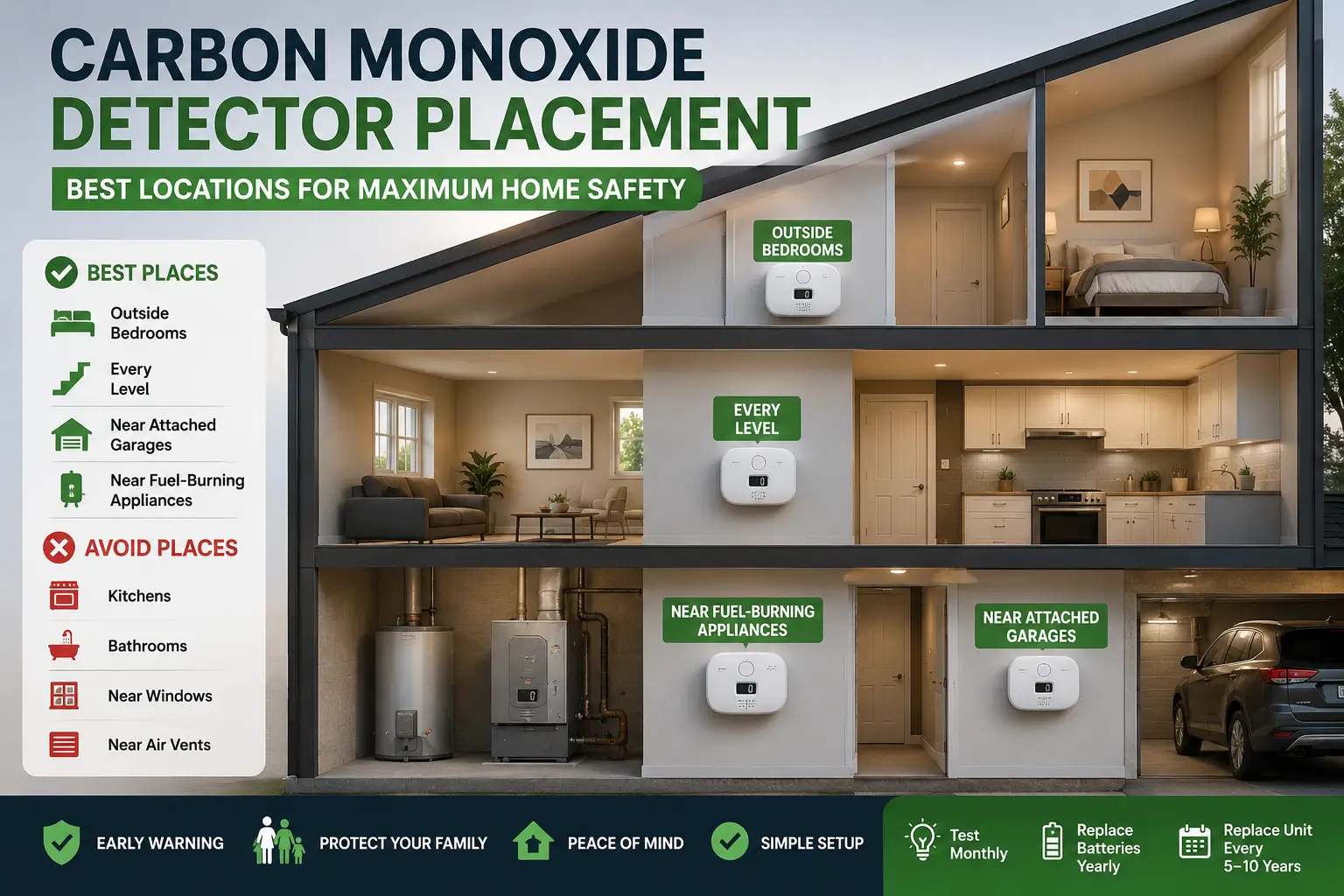
Carbon monoxide detector placement is essential for protecting your family from dangerous carbon monoxide gas leaks. Installing detectors in the correct locations helps provide faster warnings, better nighttime protection, and improved home safety.
Carbon monoxide (CO) is an invisible and odorless gas produced by fuel-burning appliances like furnaces, fireplaces, water heaters, and gas stoves. Because you cannot see or smell it, proper detector placement can save lives.
Table of Contents
Quick Answer About Carbon Monoxide Detector Placement
The best place to install carbon monoxide detectors is outside sleeping areas, on every level of the home, and near fuel-burning appliances while keeping at least 10–15 feet of distance from them.
Quick Information Table
| Feature | Details |
|---|---|
| Best Placement Areas | Bedroom hallways, basements, every floor |
| Avoid Installing Near | Kitchens, bathrooms, windows, vents |
| Ideal Distance From Appliances | 10–15 feet |
| Installation Difficulty | Easy |
| Maintenance Needed | Monthly testing and battery checks |
| Detector Lifespan | 5–10 years |
| Best For | Homes, apartments, condos, townhouses |
What Is Carbon Monoxide?
Carbon monoxide is a poisonous gas created when fuels do not burn completely. Common household sources include:
- Gas furnaces
- Fireplaces
- Water heaters
- Portable generators
- Gas ovens
- Wood-burning stoves
- Attached garages
According to the Centers for Disease Control and Prevention (CDC), hundreds of people die every year from accidental carbon monoxide poisoning in homes.
Why Proper Carbon Monoxide Detector Placement Matters
Correct placement helps detectors identify dangerous gas levels quickly before symptoms become severe.
Improper placement can:
- Delay warnings
- Cause false alarms
- Reduce protection during sleep
- Leave parts of the home uncovered
Many homeowners install detectors too close to kitchens or heating systems. This often leads to nuisance alarms and poor performance.
Best Carbon Monoxide Detector Placement Locations
The safest homes use multiple detectors in key locations for full coverage.
Install Detectors Outside Bedrooms
The most important location is outside sleeping areas.
Carbon monoxide poisoning is especially dangerous at night because people may not notice symptoms while sleeping.
Place detectors:
- In bedroom hallways
- Near children’s rooms
- Near guest bedrooms
For large homes, install additional alarms near separate sleeping zones.
Put One Detector on Every Floor
Install at least one detector on:
- Basements
- Main floors
- Upstairs hallways
- Finished attics
Even homes without gas appliances still need detectors because carbon monoxide can enter from attached garages or neighboring homes.
Install Near Attached Garages
Cars and generators produce large amounts of carbon monoxide.
Place a detector near the interior garage door, but never directly inside the garage because temperature changes and exhaust fumes may damage the sensor.
Basement Carbon Monoxide Detector Placement
Basements often contain fuel-burning equipment like:
- Boilers
- Furnaces
- Water heaters
- Gas dryers
Install detectors nearby while maintaining a safe distance to avoid false alarms.
Best Height for Carbon Monoxide Detectors
Carbon monoxide mixes evenly with indoor air. Because of this, detectors can usually be installed on walls or ceilings.
Always follow the manufacturer’s instructions for your specific detector model.
Ceiling Installation Tips
Install detectors:
- At least 6 inches away from walls
- Away from ceiling fans
- Away from air vents
- Away from hanging lights
Wall Installation Tips
Mount wall detectors:
- About 5 feet above the floor
- In open areas
- Away from furniture and curtains
Carbon Monoxide Detector Placement Checklist
Use this quick checklist for safer installation:
- Install one detector on every floor
- Place detectors outside bedrooms
- Keep detectors away from bathrooms
- Avoid placing near kitchens
- Test alarms every month
- Replace old detectors every 5–10 years
- Use interconnected alarms if possible
Places You Should Never Install Carbon Monoxide Detectors
Wrong placement can reduce effectiveness and trigger false alarms.
Avoid installing detectors:
| Location | Why It Is Bad |
|---|---|
| Kitchens | Cooking fumes can trigger false alarms |
| Bathrooms | Steam and humidity affect sensors |
| Garages | Extreme temperatures damage detectors |
| Windows | Fresh airflow disrupts detection |
| Air vents | Ventilation changes gas flow |
| Behind curtains | Blocks airflow to the sensor |
| Near fireplaces | Smoke and heat interfere with readings |
Common Carbon Monoxide Detector Placement Mistakes
Many homeowners unknowingly reduce their home’s protection by making simple installation mistakes.
Installing Only One Detector
One detector is not enough for multi-story homes.
Experts recommend installing alarms on every level and near sleeping areas for better safety coverage.
Placing Detectors Too Close to Appliances
Detectors placed directly beside furnaces or ovens may produce unnecessary alarms.
Maintain proper spacing while keeping the area protected.
Ignoring Basement Areas
Basements are common locations for carbon monoxide leaks because heating equipment is usually installed there.
Forgetting to Replace Old Detectors
Most detectors expire after several years.
Older sensors may fail to detect dangerous gas levels correctly.
Step-by-Step Carbon Monoxide Detector Installation Guide
1. Identify High-Risk Areas
Check your home for:
- Gas appliances
- Fireplaces
- Heating systems
- Attached garages
2. Choose Safe Installation Locations
Select:
- Bedroom hallways
- Every floor
- Basement utility areas
3. Mount the Detector
Use the included mounting bracket and screws.
Follow the manufacturer’s spacing recommendations carefully.
4. Test the Detector
Press the test button immediately after installation.
Repeat testing once every month.
5. Replace Batteries and Old Units
Replace batteries yearly unless using sealed battery models.
Replace the entire detector every 5–10 years.
Smart Carbon Monoxide Detector Options
Modern smart detectors provide additional safety features and remote monitoring.
Popular smart detector features include:
- Mobile alerts
- Voice warnings
- Self-testing sensors
- Low battery notifications
- Smart home integration
Popular ecosystems include:
- Google Nest
- Amazon Alexa
- Apple HomeKit
Popular detector brands include:
- Kidde
- First Alert
Carbon Monoxide Symptoms You Should Never Ignore
Early symptoms of carbon monoxide poisoning often feel similar to the flu.
Common symptoms include:
- Headaches
- Dizziness
- Nausea
- Fatigue
- Chest pain
- Confusion
- Vomiting
If multiple people in the home suddenly feel sick at the same time, leave the house immediately and contact emergency services.
Troubleshooting Carbon Monoxide Detector Problems
Why Does My Detector Keep Beeping?
Common causes include:
- Low battery
- End-of-life warning
- Dust buildup
- Sensor failure
Quick fixes:
- Replace batteries
- Clean vents gently
- Press the reset button
- Replace expired detectors
Why Am I Getting False Alarms?
False alarms often happen because of:
- Poor placement
- Steam
- Cooking smoke
- Nearby heating vents
Relocating the detector usually solves the problem.
What If My Detector Stops Working?
Try these steps:
- Check power supply
- Replace batteries
- Test the alarm
- Replace old units
If the detector still fails, install a new one immediately.
Carbon Monoxide Detector Placement for Apartments
Apartment residents should also install detectors even if the building already has shared systems.
Best apartment locations include:
- Bedroom hallways
- Living rooms
- Near entry doors
- Near gas appliances
Small apartments may only need one or two detectors depending on layout.
Smoke Detector vs Carbon Monoxide Detector Placement
Many people confuse smoke alarm placement with carbon monoxide detector placement.
| Detector Type | Main Purpose | Best Placement |
|---|---|---|
| Smoke Detector | Detect smoke and fire | Ceilings and hallways |
| Carbon Monoxide Detector | Detect poisonous gas | Outside bedrooms and every floor |
Combination alarms can provide both types of protection in one device.
Frequently Asked Questions
Should carbon monoxide detectors be placed upstairs?
Yes. Every level of the home should have at least one detector for complete protection.
Can I place a carbon monoxide detector near my furnace?
Yes, but keep it about 10–15 feet away to reduce false alarms.
Do I need a detector if my home uses electricity only?
Yes. Carbon monoxide can still enter from garages, generators, fireplaces, or neighboring units.
How often should I test carbon monoxide detectors?
Test detectors once every month using the built-in test button.
Can carbon monoxide detectors be mounted on ceilings?
Yes. Many detectors are designed for ceiling installation because carbon monoxide spreads evenly in the air.
What is the best carbon monoxide detector for smart homes?
Smart detectors from brands like Google Nest and Kidde are popular for remote alerts and automation features.
Smart Carbon Monoxide Detector Placement for Better Home Safety
Proper carbon monoxide detector placement gives your family faster warnings during dangerous gas leaks and improves overall home safety.
Installing detectors outside bedrooms, on every level, and near fuel-burning appliances can help reduce risks and provide peace of mind year-round.