

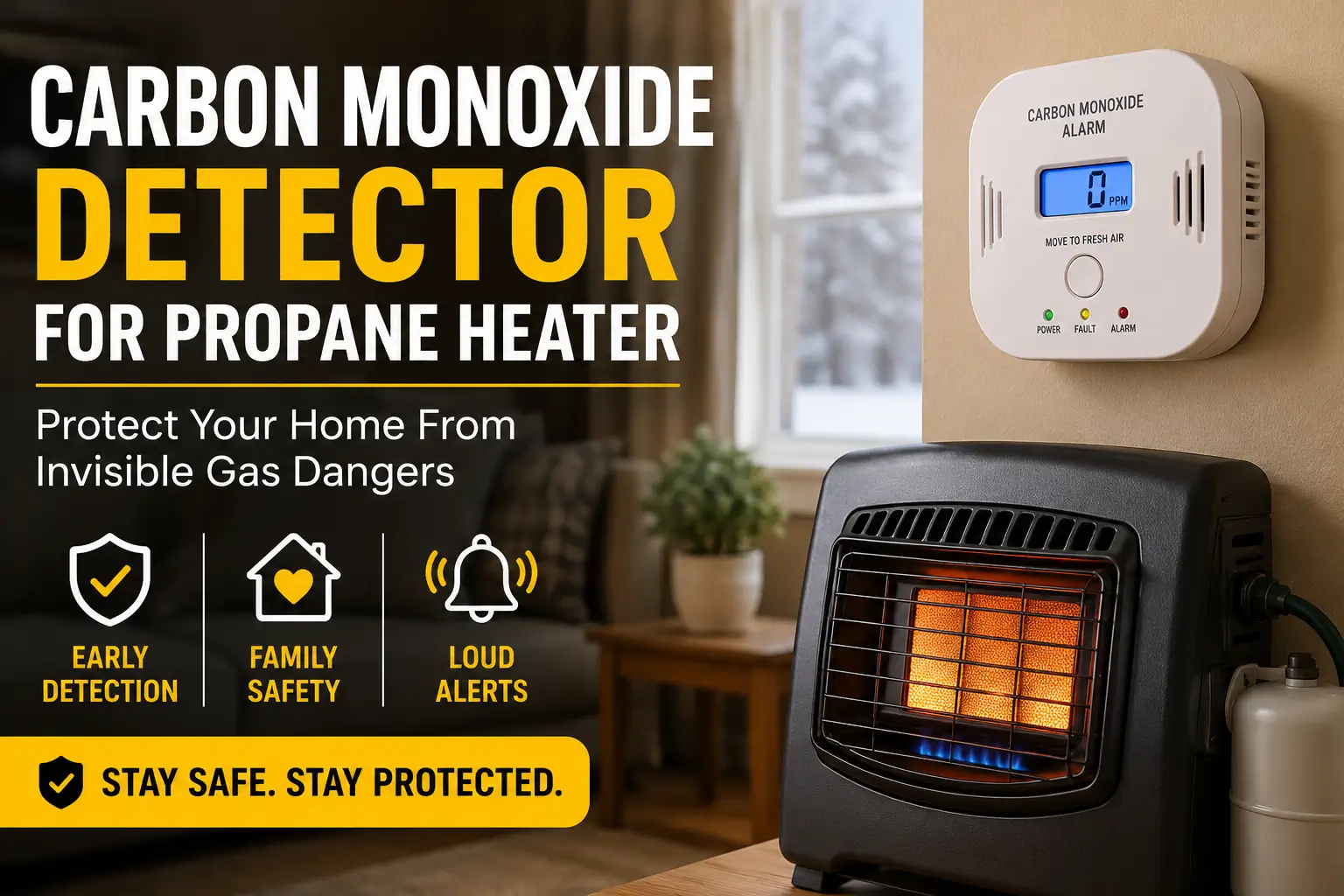
If you use a propane heater indoors, a carbon monoxide detector for propane heater safety is one of the most important devices you can install in your home, RV, garage, or cabin.
Table of Contents
Why You Need a Carbon Monoxide Detector With a Propane Heater
A propane heater can produce carbon monoxide (CO) when it burns fuel improperly. Carbon monoxide is a colorless and odorless gas that can quickly become deadly without warning.
A carbon Monoxide Detector Helps You:
- Detect dangerous CO levels early
- Prevent carbon monoxide poisoning
- Protect your family while sleeping
- Improve indoor heater safety
- Get alerts before symptoms appear
Many homeowners mistakenly think propane itself smells bad enough for safety. The propane smell additive helps detect gas leaks, but it does not detect carbon monoxide.
Quick Safety Information Table
| Feature | Details |
|---|---|
| Main Purpose | Detect dangerous carbon monoxide gas |
| Works With | Propane heaters, gas fireplaces, RV heaters |
| Best Placement | Near sleeping areas and heater rooms |
| Power Type | Battery, plug-in, or hardwired |
| Installation Difficulty | Easy |
| Average Setup Time | 10–15 minutes |
| Recommended Backup | Natural gas detector + smoke alarm |
| Best Option | 3-in-1 combo detector |
What Is a Carbon Monoxide Detector?
A carbon monoxide detector is a safety device that monitors indoor air for dangerous CO gas levels. It sounds a loud alarm when carbon monoxide reaches unsafe concentrations.
Unlike smoke alarms, CO detectors cannot detect smoke or fire unless they are combo models.
Some Modern Detectors Combine
- Smoke detection
- Carbon monoxide monitoring
- Propane or natural gas leak alerts
This is why many people now prefer a 3-in-1 smoke carbon monoxide and natural gas alarm for complete home protection.
Best Carbon Monoxide Detector for Propane Heater
The best detector for propane heater use should provide accurate CO monitoring, loud alerts, battery backup, and simple installation.
Here are the most popular options homeowners choose today.
1. First Alert Plug-In Natural Gas Propane and Carbon Monoxide Detector
First Alert detectors are popular because they combine propane leak detection with carbon monoxide monitoring in one device.
Why People Like It
- Plug-in convenience
- Battery backup during outages
- Digital display
- Loud emergency alarm
- Detects explosive gas leaks
Best For
- Bedrooms
- Living rooms
- RVs
- Cabins
2. Kidde Carbon Monoxide and Explosive Gas Alarm
Kidde alarms are known for reliable gas detection and affordable pricing.
Common Features
- Electrochemical CO sensor
- Explosive gas monitoring
- Battery backup
- Test/reset button
Why Does the Kidde Alarm Keep Beeping?
A beeping Kidde alarm may indicate:
- Low battery
- End of device life
- Carbon monoxide detection
- Sensor malfunction
- Dust buildup
Quick Fixes
- Replace batteries
- Press reset
- Vacuum air vents
- Check manufacture date
If beeping continues, replace the detector immediately.
Types of Carbon Monoxide Detectors for Propane Heaters
Different detector styles work better for different homes and heating setups.
Battery Operated Carbon Monoxide and Propane Detector
Battery-powered detectors are ideal for:
- RVs
- Cabins
- Garages
- Areas without outlets
Pros
- Works during power outages
- Portable
- Easy installation
Cons
- Requires battery replacement
- Limited lifespan
Carbon Monoxide and Gas Detector Plug-In
Plug-in models connect directly to wall outlets.
Benefits
- Continuous power
- Low maintenance
- Often includes digital display
Best For
- Apartments
- Bedrooms
- Basements
- Indoor propane heater rooms
Where to Install a Carbon Monoxide Detector
Correct placement matters more than most people realize.
Install Detectors
- Near sleeping areas
- In rooms with propane heaters
- Outside bedrooms
- On every home level
Avoid Installing Detectors
- Directly above heaters
- Near windows
- Inside humid bathrooms
- Behind furniture
Signs Your Propane Heater May Produce Carbon Monoxide
A faulty propane heater can become dangerous quickly.
Warning Signs to Watch For
- Yellow burner flame
- Soot around heater
- Condensation on windows
- Headaches indoors
- Dizziness or nausea
- Weak airflow
- Strange burning smell
If symptoms improve outdoors, leave immediately and ventilate the space.
How to Test Your Carbon Monoxide Detector
Testing ensures your detector works when you need it most.
Step-by-Step Testing Process
- Press the test button
- Wait for alarm sound
- Check display indicators
- Replace weak batteries
- Clean vents regularly
Most detectors should be replaced every 5–7 years.
Common Mistakes People Make
Many homeowners unknowingly reduce their protection.
Avoid These Mistakes
- Installing only one detector
- Ignoring chirping sounds
- Removing batteries
- Placing detectors too close to heaters
- Using expired alarms
Carbon Monoxide Detector for Propane Heater Amazon Buying Tips
Many shoppers search for a carbon monoxide detector for propane heater Amazon options because there are hundreds of models available online.
Before Buying, Check
- UL certification
- Battery backup
- Digital display
- Gas leak detection
- Warranty length
- Sensor lifespan
Reading verified customer reviews can also help identify false alarms or reliability issues.
Troubleshooting Carbon Monoxide Detector Problems
Even the best detectors can sometimes develop issues.
Detector Keeps Chirping
Usually caused by:
- Low battery
- Expired sensor
- Dust contamination
False Alarms
Possible causes include:
- Poor ventilation
- Steam
- Nearby chemicals
- Heater malfunction
Detector Will Not Turn On
Try these fixes:
- Install new batteries
- Press the reset button
- Try a different outlet
- Clean battery terminals
Best Features to Look For
The best carbon monoxide detector should include essential safety features that improve reliability and protection.
| Feature | Why It Matters |
|---|---|
| Digital Display | Shows real-time CO levels |
| Battery Backup | Works during outages |
| Loud Alarm | Better emergency alerts |
| Gas Leak Detection | Extra propane safety |
| Self-Test Function | Easier maintenance |
| End-of-Life Warning | Alerts when replacement is needed |
Real-World Example
A family using a propane heater in a winter cabin noticed their detector alarming overnight. The issue turned out to be blocked ventilation causing incomplete combustion.
Without the detector, dangerous carbon monoxide exposure could have continued for hours while everyone slept.
This is why propane heater safety should never rely on smell alone.
Frequently Asked Questions
Can a propane heater cause carbon monoxide?
Yes. Poor ventilation or incomplete fuel burning can produce dangerous carbon monoxide gas indoors.
Should I install a detector near every propane heater?
Yes. Install detectors near sleeping areas and any room using fuel-burning appliances.
How long do carbon monoxide detectors last?
Most detectors last between 5 and 7 years before replacement is recommended.
Can a smoke detector detect carbon monoxide?
No. Standard smoke alarms cannot detect carbon monoxide unless they are combo units.
Are plug-in CO detectors better than battery models?
Plug-in models provide continuous power, but battery-operated detectors work during outages and offer better portability.
Why is my carbon monoxide detector randomly beeping?
Random beeping usually means low battery, sensor expiration, or internal malfunction requiring replacement.
Smart Safety Tips for Indoor Propane Heater Use
Follow these safety tips to reduce carbon monoxide risks indoors.
Important Safety Tips
- Never use outdoor propane heaters indoors
- Keep ventilation open
- Inspect heaters yearly
- Replace damaged hoses immediately
- Test detectors monthly
- Keep spare batteries nearby
Protect Your Home With the Right Carbon Monoxide Detector for Propane Heater
Choosing the right carbon monoxide detector for propane heater safety can protect your family from one of the most dangerous invisible household threats.
Whether you choose a battery-powered model, a combo gas alarm, or a plug-in detector, proper installation and regular testing are critical for staying safe during colder months.
A reliable detector provides peace of mind and helps ensure your propane heater stays a safe and effective heating solution.
Citations
National Fire Protection Association: The Trusted Source for Fire and Life Safety