

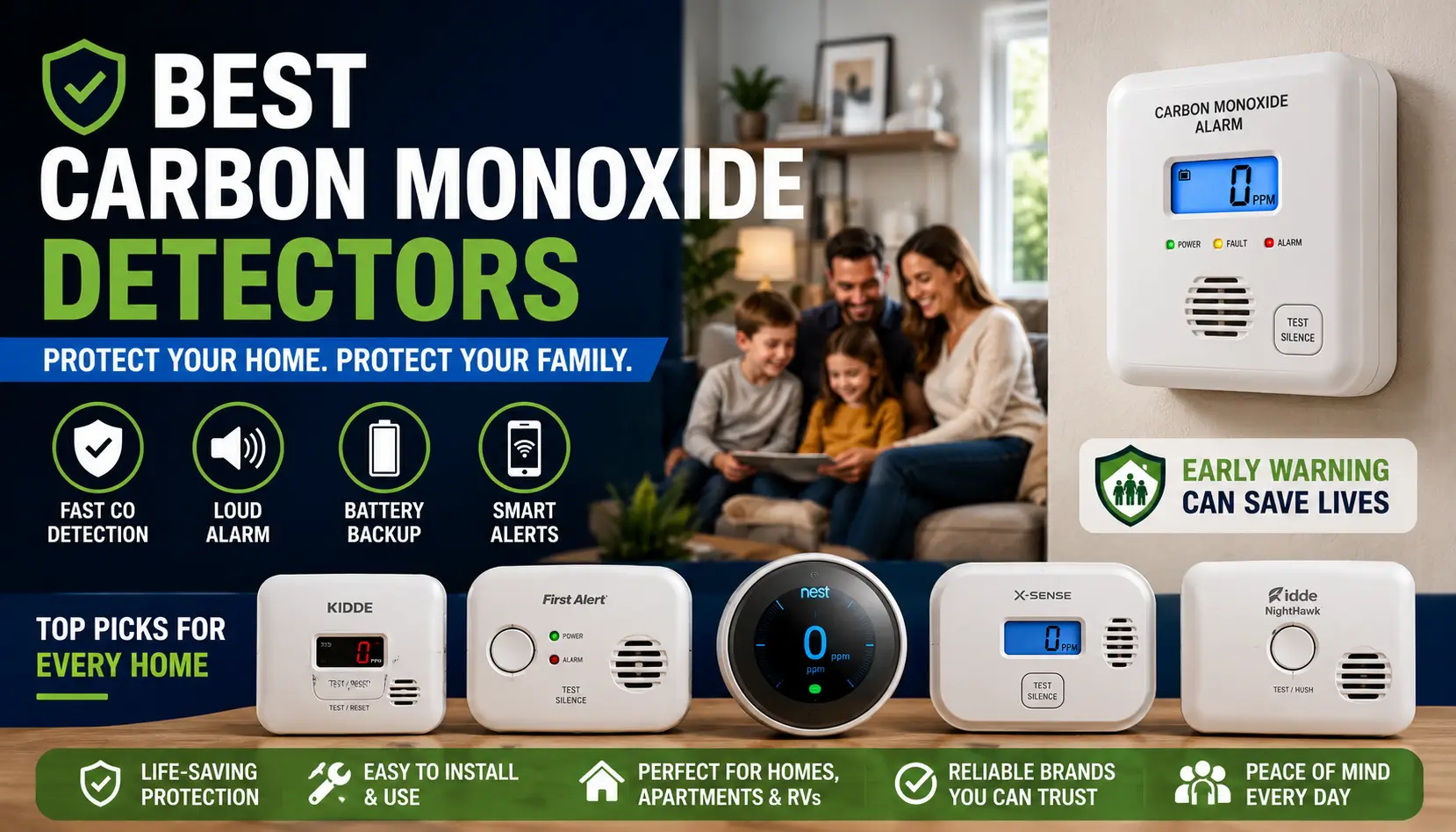
Finding the best carbon monoxide detectors is one of the smartest ways to protect your home and family from dangerous gas leaks.
Carbon monoxide is called the silent killer because it has no smell, color, or taste. A good detector can warn you before carbon monoxide levels become dangerous.
Modern detectors now offer helpful features like battery backup, digital displays, smart alerts, and loud emergency alarms.
Whether you live in a house, apartment, RV, or cabin, choosing the right detector can improve your home safety.
This guide explains the different types of carbon monoxide detectors, the best features to look for, proper placement tips, and simple maintenance steps for safer living.
Table of Contents
Why Every Home Needs Carbon Monoxide Detectors
Carbon monoxide detectors are one of the most important safety devices for modern homes.
Carbon monoxide, also called CO gas, is impossible to see or smell. It can leak from fuel-burning appliances and quickly become dangerous. Without a working detector, families may not notice the warning signs until it is too late.
Common symptoms of carbon monoxide exposure include:
- Headaches
- Dizziness
- Vomiting
- Weakness
- Confusion
- Trouble breathing
In serious cases, carbon monoxide poisoning can become deadly within minutes.
| Quick Safety Information | Details |
|---|---|
| Main Purpose | Detect dangerous CO gas |
| Best Installation Areas | Bedrooms, hallways, garages |
| Power Types | Battery, plug-in, hardwired |
| Maintenance Level | Easy |
| Recommended Testing | Once every month |
| Average Lifespan | 5–10 years |
What Makes the Best Carbon Monoxide Detectors
The best carbon monoxide detectors combine fast alerts, simple setup, and reliable long-term protection.
A high-quality detector should warn your family early enough to prevent dangerous exposure levels.
Fast CO Detection
Quick detection is the most important feature in any carbon monoxide alarm.
Reliable detectors continuously monitor air quality and sound an alarm when carbon monoxide reaches unsafe levels.
Loud Emergency Alarm
A strong alarm helps wake sleeping family members during emergencies.
Most trusted models include alarms around 85 decibels.
Battery Backup Protection
Battery backup keeps detectors running during power outages.
If you prefer cordless installation, this guide on the best battery powered carbon monoxide detector explains the safest options for homes and apartments.
Plug-In Convenience
Plug-in units are simple to install and work well in bedrooms or hallways.
You can also compare features in this helpful article about the best plug in carbon monoxide detector.
Digital CO Display
Digital displays show current carbon monoxide levels in real time.
This feature helps homeowners monitor small CO changes before alarms fully activate.
Different Types of Carbon Monoxide Detectors
Different homes and lifestyles need different detector styles.
Battery-Powered Carbon Monoxide Detectors
Battery-operated alarms are easy to move and install anywhere.
These are perfect for:
- Apartments
- RVs
- Cabins
- Dorm rooms
- Older homes
If portability matters, read this guide on the best portable carbon monoxide detector for travel-friendly choices.
Plug-In Carbon Monoxide Detectors
Plug-in models connect directly into wall outlets.
Many include battery backup for extra protection during blackouts.
Smart Carbon Monoxide Detectors
Smart alarms connect to WiFi and send alerts to your phone.
These detectors are useful when:
- You travel often
- You own rental property
- You want remote monitoring
- You already use smart home devices
Combination Smoke and CO Alarms
Combination alarms detect both smoke and carbon monoxide using one device.
This reduces clutter and improves whole-home protection.
Best Places to Install Carbon Monoxide Detectors
Proper placement helps carbon monoxide detectors work better and respond faster.
Install detectors in these locations:
- Outside every bedroom
- Near sleeping areas
- On every floor
- In basements
- Near attached garages
Avoid placing detectors:
- Directly above stoves
- Near windows
- Inside bathrooms
- In humid rooms
- Close to heating vents
Common Sources of Carbon Monoxide in Homes
Many everyday appliances can release carbon monoxide gas if they are damaged or poorly ventilated.
Common household CO sources include:
- Gas furnaces
- Fireplaces
- Water heaters
- Portable generators
- Propane heaters
- Gas stoves
- Running vehicles
If you use propane heating equipment indoors, this guide on the carbon monoxide detector for propane heater can help you choose safer detectors.
Drivers should also check this detailed article about the carbon monoxide detector for car for vehicle safety tips.
How to Test Carbon Monoxide Detectors
Regular testing keeps your detector accurate and dependable.
Follow these simple steps:
- Press the test button once every month
- Replace old batteries regularly
- Clean dust from the vents
- Check the expiration date
- Replace expired units immediately
Testing only takes a few seconds but can prevent major safety risks.
Signs Your Carbon Monoxide Detector Needs Replacement
Old detectors may stop sensing carbon monoxide correctly over time.
Replace your detector if:
- It chirps constantly
- The screen stops working
- The unit fails testing
- The expiration date has passed
- Physical damage appears
Most carbon monoxide alarms last between 5 and 10 years.
Common Carbon Monoxide Detector Problems
Many common detector issues have simple fixes.
Detector Keeps Beeping
This usually happens because of:
- Low batteries
- Dust buildup
- Power interruptions
- End-of-life warnings
Quick fix steps:
- Replace batteries
- Clean the vents
- Reset the detector
- Check the user manual
False Carbon Monoxide Alarms
False alarms may happen when detectors are placed too close to:
- Kitchens
- Bathrooms
- Humid areas
- Heating vents
Moving the detector slightly often solves the problem.
Detector Will Not Turn On
If your detector does not power on:
- Check battery direction
- Test the outlet
- Confirm power connections
- Verify the expiration date
Trusted Carbon Monoxide Detector Brands
Well-known brands often provide better long-term reliability and customer support.
Popular detector brands include:
- Kidde
- First Alert
- Google Nest
- X-Sense
If you want detailed comparisons, check these helpful guides:
Travel Safety and Portable Carbon Monoxide Protection
Portable carbon monoxide detectors add protection when staying away from home.
Travel detectors are useful for:
- Hotels
- Campers
- RVs
- Cabins
- Vacation rentals
Frequent travelers should read this complete guide on the best travel carbon monoxide detector before their next trip.
Simple Tips to Improve Carbon Monoxide Safety
Small safety habits can reduce the chances of dangerous carbon monoxide leaks.
Schedule Yearly Inspections
Professional inspections help detect damaged heating equipment early.
Never Use Generators Indoors
Portable generators release deadly carbon monoxide very quickly.
Keep Garage Areas Ventilated
Never leave a car running inside an attached garage.
Replace Old Appliances
Older appliances are more likely to leak carbon monoxide gas.
Frequently Asked Questions
How many carbon monoxide detectors should a home have?
Homes should have at least one detector on every floor and outside sleeping areas. Larger homes may need extra units for complete coverage.
Can carbon monoxide detectors detect propane leaks?
No. Carbon monoxide detectors only detect CO gas. Separate propane leak detectors are needed for propane gas detection.
Do plug-in carbon monoxide detectors work during blackouts?
Only models with battery backup continue working during power outages. Always check product specifications before buying.
Are smart carbon monoxide detectors worth buying?
Smart detectors send alerts directly to your phone. They are useful for families who travel or use smart home systems.
How often should carbon monoxide detectors be tested?
Most manufacturers recommend testing detectors once every month. Regular testing ensures alarms work properly during emergencies.
Citations
Carbon Monoxide Safety: NFPA Carbon Monoxide Alarm Safety