

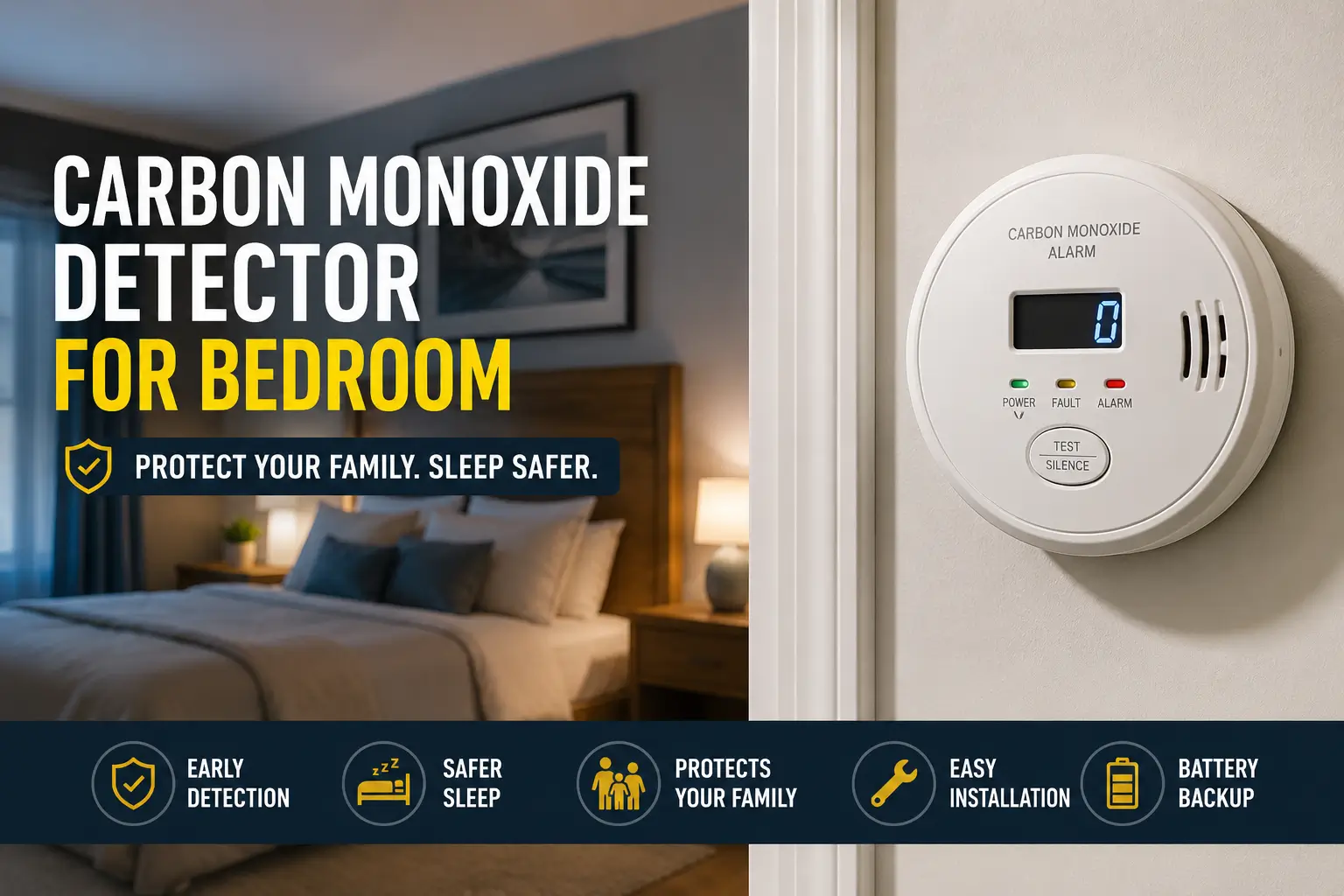
A carbon monoxide detector for bedroom safety can protect your family from dangerous gas leaks while everyone sleeps. Choosing the right bedroom carbon monoxide alarm helps improve home safety, provides faster alerts, and gives extra peace of mind at night.
Most people never think about carbon monoxide.
Until they should.
That’s the problem.
Table of Contents
Why a Carbon Monoxide Detector for Bedroom Areas Matters
A carbon monoxide detector warns you when harmful CO gas starts building up inside your home.
You can’t see it. You can’t smell it. And you usually don’t notice it right away.
That’s what makes carbon monoxide dangerous.
Gas heaters, fireplaces, furnaces, water heaters, and even attached garages can produce CO gas if something goes wrong.
And sadly, many carbon monoxide poisoning cases happen during sleep.
People simply never wake up in time.
Quick Information Table
| Feature | Details |
|---|---|
| Main Purpose | Detect harmful carbon monoxide gas |
| Best Placement | Near bedrooms and sleeping areas |
| Installation Difficulty | Easy |
| Power Options | Battery, plug-in, hardwired |
| Maintenance | Monthly testing |
| Battery Replacement | Every 6–12 months |
| Average Lifespan | 5–10 years |
What Is a Carbon Monoxide Detector?
A carbon monoxide detector is a small safety device that monitors indoor air for dangerous levels of CO gas.
If unsafe levels are detected, the alarm sounds loudly.
Simple.
That loud sound could save lives.
Unlike smoke, carbon monoxide spreads quietly through the air. There’s no warning smell or visible cloud.
That’s why every bedroom area should have nearby protection.
Common Symptoms of Carbon Monoxide Exposure
| Mild Symptoms | Severe Symptoms |
| Headache | Confusion |
| Dizziness | Chest pain |
| Nausea | Passing out |
| Fatigue | Death |
If several people in the home suddenly feel sick at the same time, carbon monoxide may be the reason.
Best Place to Install a Carbon Monoxide Detector for Bedroom Safety
The best place for a carbon monoxide detector is near sleeping areas where everyone can hear the alarm clearly.
Not hidden. Not blocked by furniture.
Just somewhere open.
Recommended Placement Tips
- Install one outside each bedroom
- Place detectors on every floor
- Keep alarms away from windows and vents
- Avoid humid bathrooms
- Install near attached garages
- Follow manufacturer placement instructions
Some homeowners also install one directly inside bedrooms.
That extra protection can help.
Especially if:
- Someone uses a space heater
- Elderly family members live in the home
- Bedrooms are far from hallways
- Someone has breathing problems
Types of Carbon Monoxide Detectors
Not every detector works the same way.
Some are basic. Others connect to smart home systems.
Battery-Powered Detectors
These are easy to install and still work during power outages.
Best for:
- Apartments
- Bedrooms
- Small homes
- Renters
Plug-In Detectors
These plug directly into wall outlets.
Many models include battery backup too.
A popular choice for bedrooms.
Hardwired Detectors
These connect directly to your home’s electrical system.
Usually better for:
- Larger homes
- New construction
- Whole-home safety setups
How to Install a Carbon Monoxide Detector in a Bedroom
Most bedroom detectors take less than 15 minutes to install.
No special tools needed.
Step-by-Step Installation
- Read the manufacturer instructions
- Pick a location near bedrooms
- Mount the bracket securely
- Insert batteries if required
- Attach the detector
- Press the test button
- Confirm the alarm is loud enough
Done.
Common Installation Mistakes
A lot of people make these mistakes:
- Installing directly above gas appliances
- Hiding detectors behind curtains
- Ignoring low battery warnings
- Installing too close to bathrooms
- Forgetting monthly testing
Small mistakes can reduce detector accuracy.
How to Tell if Your Detector Is Working Properly
A properly working detector should:
- Flash indicator lights
- Respond during testing
- Sound loudly during alerts
- Show battery status correctly
Test it every month.
Most people forget.
Until the detector starts chirping at night.
Troubleshooting Common Carbon Monoxide Detector Problems
Carbon monoxide detectors can sometimes beep, chirp, or give false alarms for reasons that are easy to fix.
Understanding the most common detector problems helps you respond quickly and keep your home protected.
Why Does the Detector Keep Beeping?
Usually the problem is:
- Low battery
- Dust buildup
- Expired sensor
- Internal malfunction
Quick fix?
Replace the battery first.
Then gently clean the detector vents.
False Alarms
False alarms sometimes happen near:
- Kitchens
- Bathrooms
- Humid rooms
- Poorly ventilated areas
Moving the detector slightly often solves the issue.
Detector Not Responding During Testing
If the test button does nothing:
- Replace the batteries
- Reset the detector
- Check the expiration date
- Replace the detector if needed
Older detectors eventually stop working correctly.
How Many Carbon Monoxide Detectors Does a Home Need?
Most homes should have:
- One detector on every floor
- One outside sleeping areas
- Extra detectors near fuel-burning appliances
Larger homes may need additional units for full protection.
More coverage is usually better.
Carbon Monoxide Detector vs Smoke Detector
People confuse these devices all the time.
But they protect against different dangers.
| Feature | Carbon Monoxide Detector | Smoke Detector |
| Detects Gas | Yes | No |
| Detects Smoke | No | Yes |
| Main Purpose | Toxic gas warning | Fire warning |
| Important Near Bedrooms | Yes | Yes |
Many newer alarms now combine both features into one device.
Convenient.
Smart Carbon Monoxide Detectors
Smart detectors connect to Wi-Fi and send alerts directly to your phone.
Helpful if:
- You travel often
- You own a smart home system
- You want mobile notifications
- You want remote monitoring
Popular features include:
- Voice alerts
- Battery monitoring
- Smartphone notifications
- Smart home integration
- Emergency warnings
Bedroom Carbon Monoxide Safety Tips
Small habits make a big difference.
Simple Safety Checklist
- Test alarms every month
- Replace batteries regularly
- Keep vents clean
- Service furnaces yearly
- Never run generators indoors
- Don’t idle cars inside garages
Simple steps.
But important.
Frequently Asked Questions
How close should a carbon monoxide detector be to a bedroom?
Install the detector within about 10 to 15 feet of bedroom doors when possible. The goal is making sure sleeping people hear the alarm quickly.
Can a carbon monoxide detector go on the ceiling?
Yes. Many detectors support ceiling mounting. Always follow the manufacturer instructions for correct placement.
Do bedrooms legally require carbon monoxide detectors?
Many local building codes require detectors near sleeping areas. Rules vary depending on where you live.
How long does a carbon monoxide detector last?
Most detectors last between 5 and 10 years before replacement is recommended.
Does carbon monoxide rise or stay low?
Carbon monoxide usually mixes evenly with indoor air. Proper placement matters more than exact height.
What should you do if the alarm goes off?
Leave the home immediately and call emergency services. Do not return until professionals say it is safe.
Why Bedroom Carbon Monoxide Protection Matters
A reliable carbon monoxide detector for bedroom protection is one of the most important safety devices you can install in your home.
It doesn’t take much effort.
But it can make a huge difference.
Proper detector placement, regular testing, and fresh batteries help ensure the alarm works when your family needs it most.
And honestly?
That peace of mind matters.
Citations
National Fire Protection Association: Carbon monoxide safety recommendations