

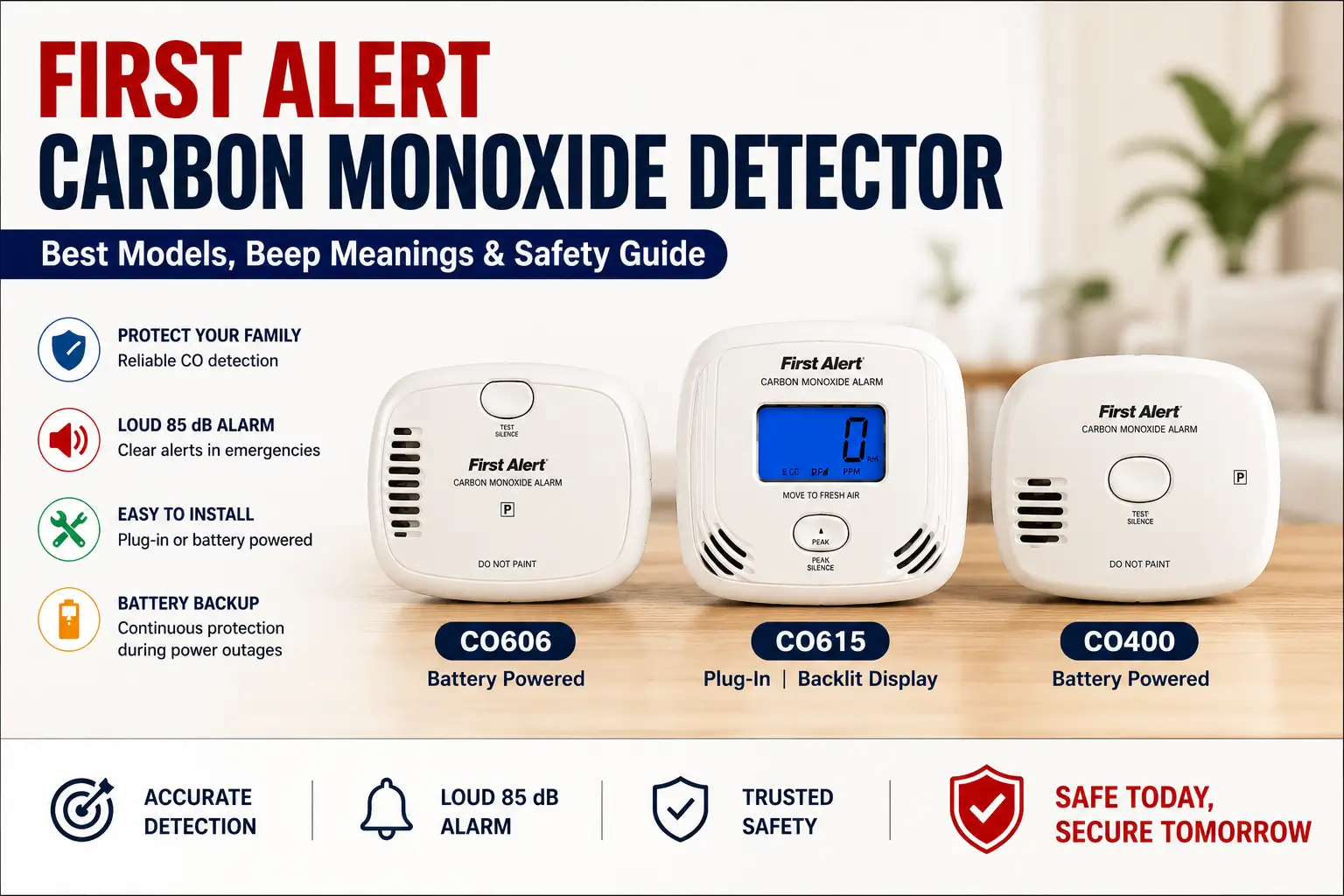
Carbon monoxide is dangerous. Quiet too. You cannot smell it, and most people never notice a leak until symptoms start showing up.
That is exactly why a good detector matters.
A lot of homeowners trust First Alert because the alarms are simple to use, reliable, and easy to install without calling an electrician.
This guide covers the best First Alert carbon monoxide detectors for bedrooms, apartments, RVs, and larger homes. We also explain common warning sounds, flashing lights, testing steps, and what those annoying beeps usually mean.
Disclosure: This post contains affiliate links. If you purchase through these links, I may earn a small commission at no extra cost to you.
Disclosure: This post contains affiliate links. If you purchase through these links, I may earn a small commission at no extra cost to you.
Table of Contents
Quick Comparison Table
| Model | Best For | Power Type | Rating | Main USP | Buy |
|---|---|---|---|---|---|
| First Alert CO606 | Bedrooms and Apartments | Battery Powered | 9.5/10 | Portable design | Buy on Amazon |
| First Alert CO615 | Smart Monitoring | Plug-In | 9.3/10 | Backlit display | Buy on Amazon |
| First Alert CO400 | Budget Buyers | Battery Powered | 8.9/10 | Affordable protection | Buy on Amazon |
How We Tested These Carbon Monoxide Detectors
We looked at these alarms the same way most homeowners would actually use them.
Not inside a lab. Inside real rooms.
We checked:
- Alarm loudness
- Ease of setup
- Display visibility at night
- Battery backup reliability
- Plug-in stability
- Wall mounting convenience
- Build quality
- Long-term customer feedback
Some detectors were easy right out of the box.
Others? Not so much.
We also reviewed common complaints online because recurring issues usually tell the real story.
Why Every Home Needs a Carbon Monoxide Detector
Carbon monoxide can come from more places than people realize.
Things like:
- Gas stoves
- Water heaters
- Furnaces
- Fireplaces
- Portable generators
- Attached garages
Even older heating systems can become a problem.
The scary part is the symptoms feel normal at first.
Headaches. Dizziness. Fatigue.
A lot of people mistake it for being sick or tired.
That is why detectors near bedrooms are so important.
First Alert Carbon Monoxide Detector Plug-In Models
Explore reliable First Alert plug-in carbon monoxide detectors designed for continuous monitoring, easy installation, and trusted home safety protection.
First Alert Carbon Monoxide Detector Model CO606
The First Alert CO606 Carbon Monoxide Detector offers reliable battery-powered protection with a compact design ideal for bedrooms, apartments, and travel use.
First Alert CO606 Battery-Powered Alarm
The First Alert CO606 works really well for apartments and smaller spaces.
No outlet needed.
That alone makes installation easier for renters.
You can mount it quickly or place it on a shelf without much effort.
Pros
- Portable design
- Flexible placement
- Easy setup
- Good for apartments
Cons
- Batteries need replacement
- No digital display
Why We Picked It
A lot of battery-powered detectors feel flimsy.
The CO606 does not.
It feels simple in a good way. Clean. Straightforward. Reliable.
And honestly, many homeowners just want something that works without overthinking it.
Specs & Configuration
| Feature | Details |
|---|---|
| Power Source | Battery |
| Display | No |
| Alarm Volume | 85 dB |
| Mounting | Wall or tabletop |
| Product | Benefits | Buy |
|---|---|---|
| First Alert CO606 | ✔ Battery-powered design for flexible installation anywhere ✔ Compact size works well for apartments and bedrooms ✔ Reliable carbon monoxide detection with loud alerts | 🛒 Buy on Amazon |
First Alert CO615
The First Alert CO615 is a strong choice for homeowners who want smart monitoring features without making installation complicated.
It plugs directly into a wall outlet and includes a backlit digital display that is easy to read during the night. The screen shows current carbon monoxide levels, which helps users monitor indoor air safety more clearly.
The alarm is loud enough to hear across larger rooms, and the peak level memory feature can show previously detected CO levels. That becomes useful if you are troubleshooting heating systems or checking recurring carbon monoxide exposure.
This model works especially well for:
- Living rooms
- Hallways
- Large bedrooms
- Homes with gas appliances
- Multi-level homes
Many homeowners prefer this model because it combines continuous plug-in power with practical monitoring tools.
Pros
- Easy plug-in installation
- Backlit display for nighttime visibility
- Peak level memory feature
- Loud emergency alarm
- Reliable long-term performance
Cons
- Requires wall outlet access
- Slightly larger than compact battery models
Why We Picked It
The CO615 feels more advanced than basic carbon monoxide alarms without becoming overly complicated.
The digital display and peak memory feature make it useful for homeowners who want extra peace of mind during winter heating seasons or around gas-powered appliances.
Specs & Configuration
| Feature | Details |
|---|---|
| Power Source | Plug-In |
| Display | Backlit Digital Screen |
| Alarm Volume | 85 dB |
| Special Feature | Peak Level Memory |
| Best For | Smart Monitoring |
| Product | Benefits | Buy |
|---|---|---|
| First Alert CO615 | ✔ Backlit digital display for easier nighttime visibility ✔ Plug-in design provides continuous carbon monoxide monitoring ✔ Peak level memory helps track previous carbon monoxide exposure | 🛒 Buy on Amazon |
First Alert CO400
The First Alert CO400 is built for homeowners who want simple carbon monoxide protection at a lower price.
No complicated setup. No advanced features.
Just straightforward protection.
This battery-powered model works well for apartments, smaller homes, guest rooms, and travel use. Since it does not need a wall outlet, placement becomes much easier.
The compact design also helps it blend into most rooms without standing out too much.
Even though it is more affordable, the alarm is still loud and reliable during emergencies.
Pros
- Budget-friendly pricing
- Portable battery-powered setup
- Easy installation
- Compact design
- Loud emergency alerts
Cons
- No digital display
- Batteries require replacement over time
Why We Picked It
Some homeowners simply want dependable protection without paying for advanced monitoring features.
The CO400 handles that really well.
It is affordable, easy to install, and practical for bedrooms, apartments, or backup protection throughout larger homes.
Specs & Configuration
| Feature | Details |
|---|---|
| Power Source | Battery Powered |
| Display | No |
| Alarm Volume | 85 dB |
| Installation | Wall Mount or Tabletop |
| Best For | Budget Buyers |
| Product | Benefits | Buy |
|---|---|---|
| First Alert CO400 | ✔ Affordable carbon monoxide protection for smaller budgets ✔ Battery-powered design allows flexible room placement ✔ Loud emergency alerts help improve home safety | 🛒 Buy on Amazon |
First Alert carbon monoxide detector 3 beeps
Three loud beeps usually mean the detector senses dangerous carbon monoxide levels.
Do not ignore it.
Even if you think it is a false alarm.
What To Do Immediately
- Leave the house immediately
- Get everyone outside
- Call emergency services
- Wait for professionals before going back inside
A lot of people hesitate first.
Bad idea.
First Alert carbon monoxide detector 5 beeps
Five beeps usually point to an end-of-life warning.
Basically, the detector is telling you it is too old to trust anymore.
Most carbon monoxide alarms last somewhere between 5 and 10 years depending on the model.
If the chirping keeps repeating, replacement is usually the safest move.
First Alert carbon monoxide detector red light
This confuses a lot of homeowners.
A flashing red light does not always mean danger.
Sometimes it simply shows the detector is working normally.
Red Light Meanings
| Red Light Pattern | Meaning |
|---|---|
| Flashing slowly | Normal operation |
| Rapid flashing with alarm | Dangerous CO levels |
| Constant red light | Possible malfunction |
Always check the manual if the pattern changes suddenly.
First Alert carbon monoxide detector beeps randomly
Random beeping gets frustrating fast.
Usually the cause is something simple:
- Low battery
- Dust buildup
- Old sensor
- End-of-life warning
- Poor placement
Sometimes changing the battery fixes it instantly.
Sometimes the detector is just old and needs replacing.
That happens more often than people think.
First Alert Carbon Monoxide detector test
Testing the detector every month matters.
Most people forget.
Until the alarm starts chirping at 2 AM.
How to Test Your Detector
- Press the test button
- Hold it for a few seconds
- Listen for the alarm
- Confirm warning lights activate
- Replace batteries if needed
Never test detectors using actual gas or vehicle exhaust.
Seriously. Do not do that.
First Alert Carbon monoxide detector manual
The manual usually explains:
- Beep meanings
- Warning light patterns
- Installation steps
- Battery replacement
- Troubleshooting codes
A lot of homeowners throw the manual away immediately.
Then regret it later.
Keeping a digital copy is honestly easier.
Common Mistakes Homeowners Make
Many homeowners install carbon monoxide detectors incorrectly or forget regular maintenance, leaving their families at risk without realizing it.
Installing Only One Detector
Larger homes need more than one unit.
Especially near bedrooms.
Ignoring Old Detectors
Sensors wear out over time.
Even if the detector still looks fine.
Installing Near Bathrooms
Steam and humidity can trigger false alarms.
Forgetting Monthly Tests
This happens constantly.
People install detectors and never test them again.
Best First Alert Detector for Specific Needs
| Need | Recommended Model |
|---|---|
| Best Overall | First Alert CO605 |
| Best Budget | First Alert CO400 |
| Best Battery Model | First Alert CO606 |
| Best Plug-In Option | First Alert CO615 |
| Best Apartment Use | First Alert CO606 |
Why Choosing the Right First Alert Carbon Monoxide Detector Matters
The First Alert carbon monoxide detector lineup covers pretty much every type of home setup.
Plug-in models work well for hallways and living rooms. Battery-powered options are better for apartments, RVs, or places without nearby outlets.
If you notice First Alert carbon monoxide detector 3 beeps, First Alert carbon monoxide detector red light warnings, or First Alert carbon monoxide detector 5 beeps, do not ignore them. Most warning sounds exist for a reason.
And honestly, replacing an older detector is much cheaper than risking your family’s safety.
A few minutes of setup today can prevent a serious emergency later.
Frequently Asked Questions
Why does my detector beep every 30 seconds?
Usually it means the battery is low or the detector is getting old. Replacing the battery often solves it quickly.
How long do carbon monoxide detectors last?
Most models last between five and ten years. Check the manufacturing label on the back of the unit.
Can I install a detector near the kitchen?
Not directly beside the stove. Cooking fumes and steam can sometimes trigger false alarms.
What does a flashing red light mean?
A slow flash usually means normal operation. Rapid flashing with alarms may indicate dangerous carbon monoxide levels.
Are plug-in detectors better?
Plug-in models provide constant power and often include battery backup. They work well for larger living areas.
How often should I test my detector?
Once every month is recommended. It only takes a few seconds and helps confirm the alarm still works properly.
Citations
What about carbon monoxide detectors?: EPA Carbon Monoxide Detector Recommendations