

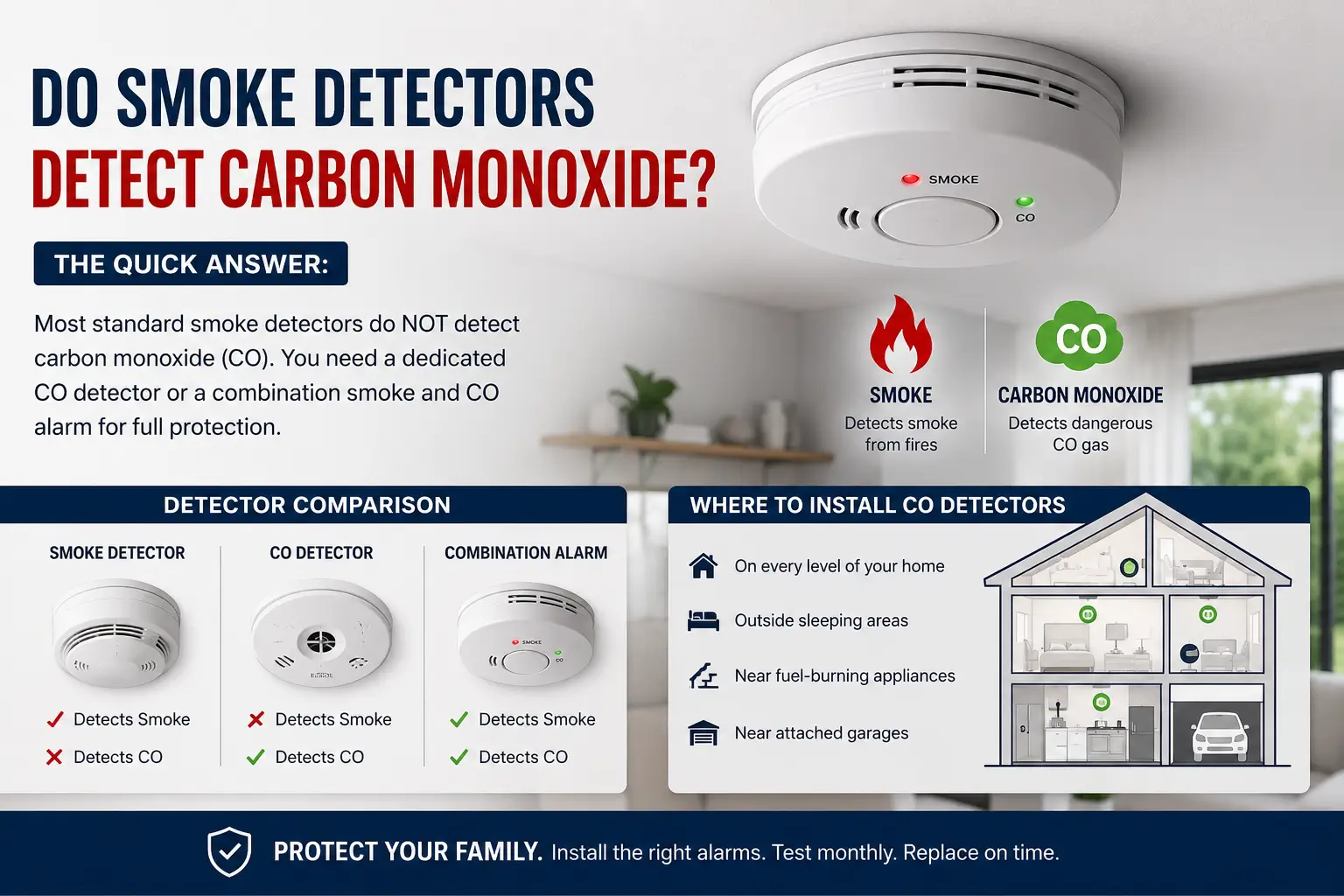
Do smoke detectors detect carbon monoxide? Most standard smoke detectors do not detect carbon monoxide unless they are specially designed combination alarms that monitor both smoke and CO gas levels.
Many homeowners think every ceiling alarm protects them from carbon monoxide poisoning. Unfortunately, that is not always true. Understanding the difference can help keep your family safe from both fires and invisible gas leaks.
According to the Centers for Disease Control and Prevention (CDC), hundreds of people die every year from accidental carbon monoxide poisoning in the United States.
Quick Answer Table
| Feature | Smoke Detector | Carbon Monoxide Detector | Combination Alarm |
|---|---|---|---|
| Detects smoke | Yes | No | Yes |
| Detects carbon monoxide | No | Yes | Yes |
| Detects fire | Yes | No | Yes |
| Detects invisible gas | No | Yes | Yes |
| Battery powered | Yes | Yes | Yes |
| Smart home support | Some models | Some models | Many models |
Table of Contents
Do Smoke Detectors Detect Carbon Monoxide?
No, regular smoke detectors cannot detect carbon monoxide gas. They are only designed to sense smoke particles from fires.
You need either:
- A dedicated carbon monoxide detector
- Or a combination smoke and CO alarm
This is one of the most common misunderstandings homeowners have.
Why People Get Confused
Smoke detectors and carbon monoxide detectors often look almost identical. Many are mounted on ceilings or walls in the same locations.
A homeowner may install a smoke alarm years ago and assume it also protects against carbon monoxide. In many cases, it does not.
Real-World Example
A family using a gas heater noticed headaches and dizziness every night during winter. Their smoke alarm never went off because it could not detect carbon monoxide. After installing a CO detector, they discovered a dangerous furnace leak.
This is why proper detectors matter.
What Does a Smoke Detector Actually Detect?
Smoke detectors react to smoke particles produced during a fire.
Common Types of Smoke Detectors
Ionization Smoke Alarms
These respond faster to fast-flaming fires.
Photoelectric Smoke Alarms
These work better for slow-burning fires with heavy smoke.
Dual-Sensor Alarms
These combine both technologies for improved protection.
Smoke detectors do not measure gases in the air.
What Is a Carbon Monoxide Detector?
A carbon monoxide detector senses dangerous levels of CO gas before it becomes deadly.
Carbon monoxide is:
- Colorless
- Odorless
- Tasteless
- Invisible
That is why it is often called the “silent killer.”
Common Sources of Carbon Monoxide in Homes
Many everyday appliances can produce carbon monoxide if ventilation fails.
Appliances That May Leak CO
| Appliance | Risk Level |
|---|---|
| Gas furnace | High |
| Fireplace | Medium |
| Water heater | Medium |
| Gas stove | Medium |
| Portable generator | Very High |
| Car in attached garage | High |
Symptoms of Carbon Monoxide Poisoning
Carbon monoxide poisoning often feels like the flu at first.
Early Warning Signs
- Headaches
- Dizziness
- Fatigue
- Nausea
- Weakness
Serious Symptoms
- Confusion
- Chest pain
- Loss of consciousness
- Breathing problems
If multiple people suddenly feel sick at home, leave immediately and call emergency services.
Where Should You Install Carbon Monoxide Detectors?
Install carbon monoxide alarms on every level of your home and outside sleeping areas.
Best Places to Install CO Alarms
- Hallways near bedrooms
- Living rooms
- Basement areas
- Near attached garages
- Near fuel-burning appliances
Places to Avoid
Do not place detectors:
- Beside windows
- Near ceiling fans
- Inside bathrooms
- Near cooking appliances
- In humid areas
Poor placement can reduce accuracy.
Combination Smoke and Carbon Monoxide Detectors
Combination alarms protect against both smoke and carbon monoxide in one device.
Benefits of Combo Detectors
- Easier installation
- Saves wall space
- Better overall protection
- Simpler maintenance
- Ideal for smart homes
Many modern smart alarms can also send mobile alerts.
How to Tell if Your Alarm Detects Carbon Monoxide
Look carefully at the label on your device.
Signs It Supports CO Detection
Check for words like:
- “Carbon Monoxide”
- “CO Alarm”
- “Smoke & CO”
- “Combination Detector”
You can also search the model number online.
How to Test a Carbon Monoxide Detector
Testing your alarm monthly helps ensure it works during emergencies.
Steps to Test Your Alarm
- Press the test button
- Wait for the alarm sound
- Confirm indicator lights flash
- Replace weak batteries
- Check expiration dates
Most carbon monoxide detectors last between 5 and 10 years.
Why Is My Carbon Monoxide Alarm Beeping?
A beeping detector does not always mean dangerous CO levels.
Common Reasons for Beeping
| Cause | Solution |
|---|---|
| Low battery | Replace battery |
| Expired detector | Replace unit |
| Dust buildup | Clean detector |
| End-of-life warning | Install new alarm |
Never ignore repeated alarms.
Common Mistakes Homeowners Make
Assuming All Smoke Detectors Detect CO
This is the biggest mistake many homeowners make.
Installing Only One Detector
Large homes usually need multiple alarms.
Ignoring Expiration Dates
Old detectors may stop working properly.
Not Testing Alarms Monthly
Regular testing helps prevent silent failures.
Smart Home Carbon Monoxide Detectors
Modern smart detectors offer extra safety features.
Smart Features Include
- Phone notifications
- Voice alerts
- Self-testing systems
- Smart home integration
- Battery monitoring
Many homeowners now connect detectors with smart home security systems.
You can also read our:
- Smart home safety tips
- Best smart smoke alarms
- WiFi smoke detector setup guide
- Smoke detector troubleshooting guide
- Home security checklist
Expert Home Safety Tips
Replace Devices on Time
| Device | Replacement Time |
|---|---|
| Smoke detector | Every 10 years |
| CO detector | Every 5–7 years |
| Combo alarm | Follow manufacturer instructions |
Install Backup Battery Models
Power outages can happen during emergencies.
Keep Detectors Clean
Dust buildup can reduce performance.
Never Ignore an Alarm
Always investigate immediately.
Frequently Asked Questions
Can smoke detectors detect natural gas leaks?
No. Smoke detectors cannot detect natural gas leaks. You need a separate gas leak detector for that purpose.
Are combination smoke and CO detectors worth it?
Yes. Combination alarms save space and provide dual protection from fires and carbon monoxide exposure.
How many carbon monoxide detectors do I need?
You should install at least one detector on every floor and near sleeping areas.
Can carbon monoxide rise or stay low?
Carbon monoxide mixes evenly in the air. That is why proper placement throughout the home is important.
Do smart smoke detectors also detect carbon monoxide?
Some smart alarms do, but not all. Always check product specifications carefully.
What should I do if my CO alarm sounds?
Leave the home immediately, move to fresh air, and contact emergency services before returning.
Protecting Your Family From Fire and Carbon Monoxide
Do smoke detectors detect carbon monoxide? Standard smoke alarms usually do not detect carbon monoxide unless they are combination units specifically designed for both smoke and CO protection.
Installing the correct detectors, testing them monthly, and replacing old units can greatly improve home safety. A small upgrade today could help protect your family from invisible dangers tomorrow.
Citations
Good Housekeeping : When to Replace Smoke Detectors