

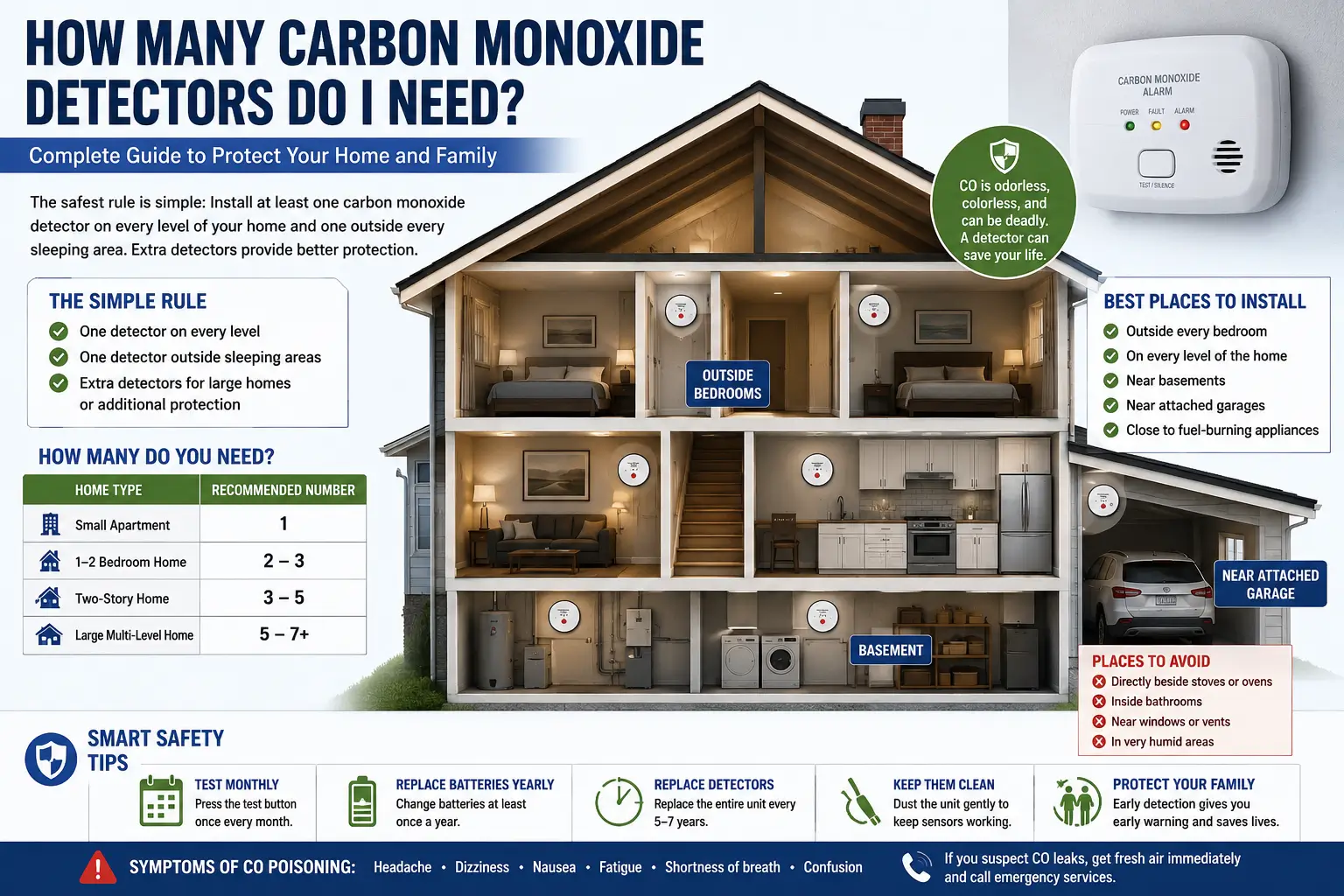
If you are asking how many carbon monoxide detectors do I need, the safest answer is this: install at least one carbon monoxide detector on every level of your home and one outside every sleeping area.
Carbon monoxide (CO) is a dangerous gas you cannot see, smell, or taste. That is why proper detector placement is one of the most important parts of home safety.
According to the Centers for Disease Control and Prevention (CDC), hundreds of people die each year in the United States from accidental carbon monoxide poisoning not linked to fires.
Whether you live in a small apartment, a two-story house, or a smart home, this guide explains exactly how many detectors you need, where to place them, and common mistakes to avoid.
Table of Contents
Quick Answer: How Many Carbon Monoxide Detectors Do I Need?
Most homes should have:
| Area of Home | Recommended CO Detectors |
|---|---|
| Every floor | 1 detector minimum |
| Outside bedrooms | 1 detector |
| Basement | 1 detector |
| Attached garage | 1 nearby detector |
| Large homes | Extra detectors for coverage |
| Gas appliances | Detector nearby |
| Installation difficulty | Easy |
| Setup time | 10–20 minutes |
Simple Rule to Remember
Use this easy formula:
- One detector on every level
- One detector near sleeping areas
- Extra detectors for large layouts
For example:
| Home Type | Recommended Number |
|---|---|
| Studio apartment | 1 |
| Small 2-bedroom home | 2–3 |
| Two-story house | 3–5 |
| Large multi-level home | 5–7 |
What Does a Carbon Monoxide Detector Do?
A carbon monoxide detector monitors the air for unsafe levels of CO gas and sounds an alarm before the gas becomes deadly.
These detectors help protect your family from leaks caused by:
- Gas furnaces
- Fireplaces
- Water heaters
- Gas stoves
- Portable generators
- Attached garages
- Wood-burning stoves
Even homes with mostly electric appliances should still use carbon monoxide alarms because nearby garages or backup generators can still create risks.
Why Multiple Carbon Monoxide Detectors Matter
One detector is usually not enough for full-home protection.
Carbon monoxide moves through homes differently depending on:
- Air circulation
- Room size
- HVAC airflow
- Closed doors
- Ceiling height
For example, a detector in the kitchen may not alert someone sleeping upstairs fast enough during a nighttime leak.
That is why safety experts recommend multiple detectors throughout the home.
Best Places to Install Carbon Monoxide Detectors
Proper placement is just as important as the number of alarms.
Install Carbon Monoxide Detectors:
- Outside every bedroom
- In upstairs hallways
- Near basements
- On every level
- Near attached garages
- Close to fuel-burning appliances
Avoid Installing Detectors:
- Directly beside ovens or stoves
- Near bathrooms
- Next to windows
- Near air vents
- Behind furniture
Do Bedrooms Need Carbon Monoxide Detectors?
Yes. Sleeping areas are one of the most important locations for carbon monoxide alarms.
Many carbon monoxide poisoning cases happen at night because people cannot smell the gas while sleeping.
In larger homes, some homeowners install detectors inside bedrooms for added protection, especially if bedrooms are far apart or family members are light sleepers.
Should I Put a Carbon Monoxide Detector in the Basement?
Yes, especially if your basement contains:
- Furnace
- Boiler
- Water heater
- Gas dryer
- Fireplace
Basements are one of the most common starting points for CO leaks.
Even unfinished basements should have a detector.
How Many Carbon Monoxide Detectors Do I Need for a Two-Story House?
Most two-story homes need at least three carbon monoxide detectors.
Recommended Setup
| Location | Detector Needed |
|---|---|
| First floor | Yes |
| Second floor | Yes |
| Outside bedrooms | Yes |
| Basement | Optional but recommended |
| Attached garage | Recommended |
Large homes with long hallways may need additional units for better sound coverage.
Smart Carbon Monoxide Detectors vs Standard Models
Smart carbon monoxide detectors are becoming more popular in modern homes.
They can send alerts to your phone even when you are away.
Popular smart features include:
- Mobile notifications
- Voice alerts
- Smart home integration
- Battery monitoring
- Interconnected alarms
- Alexa compatibility
- Google Home support
Popular smart detector brands include:
- Google Nest
- Kidde
- First Alert
Smart detectors are especially useful for:
- Vacation homes
- Large houses
- Families with children
- Elderly homeowners
Combination Smoke and Carbon Monoxide Detectors
Combination alarms detect both smoke and carbon monoxide.
Benefits include:
- Easier installation
- Less wall clutter
- Single app management
- Lower maintenance
- Better smart home integration
However, larger homes may still benefit from separate units for maximum coverage.
Hardwired vs Battery-Powered CO Detectors
| Type | Advantages | Disadvantages |
|---|---|---|
| Battery-powered | Easy to install | Batteries need replacement |
| Hardwired | Constant power | Installation may cost more |
| Plug-in | Simple setup | Limited outlet locations |
Battery backup is highly recommended even for hardwired models.
Common Carbon Monoxide Detector Mistakes
Installing Only One Detector
One alarm cannot fully protect multi-room homes.
Placing Detectors Too Close to Appliances
This may trigger false alarms.
Ignoring Expiration Dates
Most detectors last only 5–7 years.
Skipping Monthly Testing
Regular testing helps ensure alarms work during emergencies.
Signs You May Need More Carbon Monoxide Detectors
You should consider adding more alarms if:
- Your home has multiple floors
- Bedrooms are spread apart
- You recently renovated
- You added gas appliances
- You cannot hear alarms clearly
- Your HVAC system is large
- You use generators during outages
Carbon Monoxide Detector Troubleshooting Guide
Detector Keeps Beeping
Possible causes:
- Low battery
- Dust buildup
- Device expiration
- Loose wiring
Quick Fixes
- Replace batteries
- Clean the detector vents
- Reset the alarm
- Check the expiration date
False Alarms
False alarms can happen because of:
- Humidity
- Steam
- Poor ventilation
- Nearby appliances
Move the detector slightly farther from kitchens or bathrooms if false alarms continue.
Carbon Monoxide Poisoning Symptoms
Carbon monoxide poisoning symptoms are often confused with the flu.
Common symptoms include:
- Headache
- Dizziness
- Nausea
- Fatigue
- Shortness of breath
- Confusion
If multiple family members suddenly feel sick at the same time, leave the house immediately and call emergency services.
Are Carbon Monoxide Detectors Required by Law?
Many states and local building codes require carbon monoxide detectors in homes with:
- Gas appliances
- Fireplaces
- Attached garages
- Rental units
Requirements vary by location, so check local safety regulations.
Carbon Monoxide Detector Maintenance Tips
Test Every Month
Press the test button regularly.
Replace Batteries Yearly
Many people replace batteries during daylight saving time changes.
Replace Old Units
Always follow the manufacturer’s replacement schedule.
Keep Detectors Clean
Dust buildup can affect sensor performance.
Frequently Asked Questions
How many carbon monoxide detectors do I need in a small apartment?
Most small apartments need at least one detector near sleeping areas. Apartments with gas appliances may need additional coverage.
Can I install carbon monoxide detectors myself?
Yes. Most battery-powered and plug-in models are easy for homeowners to install without professional help.
Should carbon monoxide detectors be upstairs or downstairs?
They should be installed on every level of the home. Multi-story homes need coverage both upstairs and downstairs.
How long do carbon monoxide detectors last?
Most models last between 5 and 7 years. Always check the manufacturer’s expiration label.
Can smart home systems monitor carbon monoxide detectors?
Yes. Many smart detectors connect with mobile apps and smart home systems for remote alerts and monitoring.
Do electric homes still need carbon monoxide detectors?
Yes. Attached garages, generators, and nearby fuel-burning equipment can still create carbon monoxide risks.
Smart Safety Starts With Proper Detector Placement
Knowing how many carbon monoxide detectors do I need is one of the easiest ways to improve home safety. Most homes need multiple detectors placed on every level, near bedrooms, and close to fuel-burning appliances.
Adding enough detectors, testing them regularly, and upgrading older units can help protect your family from one of the most dangerous invisible threats inside a home.
Citations
EPA: Where Should I Place a Carbon Monoxide Detector?