
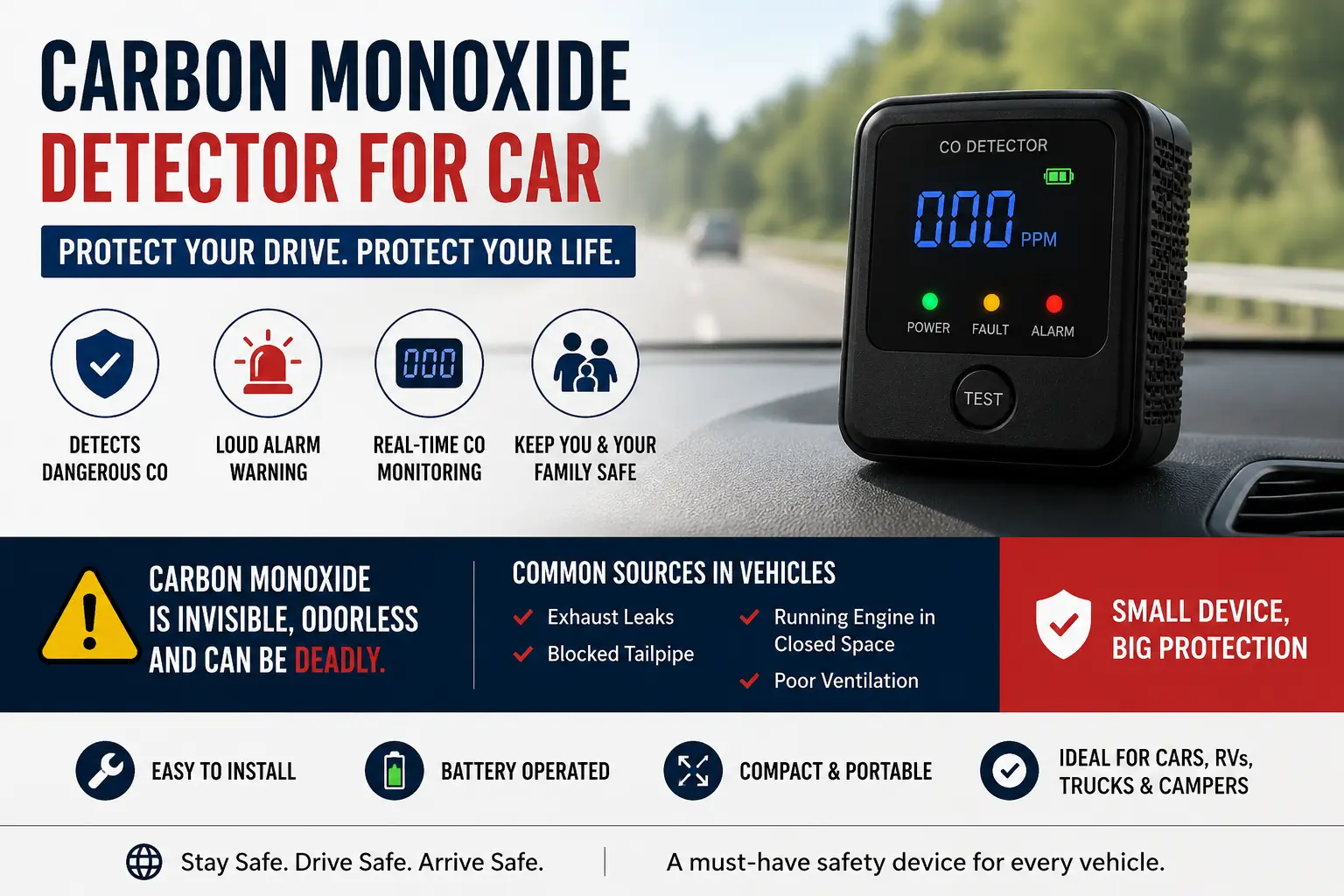
A carbon monoxide detector for car can protect you from dangerous gas leaks, exhaust problems, and silent carbon monoxide poisoning while driving or sleeping inside your vehicle.
Carbon monoxide (CO) is a colorless and odorless gas. You cannot see it or smell it. That is what makes it dangerous. A faulty exhaust system, blocked tailpipe, or engine leak can allow CO gas to enter your car cabin without warning.
Many drivers think carbon monoxide poisoning only happens inside homes. In reality, it can also happen in cars, RVs, trucks, and campers.
Table of Contents
Quick Information Table
| Feature | Details |
|---|---|
| Main Purpose | Detects carbon monoxide gas inside vehicles |
| Best For | Cars, RVs, trucks, campers |
| Danger Level | Very high if ignored |
| Installation Difficulty | Easy |
| Power Source | Battery or USB |
| Detection Time | Usually within seconds |
| Recommended Placement | Dashboard or near sleeping area |
| Maintenance | Battery checks and testing |
What Is a Carbon Monoxide Detector for Car?
A carbon monoxide detector for car is a small safety device that monitors CO gas levels inside your vehicle. It alerts you with an alarm if dangerous gas levels are detected.
These detectors are especially useful for:
- Long road trips
- Sleeping in cars
- RV camping
- Delivery drivers
- Truck drivers
- Vehicles with older exhaust systems
Even newer cars can develop exhaust leaks over time.
Why Carbon Monoxide in Cars Is Dangerous
Carbon monoxide replaces oxygen in your bloodstream. This can quickly affect your brain and body.
Common symptoms include:
- Headache
- Dizziness
- Nausea
- Fatigue
- Confusion
- Shortness of breath
High exposure can become deadly within minutes.
Children, older adults, and pets are even more vulnerable.
How Carbon Monoxide Gets Inside a Vehicle
Several issues can allow CO gas to enter your car cabin.
Exhaust System Leaks
Cracks or holes in the exhaust pipe can push dangerous fumes into the vehicle.
Rusted Vehicle Floors
Older vehicles sometimes develop holes underneath the cabin.
Blocked Tailpipe
Snow, mud, or debris can block the exhaust flow and force gas back inside.
Running the Car in a Garage
Even with the garage door open, carbon monoxide can build up quickly.
Damaged Door Seals
Broken weather seals may allow exhaust fumes to enter the cabin.
Signs Your Car May Have a Carbon Monoxide Leak
Here are some warning signs drivers often ignore:
- Exhaust smell inside the car
- Frequent headaches while driving
- Drowsiness during road trips
- Foggy thinking
- Increased fatigue
- Rust near exhaust components
If multiple passengers feel sick at the same time, stop driving immediately.
How a Carbon Monoxide Detector for Car Works
A carbon monoxide detector continuously measures the air inside your vehicle.
When CO levels become unsafe, it triggers:
- Loud alarms
- Flashing lights
- Digital warnings on some models
Advanced detectors can even display exact CO levels in parts per million (PPM).
Best Places to Install a Carbon Monoxide Detector in a Car
Correct placement matters for accurate readings.
Dashboard Area
Easy to monitor while driving.
Near Sleeping Areas in RVs
Essential for campers and van life setups.
Middle Cabin Area
Provides balanced air monitoring.
Avoid placing the detector:
- Near windows
- Directly beside AC vents
- In wet areas
- Under seats with poor airflow
Types of Carbon Monoxide Detectors for Vehicles
Battery-Powered Detectors
Portable and easy to install.
USB-Powered Detectors
Useful for modern vehicles with USB ports.
Smart CO Detectors
Some advanced models connect to smartphone apps.
Combination Smoke and CO Alarms
Ideal for RVs and camper vans.
How to Choose the Best Carbon Monoxide Detector for Car
Not all detectors are equally reliable.
Look for these features:
| Important Feature | Why It Matters |
|---|---|
| UL Certification | Better safety standards |
| Loud Alarm | Easier to hear while driving |
| Digital Display | Shows exact CO levels |
| Long Battery Life | Reduces maintenance |
| Compact Size | Easier placement |
| Fast Detection | Improves safety |
Choose trusted brands with good customer reviews.
Step-by-Step Guide to Install a Carbon Monoxide Detector in Your Car
Installing most portable detectors only takes a few minutes.
Step 1: Read the Manual
Different detectors may have unique instructions.
Step 2: Choose the Right Location
Place it where air circulates well.
Step 3: Secure the Device
Use adhesive mounts or brackets if included.
Step 4: Test the Alarm
Press the test button to confirm proper operation.
Step 5: Monitor Regularly
Check battery levels monthly.
Common Mistakes Drivers Make
Many people unknowingly reduce the effectiveness of their detector.
Avoid these mistakes:
- Ignoring low battery warnings
- Placing the detector near open windows
- Never testing the alarm
- Using expired detectors
- Assuming newer cars are always safe
Troubleshooting Carbon Monoxide Detector Problems
Detector Keeps Beeping
This may indicate:
- Low battery
- Sensor failure
- Actual CO detection
Always investigate immediately.
False Alarms
Possible causes include:
- Heavy cigarette smoke
- Poor placement
- Extreme humidity
Detector Not Turning On
Check:
- Battery orientation
- Expired batteries
- Damaged power cable
Can You Use a Home CO Detector in a Car?
Technically yes, but it is not ideal.
Vehicle-specific detectors are better because they are designed for:
- Vibration resistance
- Temperature changes
- Smaller spaces
- Mobile use
Portable travel detectors are usually the safer option.
Who Should Definitely Use a Carbon Monoxide Detector for Car?
Some drivers face higher risks than others.
You should strongly consider one if you:
- Sleep in your car
- Own an RV or camper van
- Drive an older vehicle
- Take long winter trips
- Use remote starters often
- Transport children or pets regularly
Important Safety Tips
Follow these simple tips to reduce carbon monoxide risks:
- Inspect your exhaust system yearly
- Never idle in enclosed spaces
- Keep tailpipes clear of snow
- Open windows slightly if parked temporarily
- Replace damaged seals quickly
Small maintenance steps can prevent serious accidents.
Frequently Asked Questions
Can carbon monoxide detectors work while driving?
Yes. Most portable detectors continuously monitor air quality while the vehicle is moving.
How long do car carbon monoxide detectors last?
Most detectors last between 5 and 10 years depending on the sensor type and manufacturer.
Is a carbon monoxide detector necessary in newer cars?
Yes. Even newer vehicles can develop exhaust leaks or ventilation problems over time.
Can I sleep safely in my car with a CO detector?
A detector improves safety, but proper ventilation is still very important.
What CO level is dangerous inside a car?
Even low levels over time can be harmful. Higher concentrations become dangerous very quickly.
Do RVs need multiple carbon monoxide detectors?
Yes. Larger RVs should have detectors near sleeping and living areas.
Why Every Driver Should Consider a Carbon Monoxide Detector for Car
A carbon monoxide detector for car is a simple but powerful safety device that can help protect drivers and passengers from invisible gas exposure. Whether you drive daily, travel long distances, or sleep in your vehicle during trips, adding a reliable CO detector can provide extra peace of mind and potentially save lives.
Citations
Better Homes & Gardens: Best Place to Put a Carbon Monoxide Detector