

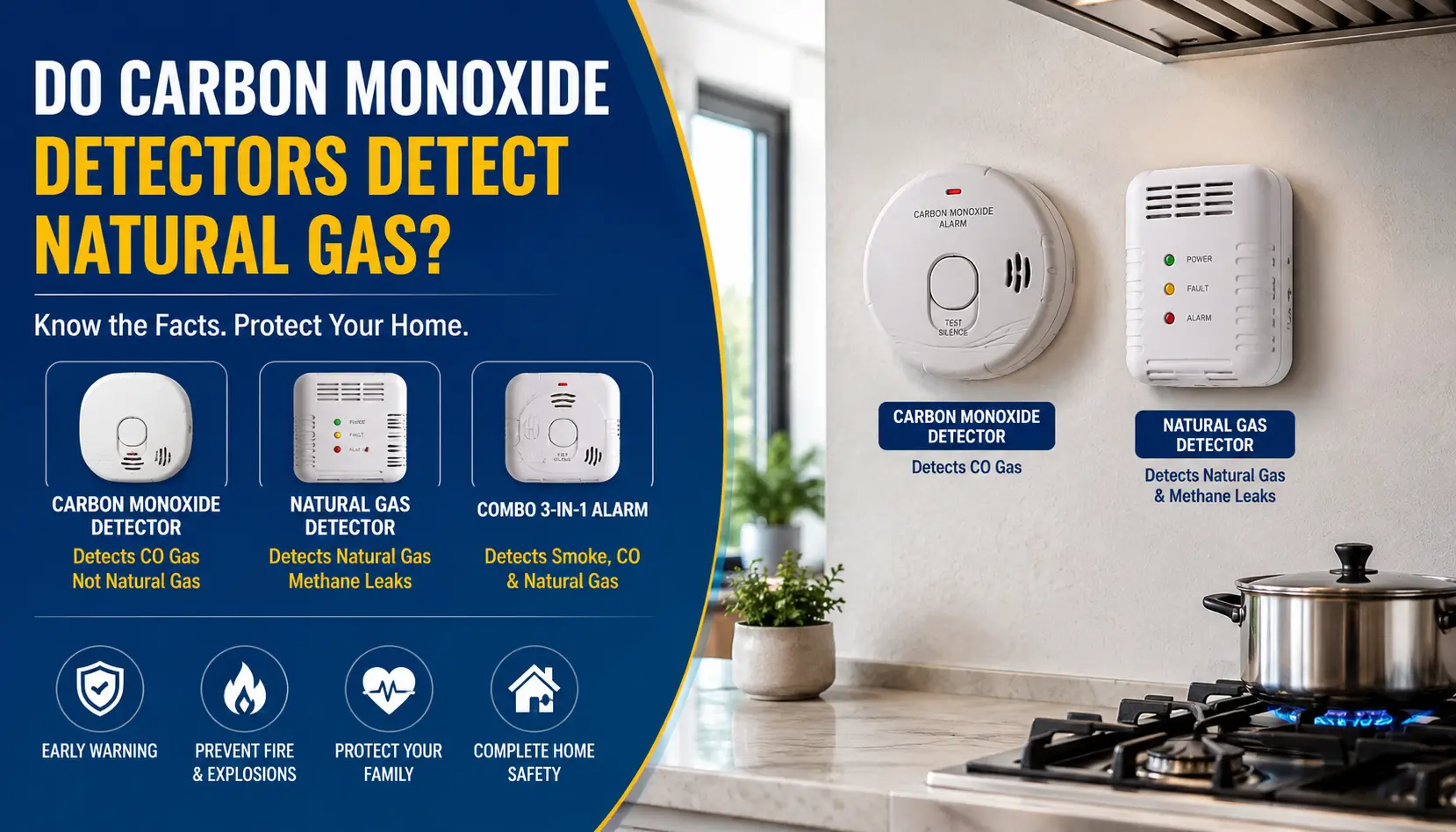
Do carbon monoxide detectors detect natural gas in your house? Many homeowners think one alarm can detect every dangerous gas, but a Natural gas Detector, carbon monoxide alarm, and smoke detector all work differently. Understanding how a Natural gas detector for home works can help prevent fires, explosions, and carbon monoxide poisoning.
If your home uses gas appliances, knowing the difference between these detectors is extremely important for family safety.
Table of Contents
Quick Answer: Do Carbon Monoxide Detectors Detect Gas Leaks?
No. Standard carbon monoxide detectors do not detect natural gas leaks or propane leaks. They only detect carbon monoxide gas created by incomplete fuel burning.
To detect methane or propane leaks, you need a dedicated Natural gas and Carbon Monoxide detector or a separate combustible gas detector.
Quick Information Table
| Feature | Carbon Monoxide Detector | Natural Gas Detector | Combo 3-in-1 Alarm |
|---|---|---|---|
| Detects carbon monoxide | Yes | Some models | Yes |
| Detects natural gas leaks | No | Yes | Yes |
| Detects propane | Usually no | Some models | Some models |
| Detects smoke | No | No | Yes |
| Best for | CO poisoning | Gas leaks | Full home safety |
| Installation area | Bedrooms | Near appliances | Central areas |
What Is a Natural Gas Detector?
A Natural gas detector for home is a safety device that detects methane leaks from gas appliances and pipes.
Natural gas is highly flammable. Even a small leak can become dangerous if ignored. A methane detector senses combustible gases before they reach explosive levels.
Common Gas Leak Sources
- Gas stoves
- Water heaters
- Furnaces
- Fireplaces
- Gas dryers
- Broken gas lines
- Loose pipe fittings
According to the National Fire Protection Association, gas-related problems contribute to many residential fire emergencies every year.
Do Carbon Monoxide Detectors Detect Natural Gas in Your House?
No, most carbon monoxide detectors cannot detect natural gas in your house unless they are specially designed as combo detectors.
A standard CO detector only senses carbon monoxide. It does not detect methane, propane, or combustible gas leaks.
This misunderstanding is very common in homes with gas appliances.
Why This Matters
Carbon monoxide and natural gas are different hazards:
| Hazard | Main Risk |
|---|---|
| Carbon monoxide | Poisoning |
| Natural gas | Fire or explosion |
| Propane | Explosion and suffocation |
That is why many safety experts recommend using:
- A carbon monoxide detector
- A smoke detector
- A natural gas detector
Or a reliable 3-in-1 Smoke & carbon monoxide and natural Gas Alarm.
What Does Carbon Monoxide Smell Like?
Carbon monoxide has no smell, color, or taste.
This is why it is called the “silent killer.”
Symptoms of carbon monoxide exposure include:
- Headaches
- Dizziness
- Nausea
- Confusion
- Fatigue
A CO detector is the only reliable way to detect it indoors.
What Does a Natural Gas Leak Smell Like?
Natural gas companies add a sulfur-like chemical called mercaptan to help people notice leaks.
Most people describe it as:
- Rotten eggs
- Sulfur
- Sewage smell
Other Signs of a Gas Leak
- Hissing sounds near pipes
- Dead plants indoors
- Bubbling water outside
- Unusual gas bill increases
- Physical symptoms like dizziness
If you notice these signs:
- Leave the house immediately
- Avoid electrical switches
- Do not use flames
- Contact your gas provider
Does a Carbon Monoxide Detector Detect Gas From the Stove?
No, a standard carbon monoxide detector does not usually detect gas from the stove.
If your stove leaks natural gas, you need a methane detector or combustible gas alarm.
However, if the stove burns fuel improperly and creates carbon monoxide, then the CO detector may activate.
Real-World Example
A homeowner may smell gas near the stove while the carbon monoxide alarm stays silent. This happens because the detector is not designed to sense methane leaks.
This is one of the biggest safety misunderstandings in many homes.
Do Carbon Monoxide Detectors Detect Propane?
No. Most carbon monoxide detectors do not detect propane.
Propane requires a dedicated propane gas detector or a combo gas alarm.
Propane vs Natural Gas
| Gas Type | Behavior | Detector Placement |
|---|---|---|
| Natural gas | Rises upward | Near ceiling |
| Propane | Sinks downward | Near floor |
Proper placement is very important for accurate leak detection.
Natural Gas and Carbon Monoxide Detector: Should You Buy One?
Yes, combo alarms are excellent for many homes.
A Natural gas and Carbon Monoxide detector combines multiple sensors into one device.
Some advanced models also include smoke detection.
Benefits of Combo Detectors
- Better overall protection
- Fewer devices to install
- Easier maintenance
- Smart home compatibility
- Mobile alerts on some models
Many modern smart gas alarms can connect to:
- Alexa
- Google Home
- Mobile apps
- WiFi systems
3-in-1 Smoke & Carbon Monoxide and Natural Gas Alarm
A 3-in-1 Smoke & carbon monoxide and natural Gas Alarm protects against:
- Smoke
- Carbon monoxide
- Combustible gas leaks
These are popular in:
- Apartments
- Small homes
- RVs
- Smart homes
Important Buying Tip
Always check the product label carefully.
Some alarms detect:
- Carbon monoxide only
Others detect:
- Smoke and CO
Only specific models detect:
- Methane
- Propane
- Explosive gases
Look for:
- UL-listed detectors
- Certified gas alarms
- Smart gas monitoring features
Best Places to Install Gas Detectors
Correct placement improves safety and reduces false alarms.
Where to Install Carbon Monoxide Detectors
Place detectors:
- Near bedrooms
- On every floor
- In hallways
Avoid:
- Bathrooms
- Humid areas
- Air vents
Where to Install Natural Gas Detectors
Place detectors:
- Near gas appliances
- Near ceilings for methane
- In kitchens
- Near furnaces
Avoid:
- Windows
- Fans
- Damp locations
Common Mistakes Homeowners Make
Assuming One Alarm Detects Everything
Many people think smoke alarms or CO alarms detect gas leaks. Most standard units do not.
Installing Detectors Incorrectly
Wrong placement can delay warnings during emergencies.
Ignoring Detector Expiration Dates
Most gas detectors last:
- 5 to 10 years
Forgetting Monthly Testing
Test alarms every month to ensure proper operation.
Troubleshooting Gas Detector Problems
Why Is My Gas Detector Beeping?
Possible causes:
- Low battery
- Sensor failure
- End-of-life warning
- Dust buildup
Quick Fixes
- Replace batteries
- Clean the detector
- Reset the unit
- Replace old alarms
Why Does My Detector Give False Alarms?
False alarms can happen because of:
- Steam
- Cooking smoke
- Aerosols
- Dust
Move the detector if needed and clean vents regularly.
Why Is My Detector Not Working?
Possible causes:
- Dead batteries
- Expired sensor
- Power problems
Check the test button monthly.
Smart Home Gas Safety Tips
Modern smart homes can improve gas safety with connected monitoring systems.
Helpful Smart Features
- Mobile gas alerts
- WiFi gas sensors
- Voice assistant integration
- Automatic emergency notifications
A smart Natural gas detector for home can warn you even when you are away.
Best Home Safety Checklist
Every Home With Gas Appliances Should Have
✔ Smoke detector
✔ Carbon monoxide detector
✔ Natural gas detector
✔ Fire extinguisher
✔ Emergency gas shut-off knowledge
This setup provides stronger household protection.
Frequently Asked Questions
Can a smoke detector detect natural gas?
No. Smoke detectors only sense smoke particles from fires. They do not detect methane or propane leaks.
Do I need both a carbon monoxide detector and a natural gas detector?
Yes. They protect against different dangers. One detects toxic carbon monoxide while the other detects combustible gas leaks.
Can natural gas cause carbon monoxide?
Yes. Faulty gas appliances can create carbon monoxide when fuel does not burn properly.
Are combo gas detectors worth buying?
Yes. Combo alarms can improve safety while reducing the number of separate devices needed in your home.
How often should gas detectors be replaced?
Most detectors should be replaced every 5 to 10 years depending on the manufacturer guidelines.
What is the best place for a natural gas detector?
Install methane detectors near ceilings and close to gas appliances because natural gas rises upward.
Final Thoughts About Do Carbon Monoxide Detectors Detect Natural Gas
So, do carbon monoxide detectors detect natural gas? In most cases, no. Standard carbon monoxide alarms cannot detect methane or propane leaks unless they are specially designed as combo detectors.
For complete home protection, experts recommend installing:
- A carbon monoxide detector
- A smoke alarm
- A Natural gas Detector
If you use gas appliances, a Natural gas and Carbon Monoxide detector or 3-in-1 Smoke & carbon monoxide and natural Gas Alarm can provide better safety, earlier warnings, and greater peace of mind.