

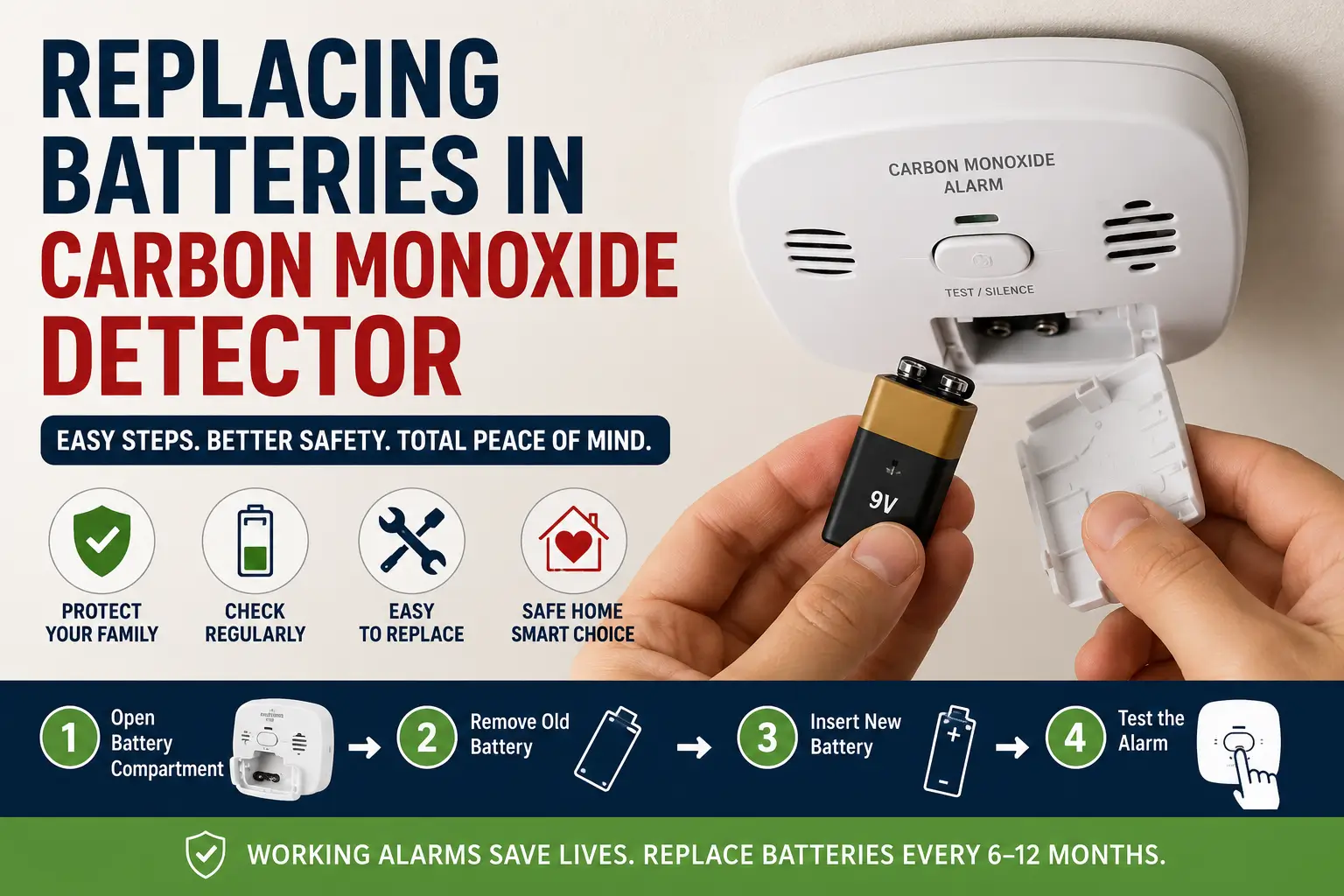
Replacing batteries in carbon monoxide detector devices is one of the easiest ways to protect your home and family. A working carbon monoxide alarm can warn you before dangerous gas levels become life-threatening.
Carbon monoxide (CO) is often called the “silent killer” because it has no smell, color, or taste. According to the National Fire Protection Association, every home should have properly working CO alarms installed near sleeping areas.
Many homeowners ignore chirping alarms for days. Unfortunately, a dead battery can stop the detector from warning you during a real emergency.
Table of Contents
| Quick Information | Details |
|---|---|
| Difficulty Level | Easy |
| Time Needed | 5–10 Minutes |
| Recommended Battery Change | Every 6–12 Months |
| Best Battery Type | Alkaline or Lithium |
| Tools Required | New batteries and ladder |
| Safety Importance | Critical |
Why Replacing Batteries in Carbon Monoxide Detector Is Important
Replacing batteries in carbon monoxide detector units keeps the alarm active 24/7. Without power, the detector cannot sense dangerous carbon monoxide gas.
Carbon monoxide poisoning can happen from:
- Gas furnaces
- Water heaters
- Fireplaces
- Portable generators
- Gas stoves
- Running vehicles in garages
Even low levels of CO exposure can cause:
- Headaches
- Dizziness
- Nausea
- Fatigue
- Confusion
High exposure can become deadly within minutes.
That is why safety experts recommend testing alarms every month and replacing batteries regularly.
How Carbon Monoxide Detectors Work
A carbon monoxide detector continuously monitors the air for unsafe CO levels.
When the detector senses dangerous gas levels, it triggers:
- A loud siren
- Flashing warning lights
- Voice alerts on smart models
- Smartphone notifications on WiFi-enabled devices
Most detectors rely on batteries as either:
- Main power source
- Backup power during outages
If the battery dies, protection may stop completely.
Signs Your Carbon Monoxide Detector Battery Needs Replacing
Most alarms give several warning signs before the battery fully dies.
Common low-battery signs include:
- Random chirping sounds
- One beep every 30–60 seconds
- Flashing yellow or red light
- “Low Battery” warning message
- Weak alarm sound during testing
Many homeowners notice chirping at night because homes become quieter after bedtime.
Ignoring these warnings is one of the biggest home safety mistakes.
How to Replace Batteries in a Carbon Monoxide Detector
Replacing detector batteries is simple and usually takes less than 10 minutes.
Step 1: Check Your Detector Type
First, identify whether your detector is:
- Battery-powered
- Hardwired with backup batteries
- Combination smoke and CO alarm
The battery compartment location may vary by model.
Step 2: Turn Off Power if Hardwired
For hardwired alarms, turn off power at the breaker if recommended by the manufacturer.
This helps avoid electrical issues during removal.
Step 3: Remove the Detector
Twist the detector counterclockwise or slide it from the mounting bracket.
Some models include a locking tab for child safety.
Step 4: Open the Battery Door
Locate the battery compartment carefully.
Check for:
- Corrosion
- Dust buildup
- Loose battery contacts
- Moisture damage
Clean dusty contacts gently with a dry cloth.
Step 5: Insert Fresh Batteries
Install new batteries using the correct positive (+) and negative (-) directions.
Experts usually recommend:
- Alkaline batteries for yearly replacement
- Lithium batteries for longer lifespan
Avoid mixing old and new batteries together.
Step 6: Test the Carbon Monoxide Detector
Press and hold the “Test” button.
A loud alarm confirms the detector is working correctly.
If there is no sound:
- Recheck battery placement
- Use fresh batteries
- Inspect the battery compartment
Step 7: Reinstall the Detector
Secure the detector back onto its bracket.
Make sure the unit locks firmly into place.
Best Batteries for Carbon Monoxide Detectors
Choosing the correct battery improves reliability and reduces false chirping.
| Battery Type | Best For | Average Lifespan |
|---|---|---|
| 9V Alkaline | Older alarms | 6–12 months |
| AA Alkaline | Modern detectors | 1 year |
| Lithium Batteries | Smart detectors | Up to 10 years |
Lithium batteries work especially well in cold environments because they last longer and resist temperature changes.
Common Carbon Monoxide Detector Battery Problems
Some detectors continue beeping even after installing fresh batteries.
Here are the most common causes.
Detector Still Chirps After Battery Replacement
Possible reasons:
- Battery installed incorrectly
- Battery drawer not fully closed
- Detector needs resetting
- Expired detector sensor
Many carbon monoxide detectors expire after 5–10 years.
Check the manufacturing date on the back of the unit.
Detector Does Not Respond to Testing
Possible causes include:
- Dead replacement batteries
- Dirty battery terminals
- Internal sensor failure
If the alarm still fails after troubleshooting, replace the detector immediately.
False Alarms or Random Beeping
Sometimes alarms react to:
- High humidity
- Steam from bathrooms
- Dust buildup
- Nearby cooking smoke
- Low temperatures
Move the detector if installed too close to kitchens or bathrooms.
How Often Should You Replace Detector Batteries?
Most manufacturers recommend replacing batteries:
- Every 6 months
- At least once per year
- Immediately after low-battery warnings
A common reminder is changing batteries during daylight saving time.
Monthly testing is also recommended by the U.S. Consumer Product Safety Commission.
Where Should Carbon Monoxide Detectors Be Installed?
Correct placement improves detection speed and accuracy.
Install detectors:
- Near bedrooms
- On every floor
- Outside sleeping areas
- Near attached garages
Avoid placing detectors:
- Near windows
- Next to vents
- Inside humid bathrooms
- Behind curtains or furniture
Proper placement helps reduce false alarms.
Smart Carbon Monoxide Detectors vs Traditional Models
Modern smart detectors offer extra safety features for connected homes.
| Feature | Traditional Detector | Smart Detector |
|---|---|---|
| Battery Alerts | Basic chirping | Smartphone notifications |
| Remote Monitoring | No | Yes |
| Voice Warnings | No | Yes |
| Smart Home Integration | Limited | Alexa and Google Home support |
| Maintenance Reminders | Manual | Automatic |
Smart detectors are especially useful for travelers or busy families.
Expert Home Safety Tips for Carbon Monoxide Detectors
Home safety professionals recommend these simple habits:
- Test alarms every month
- Replace detectors every 7–10 years
- Keep spare batteries at home
- Vacuum alarms every few months
- Install interconnected detectors
- Never remove batteries to stop chirping
One common mistake is disconnecting the detector during nuisance beeping and forgetting to reinstall the batteries later.
Carbon Monoxide Detector Maintenance Checklist
Use this simple checklist to keep detectors working properly.
Monthly Tasks
- Test all alarms
- Check warning lights
- Listen for weak chirping
Every 6–12 Months
- Replace batteries
- Clean dust from vents
- Inspect mounting brackets
Every 7–10 Years
- Replace the detector unit
- Upgrade outdated alarms
- Check for smart safety features
Frequently Asked Questions
Why does my carbon monoxide detector chirp at night?
Homes are quieter at night, making low-battery chirps easier to hear. Temperature drops can also affect weak batteries.
Can I unplug a chirping carbon monoxide detector?
You should not unplug the detector permanently. Replace the battery or the unit immediately to maintain protection.
How long do carbon monoxide detector batteries last?
Most standard batteries last 6–12 months. Lithium battery models can last several years depending on usage.
Do hardwired carbon monoxide detectors need batteries?
Yes, hardwired models usually include backup batteries. These batteries keep the alarm working during power outages.
What happens if I ignore a low battery warning?
The detector may stop sensing carbon monoxide properly. This increases the risk of missing a dangerous gas leak.
Are smart carbon monoxide detectors worth buying?
Smart detectors provide phone alerts and remote monitoring. They are useful for larger homes and smart home setups.
Importance of Replacing Batteries in Carbon Monoxide Detectors
Replacing batteries in carbon monoxide detector units is a small maintenance task that can save lives. Regular testing, proper battery replacement, and timely detector upgrades help keep your family protected from dangerous carbon monoxide exposure.
A properly working carbon monoxide detector gives peace of mind and improves overall home safety. Never ignore chirping alarms or delayed battery replacement because early warnings matter during emergencies.
Citations
Energy.gov: Home Heating and Carbon Monoxide Safety