

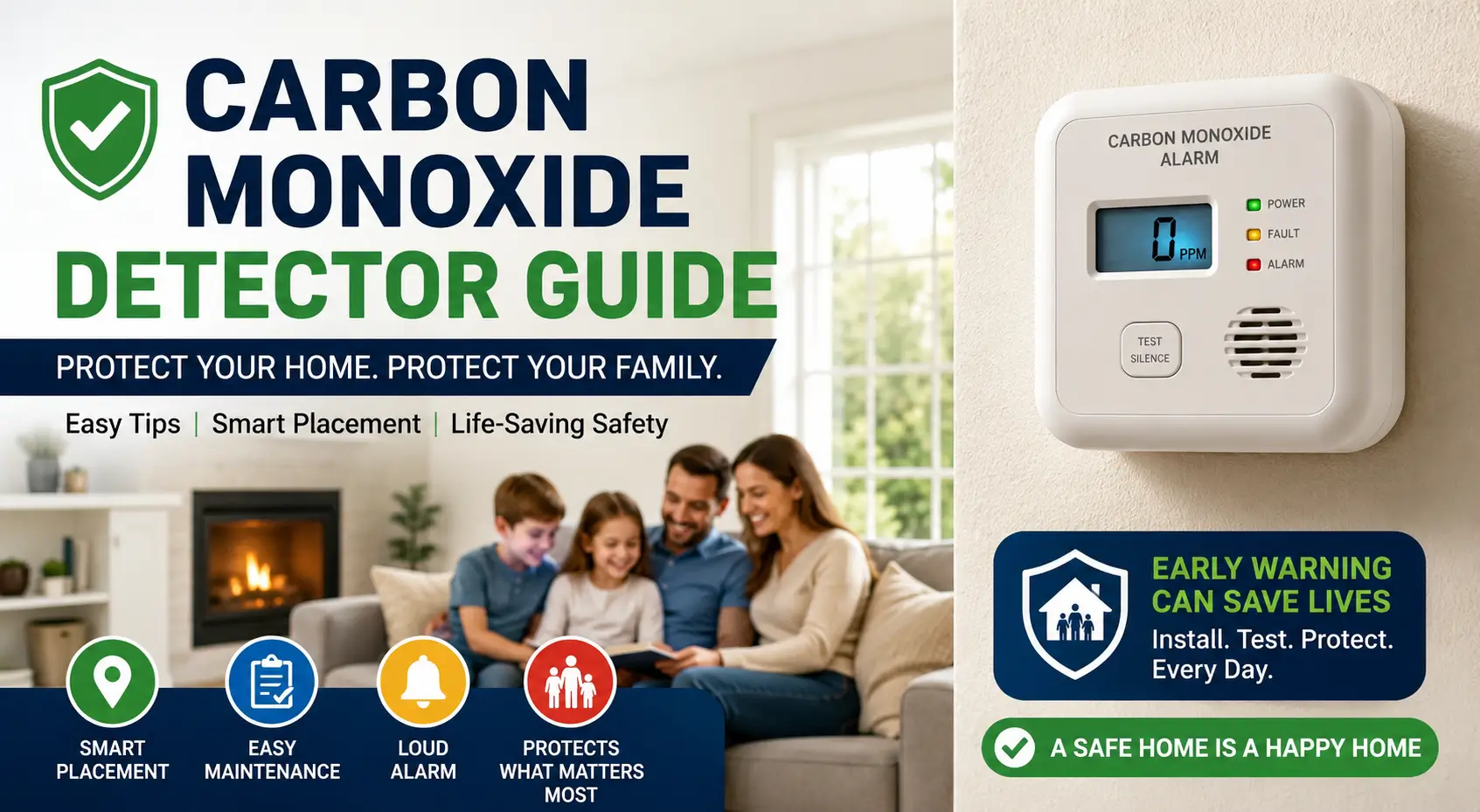
Carbon monoxide detector guide information is important for every homeowner because carbon monoxide is a dangerous gas that cannot be seen, smelled, or tasted.
A carbon monoxide leak can happen at any time from furnaces, fireplaces, generators, gas stoves, or water heaters.
Without a working carbon monoxide detector, families may not realize there is a problem until serious symptoms appear.
This complete guide explains how carbon monoxide detectors work, where to install them, how to maintain them, common warning signs, troubleshooting tips, and the best ways to keep your home and family safe from invisible carbon monoxide dangers every day.
Table of Contents
Quick Information Table
| Feature | Details |
|---|---|
| Main Purpose | Detect dangerous carbon monoxide gas |
| Best Locations | Bedrooms, hallways, garages, every floor |
| Recommended Testing | Once every month |
| Battery Replacement | Every 6 to 12 months |
| Average Lifespan | 5 to 10 years |
| Best Power Options | Battery, plug-in, or hardwired |
| Difficulty Level | Beginner-friendly |
| Emergency Alarm | Loud warning sound |
Carbon Monoxide Detector Guide: Understanding Carbon Monoxide
Understanding carbon monoxide is the first step in every carbon monoxide detector guide.
Carbon monoxide, also called CO gas, is a poisonous gas created when fuel burns incompletely. It is extremely dangerous because humans cannot detect it without special equipment.
Unlike smoke, carbon monoxide has:
- No smell
- No color
- No taste
- No visible warning signs
This is why it is called the silent killer.
Carbon monoxide can build up inside homes very quickly. Poor ventilation, damaged appliances, and blocked vents can all increase the risk.
Common Household Sources of Carbon Monoxide
Many household appliances can create dangerous carbon monoxide leaks if they are not maintained properly.
Common carbon monoxide sources include:
- Gas furnaces
- Water heaters
- Fireplaces
- Wood-burning stoves
- Gas dryers
- Portable generators
- Gas ovens
- Propane heaters
- Running vehicles in garages
- Charcoal grills used indoors
Even newer homes can experience dangerous carbon monoxide leaks.
Why Carbon Monoxide Is Dangerous
A good carbon monoxide detector guide should explain how carbon monoxide affects the body.
When carbon monoxide enters the lungs, it replaces oxygen in the bloodstream. This prevents organs and tissues from getting enough oxygen.
As carbon monoxide levels rise, symptoms become more serious.
Early Symptoms of Carbon Monoxide Exposure
Early symptoms are often confused with flu symptoms.
Common warning signs include:
- Headaches
- Dizziness
- Weakness
- Fatigue
- Nausea
- Vomiting
- Confusion
- Chest pain
Severe Carbon Monoxide Poisoning Symptoms
High carbon monoxide exposure can cause:
- Loss of consciousness
- Brain damage
- Heart complications
- Seizures
- Death
Children, older adults, pregnant women, and pets are often affected faster than healthy adults.
People sleeping during a leak may never wake up if there is no carbon monoxide detector installed.
What Is a Carbon Monoxide Detector?
A carbon monoxide detector is a device designed to monitor indoor air and warn people when dangerous CO gas levels are detected.
When the detector senses unsafe carbon monoxide levels, it activates a loud alarm.
Modern carbon monoxide detectors are designed to work continuously. They monitor indoor air every day and night to keep families safe.
Features Found in Modern Carbon Monoxide Detectors
Modern carbon monoxide detectors often include:
- Digital gas level displays
- Smartphone alerts
- Voice warnings
- Smart home integration
- Automatic self-testing
- Battery backup
- Interconnected alarms
These features improve home safety and help homeowners react faster during emergencies.
Why Every Home Needs a Carbon Monoxide Detector Guide
Every family should understand the importance of a proper carbon monoxide detector guide.
Many people wrongly assume carbon monoxide poisoning only happens in old houses. In reality, leaks can happen in:
- New homes
- Apartments
- Condos
- RVs
- Cabins
- Hotels
- Campers
- Mobile homes
Modern homes are tightly sealed for energy efficiency. While this reduces heating and cooling costs, it can also trap dangerous gases indoors.
Homes That Need Carbon Monoxide Detectors
You should install carbon monoxide detectors if your home has:
- Gas appliances
- An attached garage
- Fireplaces
- Wood stoves
- Gas heating systems
- Propane appliances
- Portable generators
Even homes with mostly electric appliances may still face carbon monoxide risks.
If you are unsure how many alarms your home needs, read this detailed guide on How Many Carbon Monoxide Detectors Do I Need?
How Carbon Monoxide Detectors Work
This carbon monoxide detector guide becomes easier when you understand how detectors sense dangerous gas levels.
Carbon monoxide detectors contain sensors that continuously monitor indoor air.
When carbon monoxide reaches unsafe levels, the detector activates a loud warning alarm.
What Carbon Monoxide Detectors Measure
Carbon monoxide detectors measure:
- Carbon monoxide concentration
- Exposure duration
- Air safety levels
A short low-level exposure may not trigger an alarm immediately. High levels trigger faster alerts.
Main Types of Carbon Monoxide Sensors
Different detectors use different sensor technologies.
Electrochemical Sensors
Electrochemical sensors are the most common and accurate sensors used in modern carbon monoxide detectors.
Benefits include:
- High accuracy
- Reliable readings
- Longer lifespan
- Fewer false alarms
Biomimetic Sensors
These sensors use a gel that changes color when carbon monoxide is present.
Metal Oxide Semiconductor Sensors
These sensors detect electrical resistance changes caused by carbon monoxide.
Types of Carbon Monoxide Detectors
A complete carbon monoxide detector guide should explain the different detector options available.
Choosing the right detector depends on:
- Home size
- Budget
- Power preference
- Smart home setup
- Travel needs
Battery-Powered Carbon Monoxide Detectors
Battery-powered detectors are popular because they are easy to install.
Advantages
- Works during power outages
- Portable
- Affordable
- Easy installation
Disadvantages
- Batteries require replacement
- Users may forget maintenance
If you want recommendations, read this guide on the Best Battery Powered Carbon Monoxide Detector
Plug-In Carbon Monoxide Detectors
Plug-in detectors connect directly to wall outlets.
Advantages
- Continuous electrical power
- Less battery maintenance
- Simple setup
Disadvantages
- Limited placement options
- Some models fail during outages without backup batteries
Learn more in this article about the Best Plug in Carbon Monoxide Detector
Hardwired Carbon Monoxide Detectors
Hardwired detectors connect directly to home electrical systems.
Advantages
- Reliable power
- Interconnected alarm systems
- Better large-home protection
Disadvantages
- Higher installation cost
- Professional installation may be needed
Smart Carbon Monoxide Detectors
Smart detectors connect to WiFi and smartphone apps.
Smart Features
- Mobile alerts
- Voice warnings
- Remote monitoring
- Self-testing
- Smart home integration
These detectors are useful for homeowners who travel frequently.
Carbon Monoxide Detector Placement Guide
Proper placement is one of the most important parts of any carbon monoxide detector guide.
Even the best detector may not protect your family if it is installed incorrectly.
Best Locations for Carbon Monoxide Detectors
Experts recommend installing detectors:
- Outside every bedroom
- Inside bedrooms
- On every floor
- Near attached garages
- Near fuel-burning appliances
- In hallways near sleeping areas
Locations to Avoid
Avoid placing detectors:
- Next to windows
- Near air vents
- Behind furniture
- Inside bathrooms
- Near ceiling fans
- Above stoves
- In dusty spaces
Wrong placement can delay alarms or cause false alerts.
Read these detailed placement guides:
Should Carbon Monoxide Detectors Be Installed on Walls or Ceilings?
Many people incorrectly believe carbon monoxide always rises.
Carbon monoxide mixes evenly with air.
Most manufacturers recommend installing detectors:
- At breathing height
- On walls
- According to product instructions
Always follow manufacturer guidelines because installation instructions vary by model.
Carbon Monoxide Detector for Bedroom Safety
Bedroom protection is extremely important.
Most carbon monoxide poisoning deaths happen while people are sleeping.
Benefits of Bedroom Carbon Monoxide Detectors
- Wake sleeping family members
- Provide earlier warnings
- Improve nighttime safety
- Reduce delayed emergency response
Children and elderly family members especially benefit from bedroom detectors.
Learn proper bedroom placement in this guide on the Best Carbon Monoxide Detector for Bedroom Safety
Smoke Detector vs Carbon Monoxide Detector
Many homeowners confuse smoke alarms and carbon monoxide detectors.
These devices serve different purposes.
| Device | Detects |
|---|---|
| Smoke Detector | Smoke and fire |
| Carbon Monoxide Detector | Carbon monoxide gas |
| Combination Alarm | Smoke and carbon monoxide |
Smoke detectors cannot always detect carbon monoxide.
Combination alarms provide both fire and gas protection.
Read the full comparison in this article about Smoke Detectors and Carbon Monoxide Detectors
Do Carbon Monoxide Detectors Detect Natural Gas?
This is one of the most common questions homeowners ask.
Standard carbon monoxide detectors do not detect natural gas leaks.
They are designed only for carbon monoxide gas.
Natural Gas Detectors Can Detect
- Methane leaks
- Propane leaks
- Fuel gas leaks
Carbon monoxide detectors identify toxic combustion gas.
Read the complete explanation here:
Do Carbon Monoxide Detectors Detect Natural Gas?
How Many Carbon Monoxide Detectors Do You Need?
This carbon monoxide detector guide should help homeowners build complete protection.
Recommended Detector Placement
Experts recommend:
- One detector on every level
- One outside each sleeping area
- One near attached garages
- Extra detectors near fuel-burning appliances
Large homes may require multiple detectors.
A single detector is usually not enough for complete protection.
Detailed guide:
How Many Carbon Monoxide Detectors Do I Need?
Best Carbon Monoxide Detector Features
A modern carbon monoxide detector guide should explain which features matter most.
Digital Display
A digital screen shows real-time carbon monoxide levels.
Battery Backup
Battery backup keeps detectors running during power outages.
Voice Alerts
Voice warnings explain the emergency more clearly.
Smart App Notifications
Smart alerts notify homeowners remotely.
Interconnected Alarms
All alarms sound together during emergencies.
Self-Testing Features
Automatic self-checks improve reliability.
Best Carbon Monoxide Detector Brands
Several trusted brands are known for reliable home safety products.
Popular Carbon Monoxide Detector Brands
- Kidde
- First Alert
- Nest
- X-Sense
Learn more about trusted detector brands:
Carbon Monoxide Detector Maintenance Guide
Proper maintenance keeps detectors accurate and reliable.
Test Your Detector Monthly
Press the TEST button once every month.
The alarm should sound loudly.
Clean Dust Regularly
Dust buildup may interfere with sensors.
Use a soft brush or vacuum attachment carefully.
Replace Batteries on Time
Many detectors need battery replacement every 6 to 12 months.
Check Expiration Dates
Carbon monoxide detectors do not last forever.
Learn how to replace detector batteries safely in this guide about Replacing Batteries in Carbon Monoxide Detectors
How Long Do Carbon Monoxide Detectors Last?
Every carbon monoxide detector guide should explain detector lifespan.
Average Detector Lifespan
- 5 years
- 7 years
- 10 years for premium models
Over time, sensors become less accurate.
Signs Your Detector Needs Replacement
- End-of-life chirping
- Failed test checks
- Yellow warning lights
- Frequent false alarms
- Expired manufacture date
Read the complete lifespan guide:
How Long Do Carbon Monoxide Detectors Last?
Carbon Monoxide Detector Beeping Meanings
Different beep patterns mean different things.
Understanding alarm sounds helps homeowners respond properly.
| Beep Pattern | Meaning |
|---|---|
| 4 loud beeps | Carbon monoxide emergency |
| Single chirp every minute | Low battery |
| Multiple chirps | Detector malfunction |
| End-of-life warning | Replace detector |
Many homeowners confuse low battery chirps with emergencies.
Always check the detector manual for exact alarm patterns.
See every beep meaning explained in this guide:
Carbon Monoxide Detector Beeping Meanings
What to Do If a Carbon Monoxide Detector Goes Off
This carbon monoxide detector guide should prepare families for emergencies.
If the alarm sounds continuously:
Step 1: Leave the Home Immediately
Move outside into fresh air.
Take pets and family members with you.
Step 2: Call Emergency Services
Contact firefighters or emergency responders.
Step 3: Do Not Ignore Symptoms
Headaches, dizziness, and nausea may indicate poisoning.
Step 4: Avoid Re-Entering the Home
Only return after professionals confirm the home is safe.
Step 5: Schedule Appliance Inspections
A professional should inspect:
- Furnaces
- Fireplaces
- Water heaters
- Generators
- Fuel-burning appliances
Learn more emergency troubleshooting steps here:
Carbon Monoxide Detector Going Off
Common Causes of Carbon Monoxide Leaks
Understanding leak sources improves home safety.
Faulty Furnaces
Damaged furnaces are one of the most common causes.
Blocked Chimneys
Poor ventilation traps dangerous gases indoors.
Running Cars Inside Garages
Even open garages may not provide enough ventilation.
Portable Generators
Generators should never operate indoors.
Gas Water Heaters
Poor maintenance may increase leak risks.
Propane Heaters
Improper use may create dangerous carbon monoxide buildup.
Read this helpful guide on Carbon Monoxide Detectors for Propane Heaters
Portable Carbon Monoxide Detectors for Travel
Carbon monoxide dangers can happen outside the home too.
Places Where Portable Detectors Help
- Hotels
- Airbnb rentals
- RVs
- Campers
- Cabins
- Vacation homes
Travelers increasingly carry portable detectors for added protection.
Helpful travel detector guides:
Carbon Monoxide Detector for Cars
Carbon monoxide leaks can also happen inside vehicles.
Vehicle Carbon Monoxide Risks
- Exhaust leaks
- Poor ventilation
- Idling engines
- Damaged exhaust systems
Drivers Who Benefit Most
- Road trip travelers
- RV owners
- Truck drivers
- Campers
Read more here:
Carbon Monoxide Detector for Cars
Common Carbon Monoxide Detector Mistakes
Many families unknowingly reduce their protection.
Installing Too Few Detectors
One detector alone rarely protects an entire home.
Ignoring Low Battery Warnings
Low battery chirps should never be ignored.
Using Expired Detectors
Old sensors may fail during emergencies.
Installing Near Windows
Airflow may delay gas detection.
Removing Batteries Permanently
Some homeowners remove batteries to stop chirping sounds.
This creates dangerous safety risks.
Carbon Monoxide Detector Troubleshooting Guide
This troubleshooting section can solve common detector problems.
| Problem | Possible Cause | Quick Fix |
|---|---|---|
| Constant chirping | Low battery | Replace batteries |
| Random alarms | Dust or humidity | Clean detector |
| No power light | Dead battery | Install fresh batteries |
| False alarms | Poor placement | Relocate detector |
| End-of-life warning | Expired sensor | Replace detector |
Why Does My Detector Chirp at Night?
Cool temperatures can weaken old batteries faster.
Why Does My Detector Keep False Alarming?
Steam, humidity, dust, and poor placement often cause false alarms.
Can Carbon Monoxide Detectors Fail?
Yes. Old or damaged sensors may stop working properly.
Regular testing is extremely important.
Carbon Monoxide Safety Tips for Families
A strong carbon monoxide detector guide should also focus on prevention.
Schedule Annual Furnace Inspections
Professional inspections reduce leak risks.
Never Use Generators Indoors
Generators should remain far from windows and doors.
Keep Chimneys Clean
Blocked chimneys increase dangerous gas buildup.
Maintain Ventilation Systems
Fresh airflow improves home safety.
Never Leave Cars Running in Garages
Even short periods can create dangerous carbon monoxide levels.
Carbon Monoxide Detector Laws and Building Codes
Many states and countries legally require carbon monoxide detectors.
Places That Often Require Detectors
- Apartments
- Rental properties
- Hotels
- New homes
- Homes with garages
- Homes with fuel-burning appliances
Landlords are often responsible for providing working detectors.
Local laws vary by location.
Carbon Monoxide Detector User Manual Importance
Many homeowners never read the detector manual.
This can create confusion during emergencies.
Information Found in User Manuals
- Alarm sounds
- Maintenance steps
- Testing instructions
- Placement recommendations
- Battery replacement instructions
- Expiration details
Read the complete beginner guide here:
Carbon Monoxide Detector User Manual Guide
Carbon Monoxide Detector Checklist for New Homeowners
This checklist helps families improve home safety quickly.
Home Safety Checklist
- Install detectors on every floor
- Place alarms near bedrooms
- Test alarms monthly
- Replace batteries yearly
- Replace expired detectors
- Schedule yearly furnace inspections
- Learn emergency evacuation plans
- Read the detector manual carefully
Frequently Asked Questions
Can carbon monoxide detectors detect smoke?
Most standard carbon monoxide detectors only detect carbon monoxide gas. Combination alarms can detect both smoke and carbon monoxide.
Should I put a carbon monoxide detector in every bedroom?
Bedroom detectors improve nighttime safety. They help wake sleeping family members during emergencies.
How often should I test my detector?
Most experts recommend testing detectors every month. You should also test them after replacing batteries.
Can I unplug my detector temporarily?
You should never disable your detector unless replacing it immediately. Even short periods without protection can become dangerous.
Do electric homes need carbon monoxide detectors?
Yes. Attached garages and nearby fuel-burning appliances may still create carbon monoxide risks.
What is the safest carbon monoxide detector type?
Electrochemical detectors are considered highly accurate. Smart detectors also provide remote alerts and extra features.
Carbon Monoxide Detector Guide for Safer Homes and Families
This carbon monoxide detector guide helps homeowners understand how important these devices are for daily safety.
Carbon monoxide poisoning can happen quickly and without warning. Proper detectors provide early alerts that may save lives.
Best Ways to Stay Protected
- Install enough detectors
- Place detectors correctly
- Test alarms monthly
- Replace batteries regularly
- Replace expired units
- Maintain fuel-burning appliances
Whether you choose a battery-powered model, a smart detector, or a plug-in alarm, the most important step is making sure your home has working carbon monoxide protection today.
Families who follow a proper carbon monoxide detector guide are much better prepared to prevent emergencies, respond safely to alarms, and protect loved ones from invisible dangers.